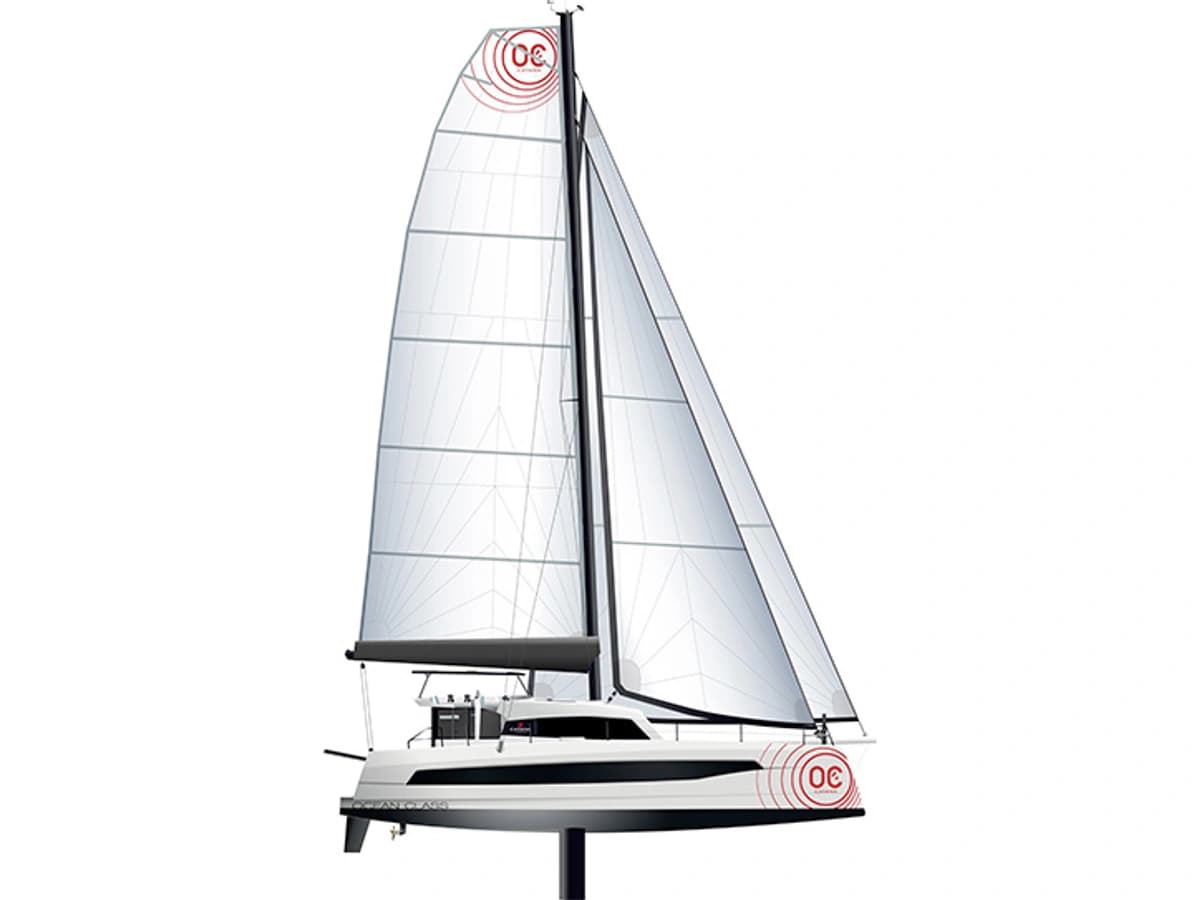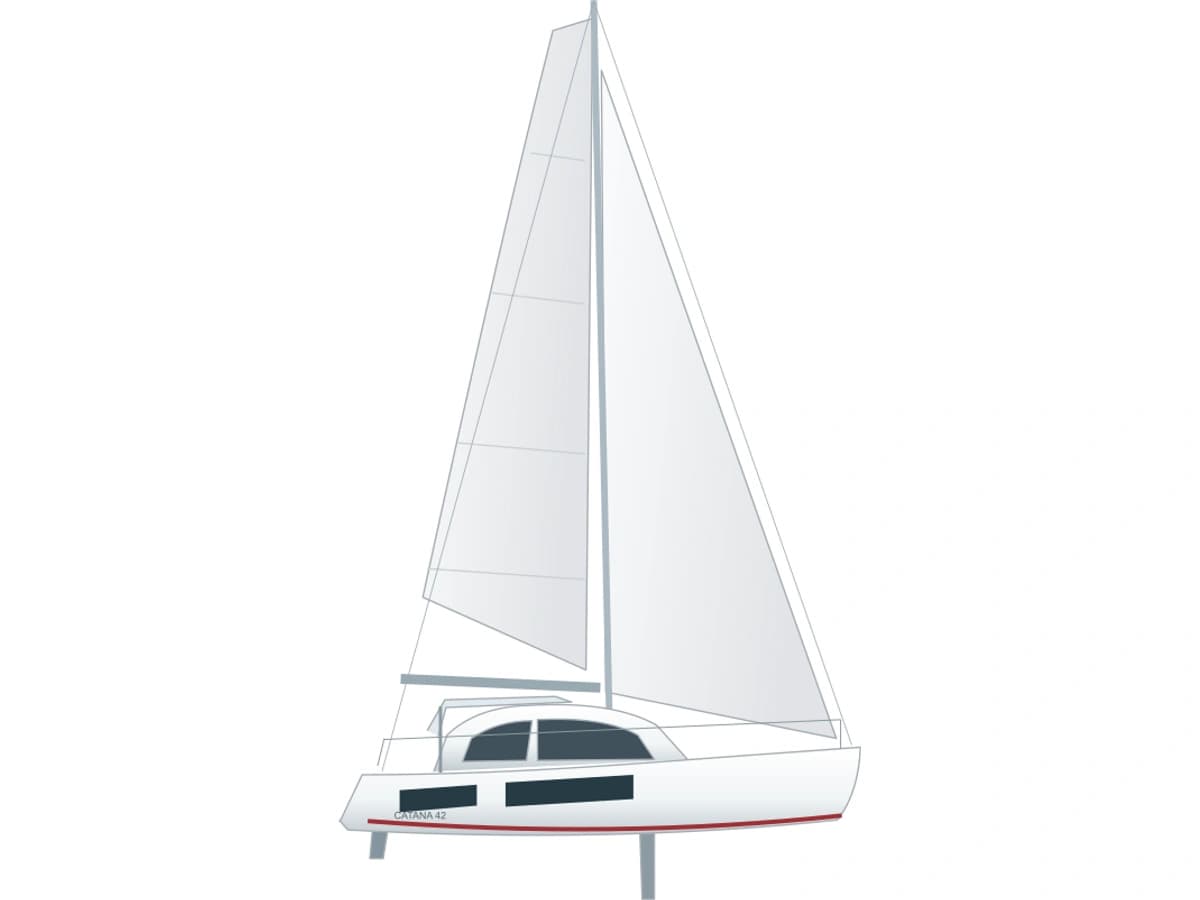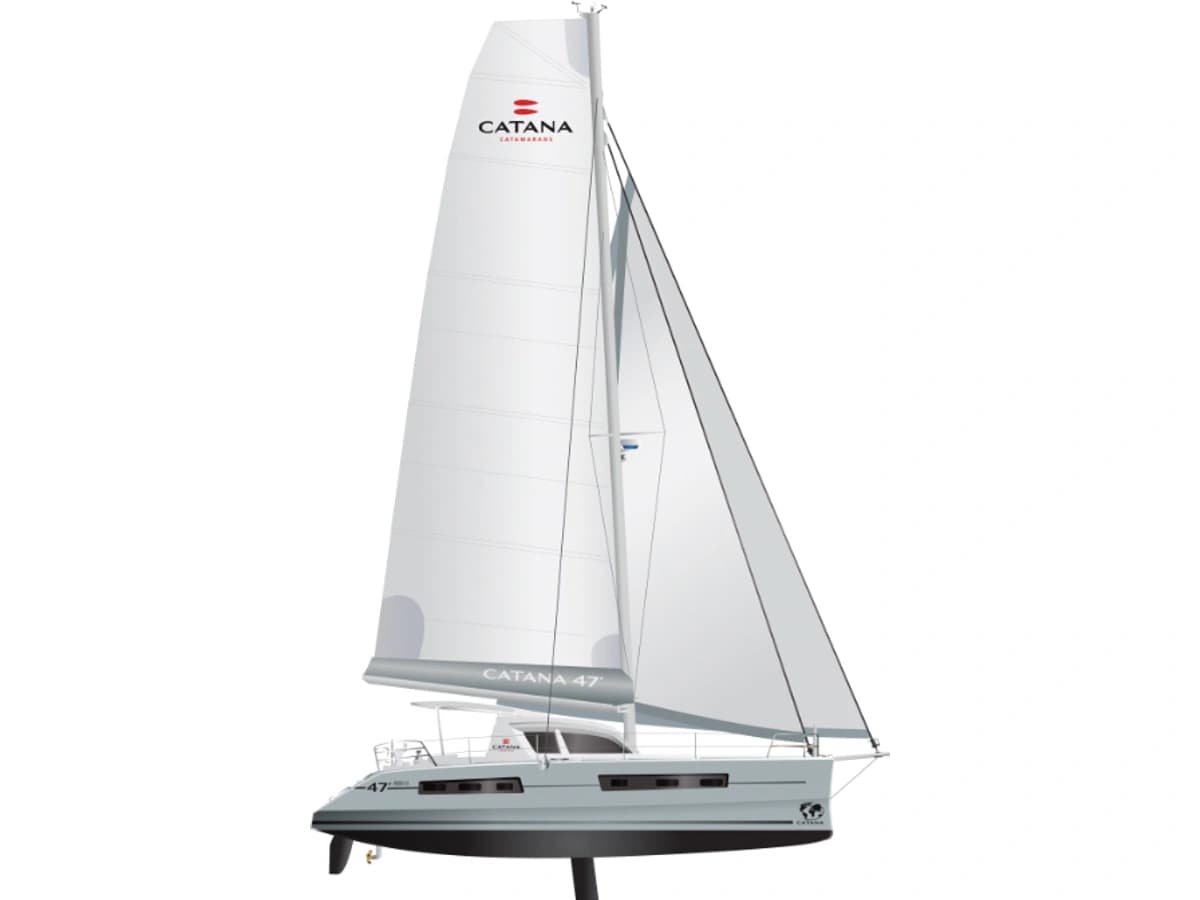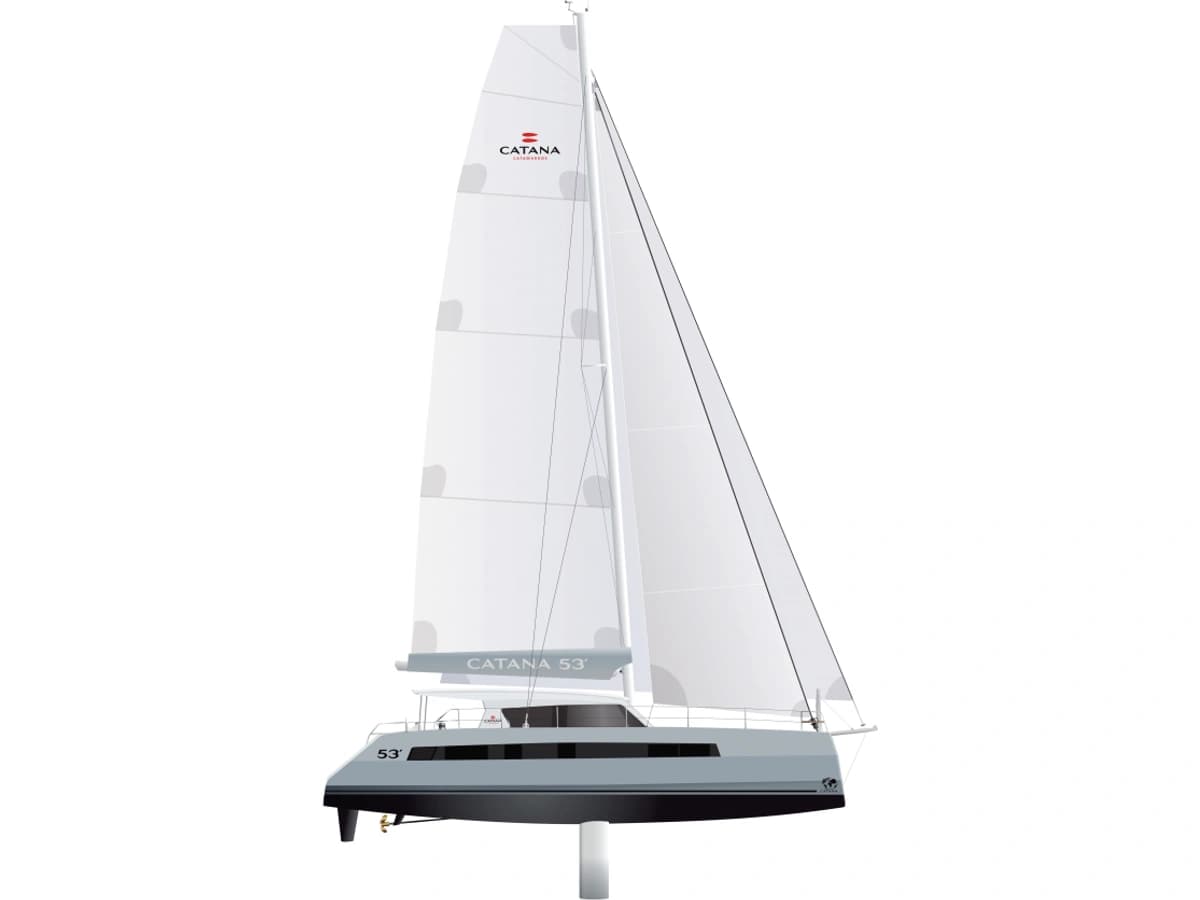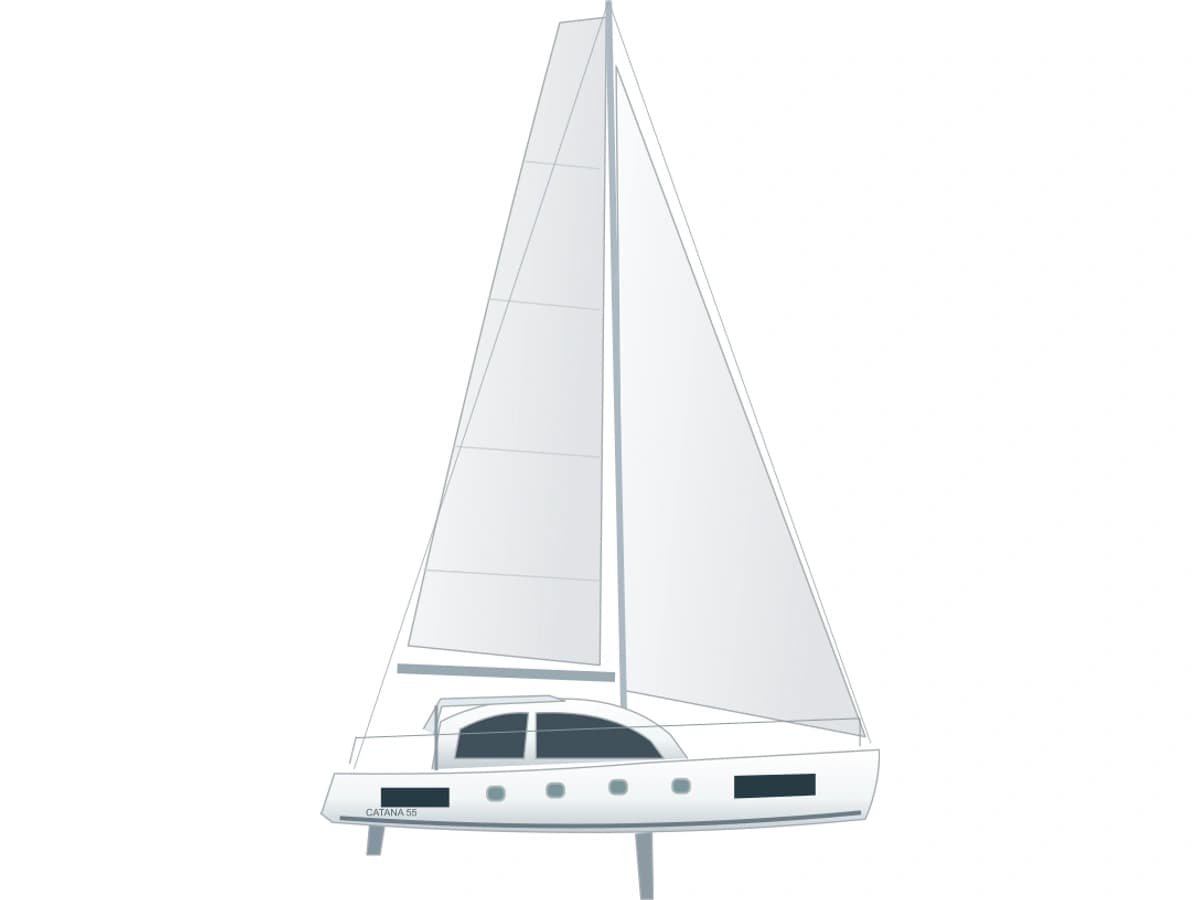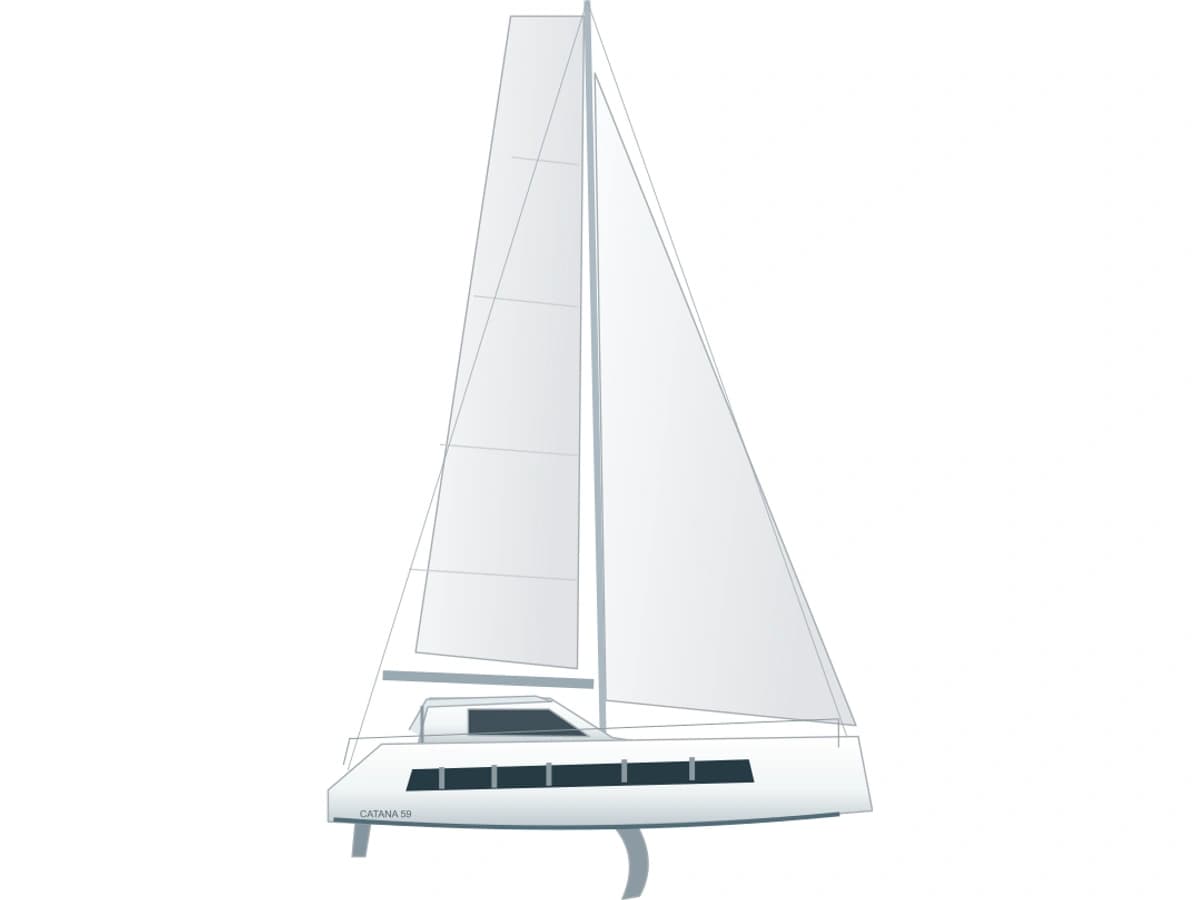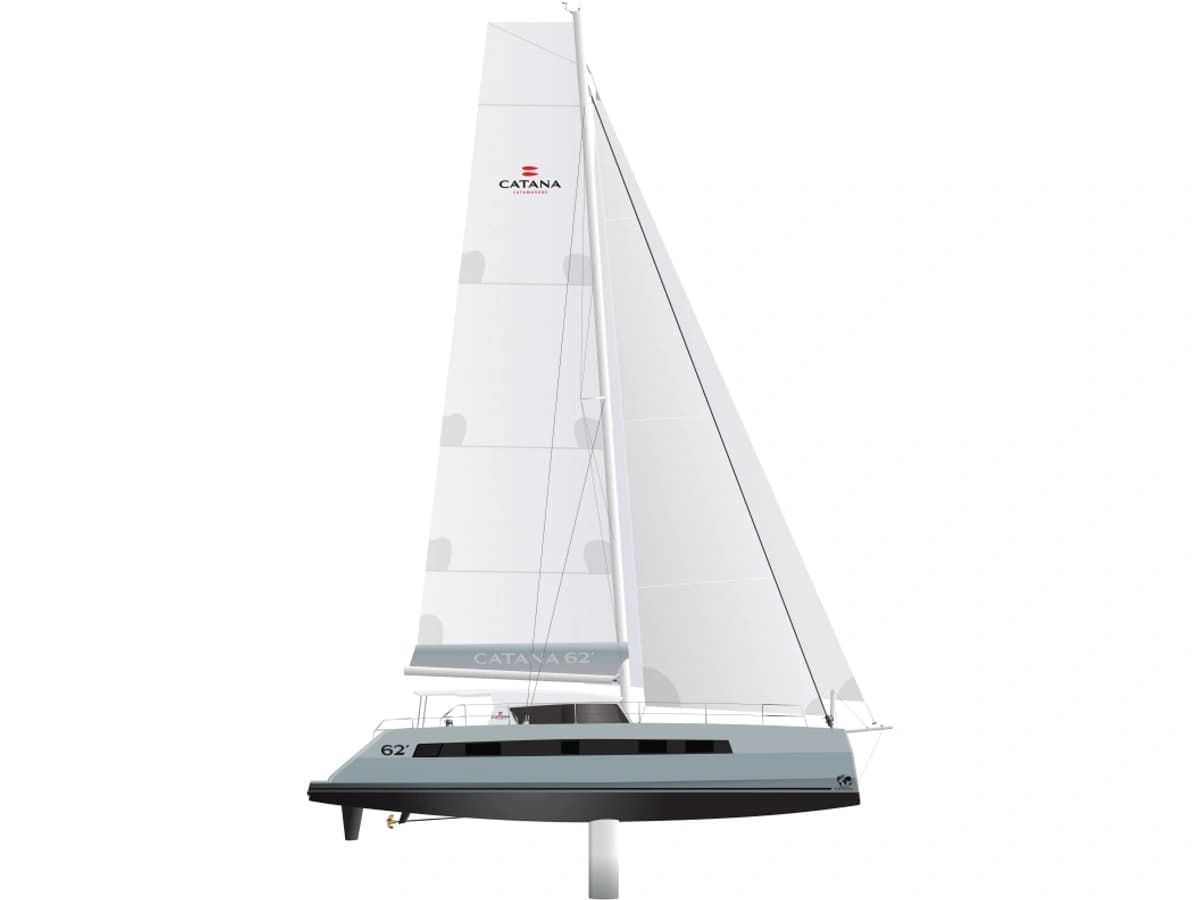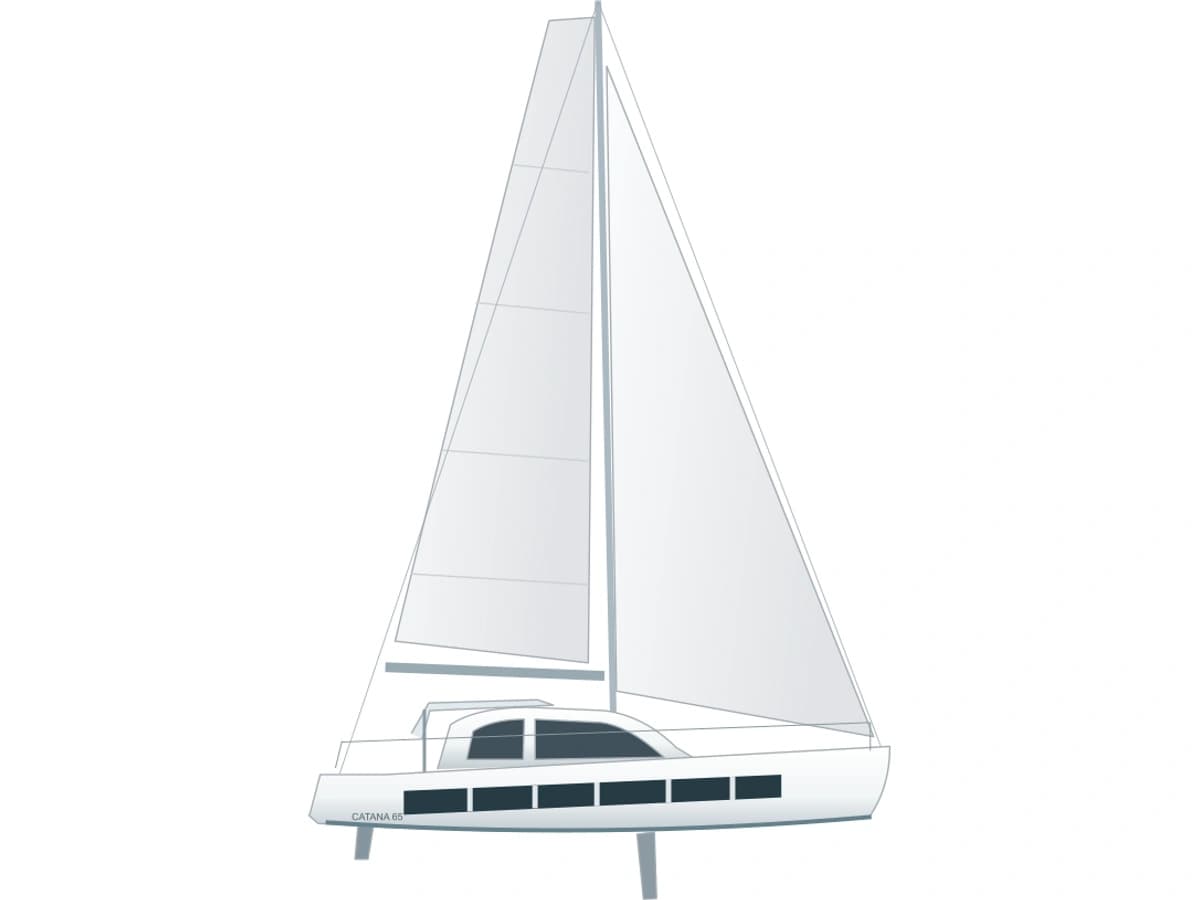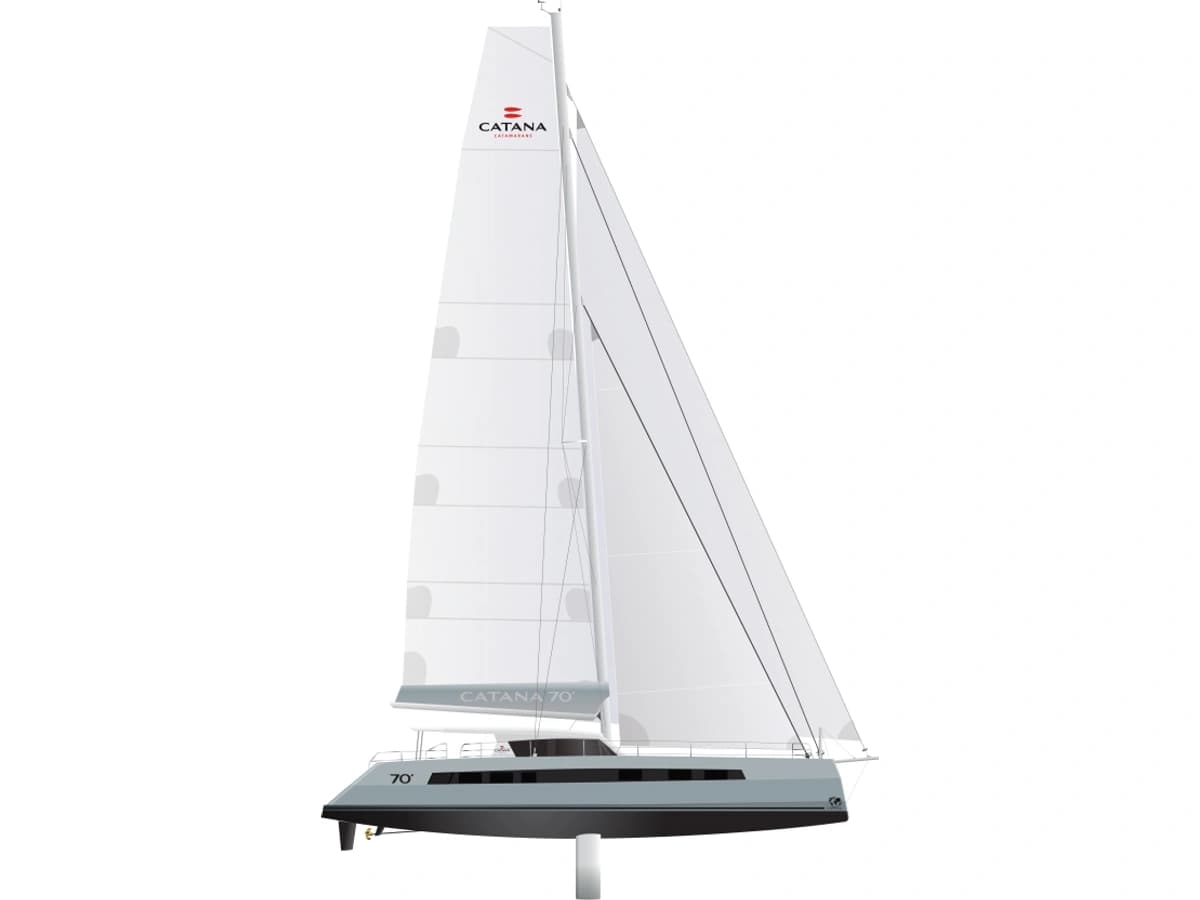
Original Catana 50 manufacturer photography and a published layout from the earlier numbered design, distinct from today’s Ocean Class. Early-build dimensions and later editions differ. Images: Catana.
About the Catana 50
The Catana 50 emerged in 2006–07 as part of the earlier numbered range, pairing Christophe Barreau’s performance-cruising design with tulip-shaped bows and lifting daggerboards. Unlike the later Ocean Class concept, it places two open steering stations aft rather than one raised, sheltered helm. That arrangement keeps the steering position close to the stern quarters and side decks.
From either helm, the skipper can look directly along the nearby hull side and step quickly into the cockpit, useful when docking or handling lines with a short-handed crew. The self-supporting bimini shades the cockpit without closing off the forward view. This layout favors immediate deck access over the greater shelter of a raised station.
Inside, the main-level U-shaped galley keeps cooking close to both the panoramic saloon and cockpit, so meals and watchkeeping can remain part of shared life aboard. Wide views from the saloon support relaxed indoor dining and help crew stay aware of activity outside. Owner and family arrangements vary among delivered boats, affecting how private space, storage and guest accommodation are balanced.
Under sail, the daggerboards can be lowered to improve lateral grip and raised for shallower approaches, while the integrated composite forward beam and double forward transverse bulkheads form part of the structure. Foam-sandwich construction with aramid reinforcement reflects the model’s weight-conscious cruising brief. Choose the Catana 50 if you want twin aft helms and active daggerboard sailing, accepting less helm shelter for direct cockpit and deck access.
Catana 50 accommodation layouts
Manufacturer general-arrangement drawings. Open a plan for a closer look.
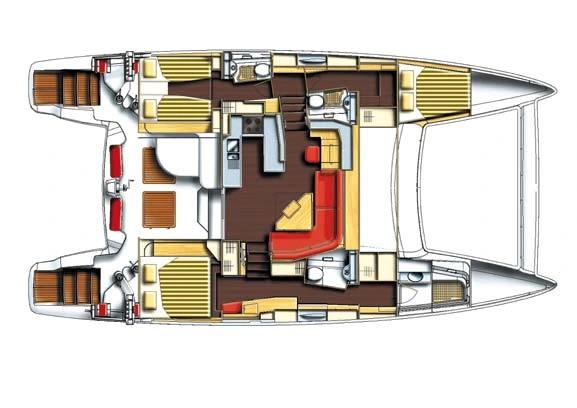
Original Catana 50 manufacturer layout; a reference arrangement from the earlier numbered design.
Considering a Catana 50?
Talk through layouts, equipment, ownership costs and your cruising plans with a dedicated catamaran specialist.