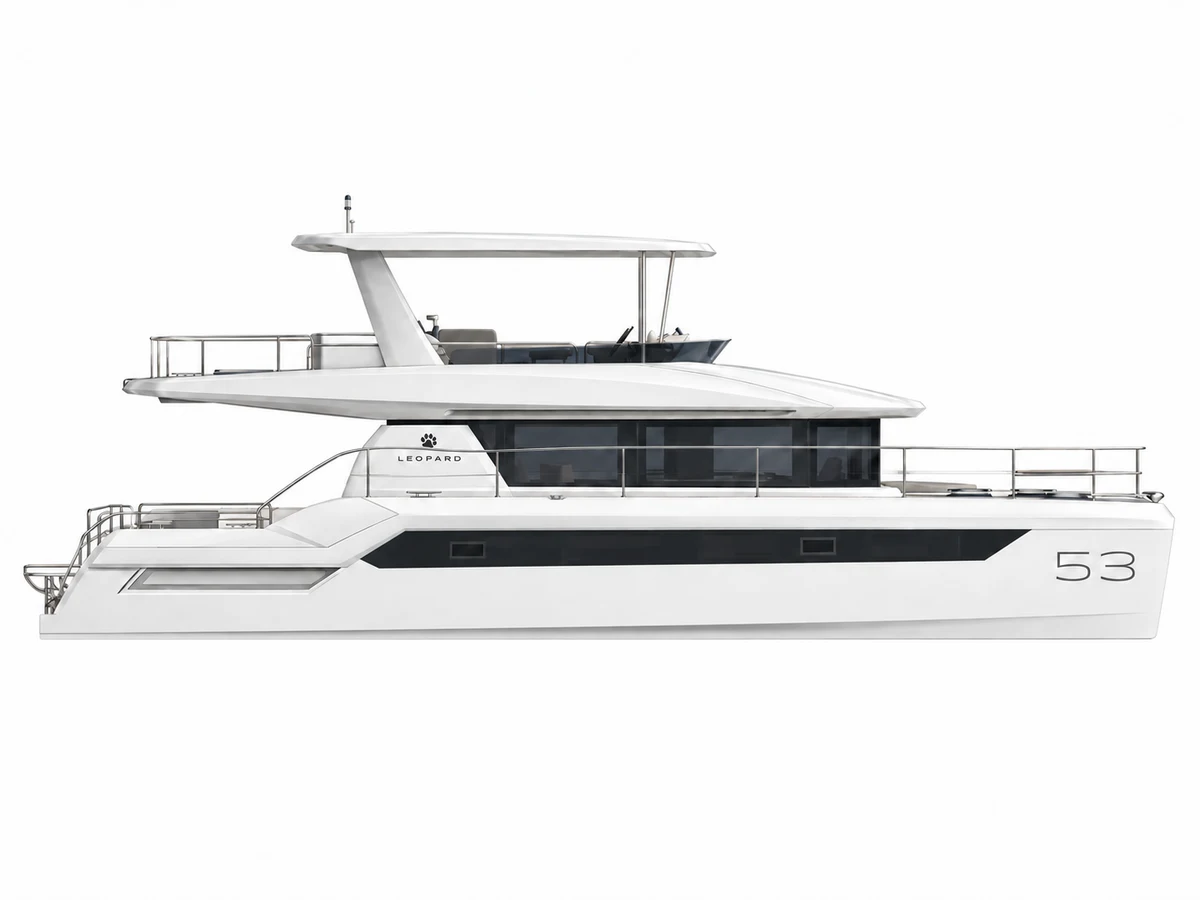
Leopard 46PC
Official Leopard walkthrough. Cabin layouts and installed options vary by yacht.
About the Leopard 46PC
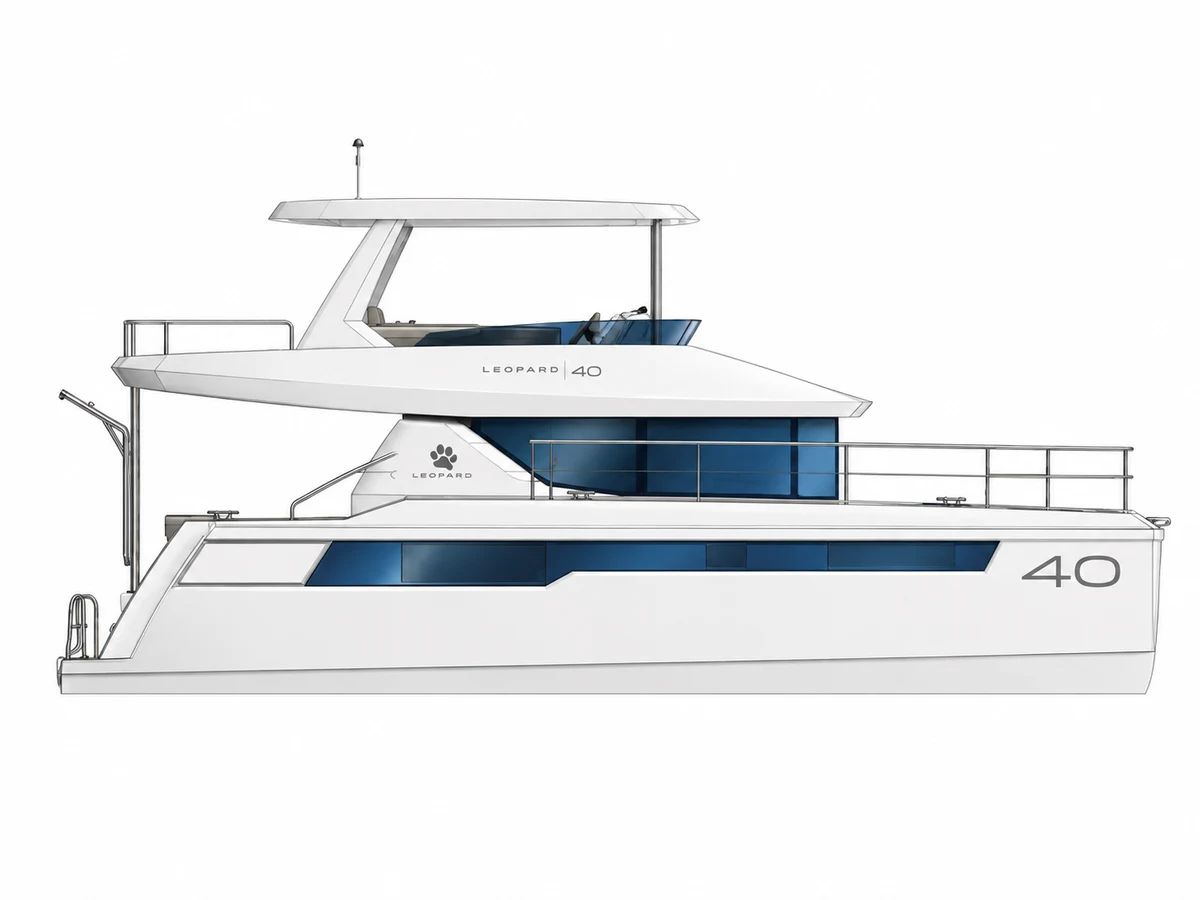
The Leopard 46PC is Leopard’s power model in the 46-series, distinct from both the sailing Leopard 46 and the earlier 46PC design. Its twin-hull arrangement combines a flybridge with separate interior and exterior spaces, including a saloon, galley, foredeck access and an upper social area. This layout suits buyers who want several distinct places for daily routines and social time aboard a power catamaran.
Accommodation is offered in three- and four-cabin arrangements, with ensuite heads for every cabin. The three-cabin owner version devotes one hull to a larger suite with a walk-in closet, desk and double vanity. Choosing four cabins adds private sleeping spaces for family or guests, but gives up the owner layout’s larger dedicated suite and its associated storage and work features.
The flybridge combines the helm with a social area, while the published plan also shows an interior helm. This gives the operator a choice between an enclosed position and the upper deck while keeping the flybridge part of the gathering space. The aft galley includes a serving counter and storage, and the forward saloon lounge connects to foredeck access. Twin 250-hp diesels are standard; higher-output diesel pairs are optional.
Buyers comparing the Leopard 46PC with the current Leopard 46 should begin with propulsion: the 46PC is a powercat, whereas the Leopard 46 uses a sailing rig. After that decision, compare the owner and four-cabin plans on CatamaranWorld and match actual inventory to the installed engine option and fitted equipment. The owner plan prioritizes a larger personal suite, while the alternative prioritizes more separate cabins.
Leopard 46PC accommodation layouts
Manufacturer general-arrangement drawings. Open a plan for a closer look.
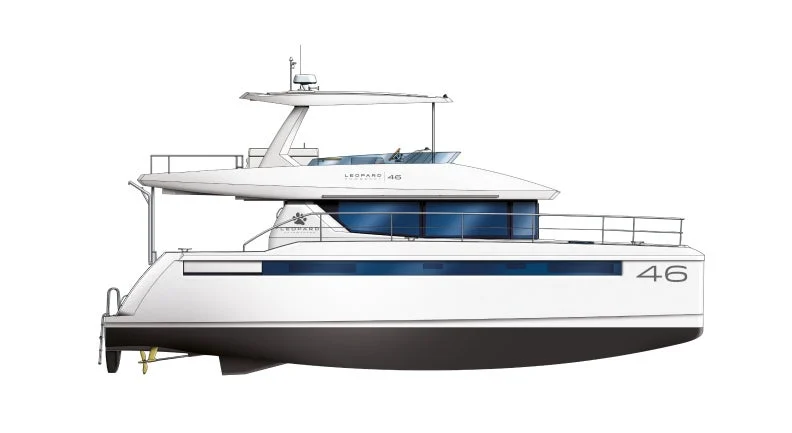
Manufacturer plan for this configuration. Open the drawing to compare the arrangement.
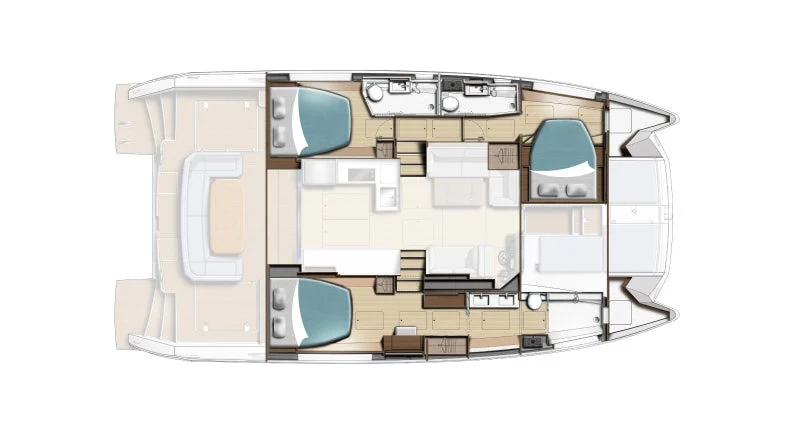
Manufacturer plan for this configuration. Open the drawing to compare the arrangement.
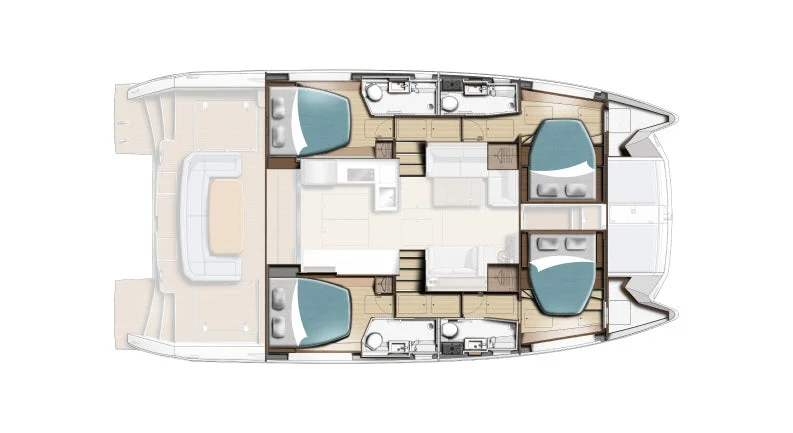
Manufacturer plan for this configuration. Open the drawing to compare the arrangement.
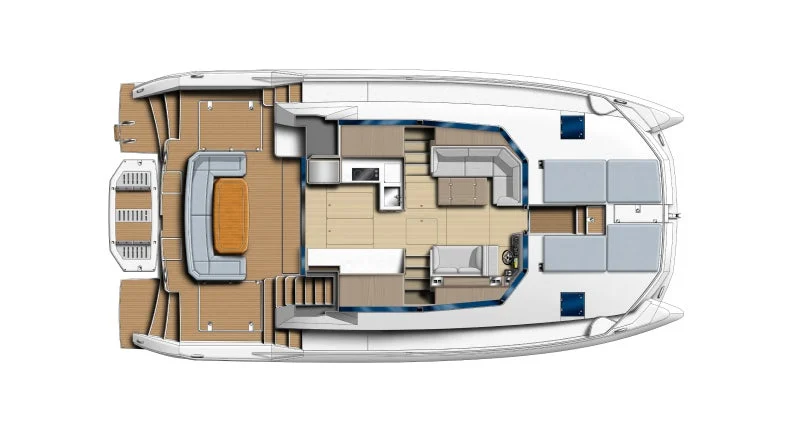
Manufacturer plan for this configuration. Open the drawing to compare the arrangement.
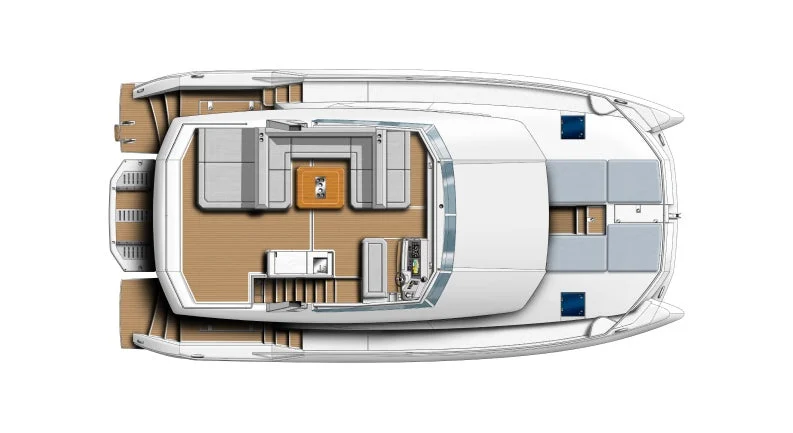
Manufacturer plan for this configuration. Open the drawing to compare the arrangement.
Testimonials
“An even ride in rough seas”
In his Leopard 46 Powercat boat review, Kevin Koenig tested a boat with twin 370-hp Yanmars outside Government Cut in confused three- to four-foot seas. He reported an even, sturdy ride, a comfortable 17-knot cruise and tight turns at cruising speed.
Koenig found several places for the group to gather: a spacious saloon with a centerline glass door to the foredeck, plus a flybridge with a shaded helm, companion seating, a dining area and an aft sunpad. His three-cabin test boat also had an owner’s suite occupying the starboard hull.
“Room to work around the engines”
In his BoatTEST report on the Leopard 46 Powercat (2022-), Capt. Steve recorded a best cruise of 16.8 knots at 3,000 rpm with twin 370-hp Yanmars. At that speed, the test boat burned 22.5 gallons per hour; BoatTEST calculated a 329-nautical-mile range with a 10 percent fuel reserve.
His inspection also focused on maintenance access. Aft-deck hatches open to engine compartments separated from the sleeping quarters, with room to reach around the engines and access to the fuel strainer and steering gear.
Model years & editions
Key milestones and configuration choices.
- 2022
Miami debut and sea trial
Power & Motoryacht tested the new 46 Powercat after the 2022 Miami show. The tested twin-370 hp installation was an upgraded engine choice.
- Layouts and equipment
Three or four en-suite cabins
The owner’s-hull arrangement trades a fourth cabin for a larger private suite. Engine upgrades are separate from cabin layout.
Leopard 46PC FAQs
How is the Leopard 46 Powercat different from the Leopard 46 sailing model?
They are separate designs. The Powercat has a flybridge and twin diesel propulsion without a sailing rig; the current sailing 46 has a protected sailing helm and different dimensions and layouts. Reviews and specifications must match the Powercat designation.
What do I gain with the three-cabin 46 Powercat layout?
The owner’s suite occupies a hull and includes a walk-in closet, desk and double vanity. The four-cabin alternative prioritizes another separate guest room. Both factory arrangements provide en-suite bathrooms, so the main choice is owner’s space versus additional guest accommodation.
Are twin 370 hp engines standard on the 46 Powercat?
No. Leopard currently lists twin 250 hp engines as standard, with 320 hp and 370 hp upgrades. Some published tests concern the more powerful installation. Confirm the engine model before comparing acceleration, cruising speed or fuel consumption with those tests.
Does the 46 Powercat have sheltered steering as well as a flybridge helm?
The interior helm and flybridge provide different steering positions for weather and visibility. The forward saloon door also gives direct access to the bow. Check the actual boat’s controls and electronics at both stations, since installed equipment can vary.
How do you access the 46 Powercat’s engines?
Aft deck hatches and steps lead into machinery spaces separated from the living areas. That arrangement lets service work happen outside the cabins. Look at access around filters, batteries and any generator on the individual boat rather than judging engine-room space from an empty plan.
What range can I expect from a Leopard 46 Powercat?
Its published fuel capacity is 1,800 litres, but that alone does not establish range. Engine choice, cruising speed, sea conditions, load and the reserve you retain all matter. Ask for fuel-flow figures at your intended speed and use the actual installation instead of applying another test boat’s headline range.
Considering a Leopard 46PC?
Talk through layouts, equipment, ownership costs and your cruising plans with a dedicated catamaran specialist.