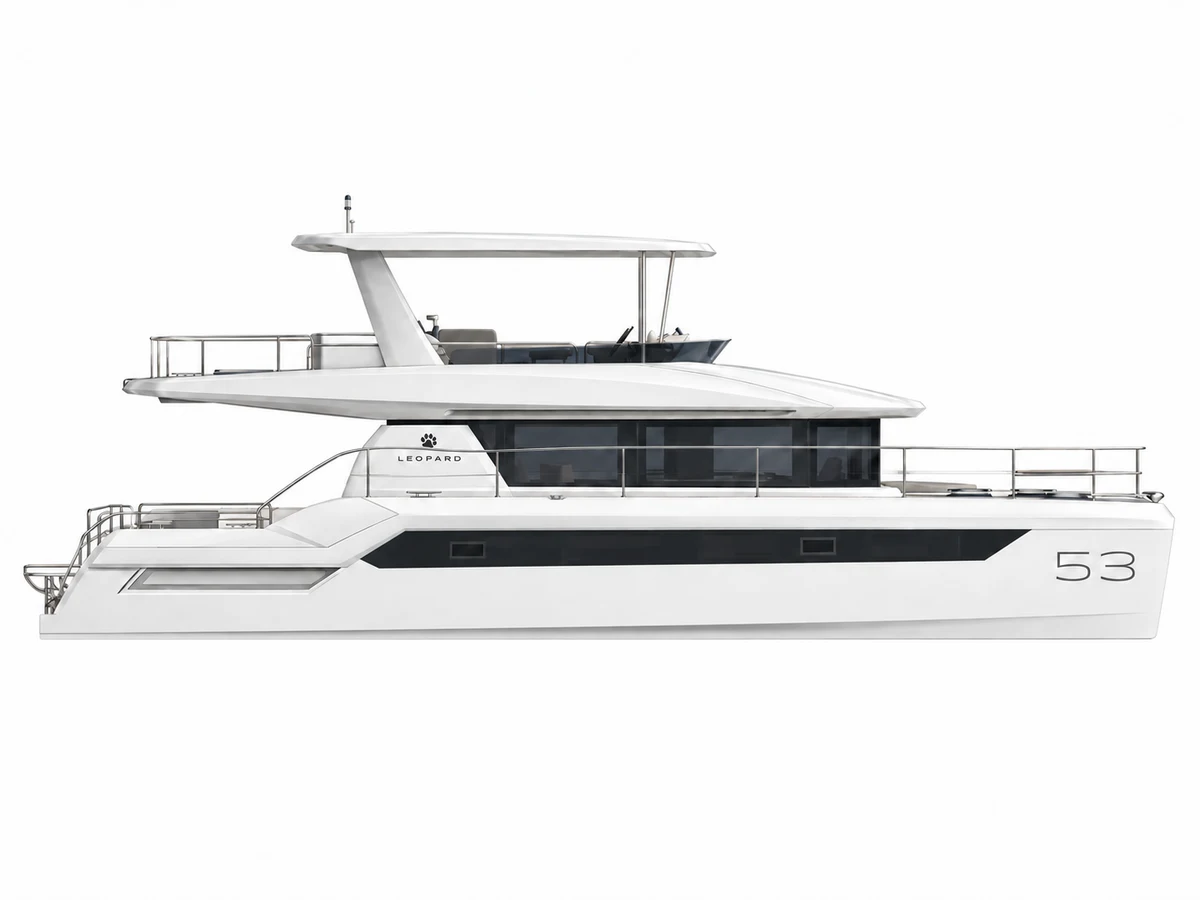
Leopard 40PC
Official Leopard walkthrough. Cabin layouts and installed options vary by yacht.
About the Leopard 40PC
The Leopard 40PC is a purpose-built power catamaran, not the Leopard 40 sailing model. Its twin-hull form and enclosed living areas support coastal passage planning and time aboard at anchor, while the absence of a sailing rig keeps the model’s identity firmly focused on motor-powered cruising. The layout is therefore aimed at buyers who want separate indoor and outdoor operating positions.
Accommodation follows a three-cabin plan, with two cabins to port and the owner’s cabin occupying the starboard hull. Two heads serve the arrangement, so buyers gain a dedicated owner’s side but should consider how the port cabins share facilities. On the main deck, an L-shaped galley, full-size refrigerator and level saloon floor place food preparation and everyday living together.
An inside helm provides a sheltered operating position, while a second helm on the flybridge offers an open-air alternative. The forward saloon door gives direct access to the foredeck, and the aft engine rooms have separate exterior access, affecting how crew move through the boat and reach machinery. Twin 250 hp diesels are standard, with 320 or 370 hp diesels offered as options.
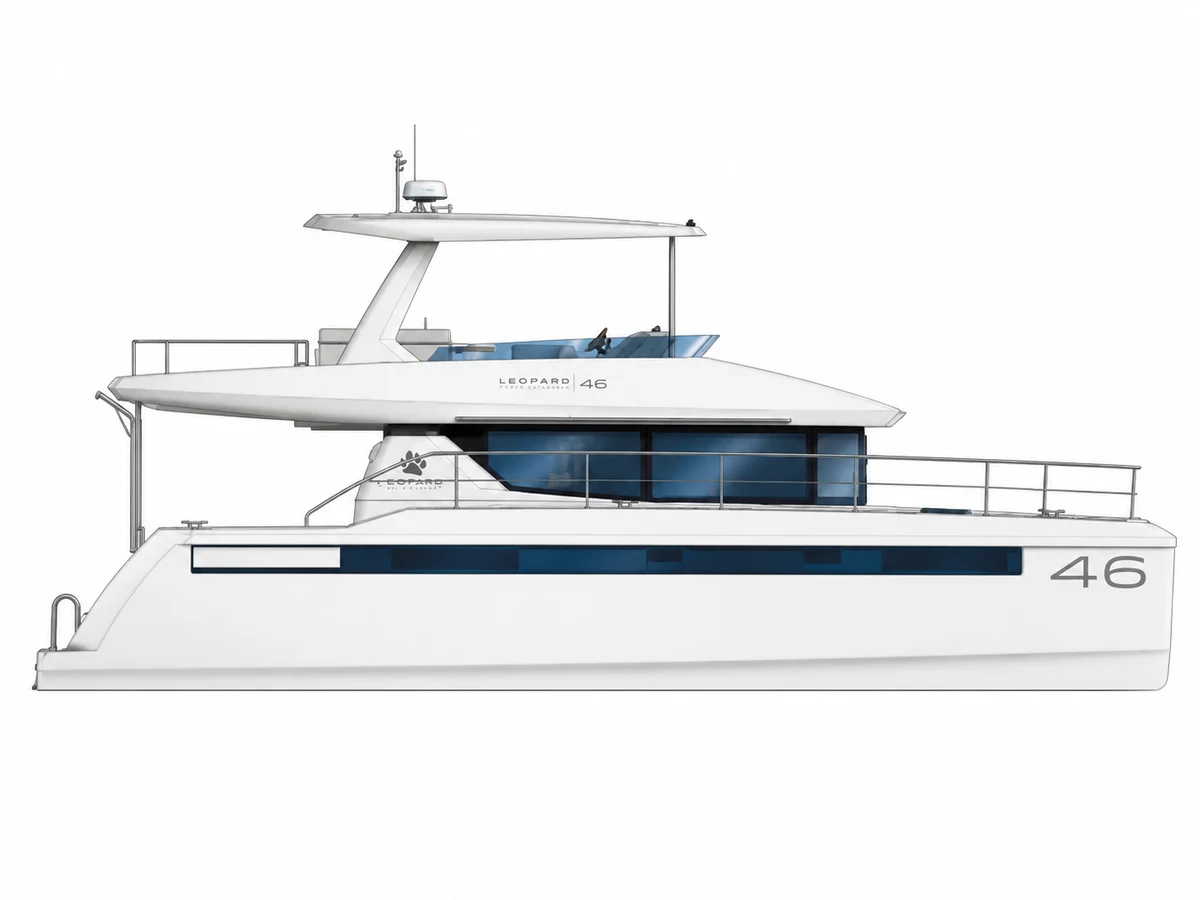
When comparing used examples, match CatamaranWorld plan views with the actual inventory listing to verify the cabin arrangement, helm setup and installed engine rating. Choose the Leopard 40PC over the Leopard 40 if motor propulsion and two helm levels are priorities; compare it with the larger Leopard 46PC when its three- or four-cabin choices and published owner-suite features better suit your needs.
Leopard 40PC accommodation layouts
Manufacturer general-arrangement drawings. Open a plan for a closer look.
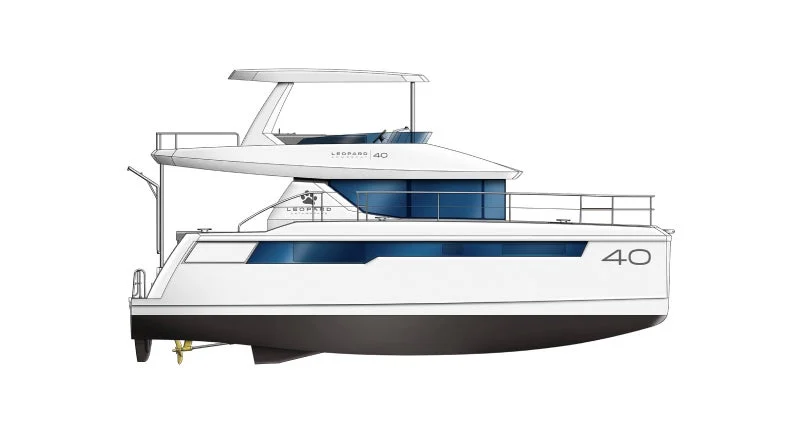
Manufacturer plan for this configuration. Open the drawing to compare the arrangement.
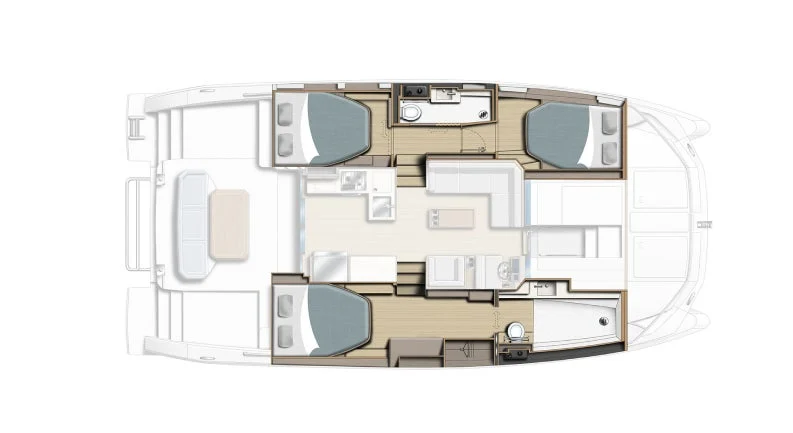
Manufacturer plan for this configuration. Open the drawing to compare the arrangement.
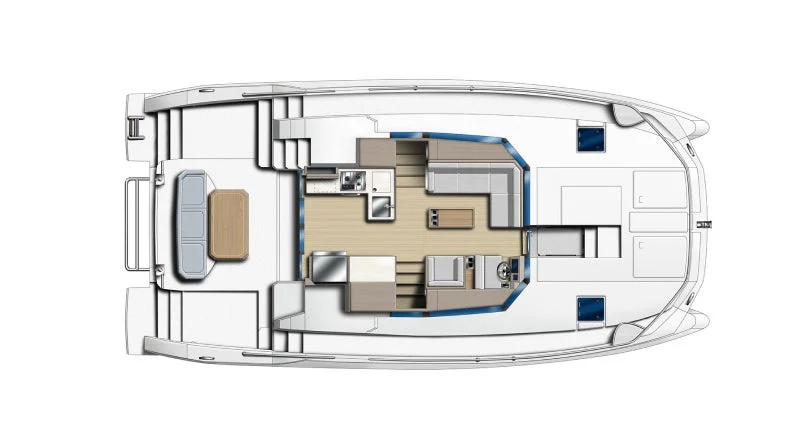
Manufacturer plan for this configuration. Open the drawing to compare the arrangement.
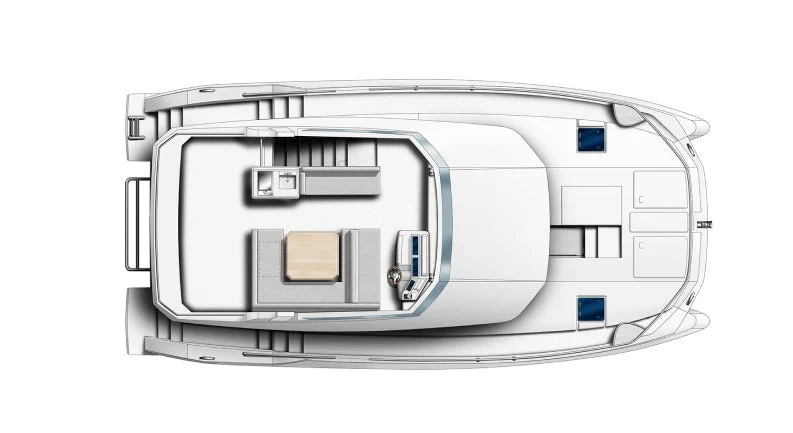
Manufacturer plan for this configuration. Open the drawing to compare the arrangement.
Testimonials
“Flybridge dining with a clear view”
In his Leopard 40 PC boat test, Dominic Salander found the boat stable, balanced and easy to handle in Miami’s flat seas and 3–4 knots of wind. The test boat had optional twin 370 hp engines, and its large flybridge offered a clear-view helm, seating and a dining area beneath a hardtop.
The cockpit dining table sits beneath the flybridge, while sliding doors lead to a galley positioned to serve the cockpit. Salander also highlighted the interior helm, direct saloon access to the foredeck and storage in the starboard owner’s suite.
“A gentle ride in short chop”
In his Leopard Powercat 40 sea trial off St-Raphaël, Alex Smith found generous outdoor space aboard a privately owned boat. He highlighted the flybridge dining area, chaise longue and open aft deck, along with the test boat’s foredeck sunbed cushions and large storage compartments.
In short chop and gusts of about 20 knots, Smith reported a gentle, stable ride without the bridgedeck striking the water. He also found that the saloon’s level floor, large windows and forward door made the interior feel open and connected to the outdoor areas.
Model years & editions
Key milestones and configuration choices.
- 2023
Miami world premiere
The 40 Powercat joined the 46 and 53 in Leopard’s power range, with its world premiere at the 2023 Miami show.
- Layouts and equipment
Three cabins; three engine choices
The owner’s hull and two guest cabins share two bathrooms. Factory diesel choices are 250, 320 or 370 hp per engine.
Leopard 40PC FAQs
Is the Leopard 40 Powercat a sailing catamaran with the mast removed?
No. It is a dedicated power catamaran designed by Simonis Voogd and built by Robertson & Caine. Its propulsion, flybridge and accommodation should be compared with other powercats, not with specifications for the separate Leopard 40 sailing model.
Do all three cabins on the Leopard 40 Powercat have their own bathroom?
No. The owner’s cabin occupies the starboard hull with its own bathroom, while the two port guest cabins share a bathroom. That is an important difference from larger powercats with an en-suite for every cabin. Check the plan against how your guests will use the boat.
Can I drive the Leopard 40 Powercat from inside?
Yes. Its interior helm supplements the flybridge station, providing a sheltered steering position. The saloon also has a forward door to the bow area. During a viewing, check visibility and access to controls from both steering positions.
Which engines should I compare on used Leopard 40 Powercats?
The current factory choices are twin 250 hp diesels as standard and twin 320 hp or 370 hp alternatives. Performance and consumption figures depend on that installation as well as load and conditions. Compare a sea-trial result only with a boat carrying the same engines and a similar cruising load.
Can the engines be serviced without going through a cabin?
The two aft technical spaces are separated from the accommodation and accessed from outside. This keeps routine machinery access out of the sleeping cabins. Inspect the hatch openings, service clearances and installed equipment on the particular boat, especially if additional systems have been fitted.
What dimensions matter when berthing the Leopard 40 Powercat?
The factory publishes 12.19 m overall length, 6.61 m beam and 1.10 m draft. Fuel capacity is 1,400 litres and water capacity is 640 litres, so the actual cruising load also matters. Confirm the fitted dimensions and loaded draft before arranging a berth or yard lift.
Considering a Leopard 40PC?
Talk through layouts, equipment, ownership costs and your cruising plans with a dedicated catamaran specialist.