Cure 48GT
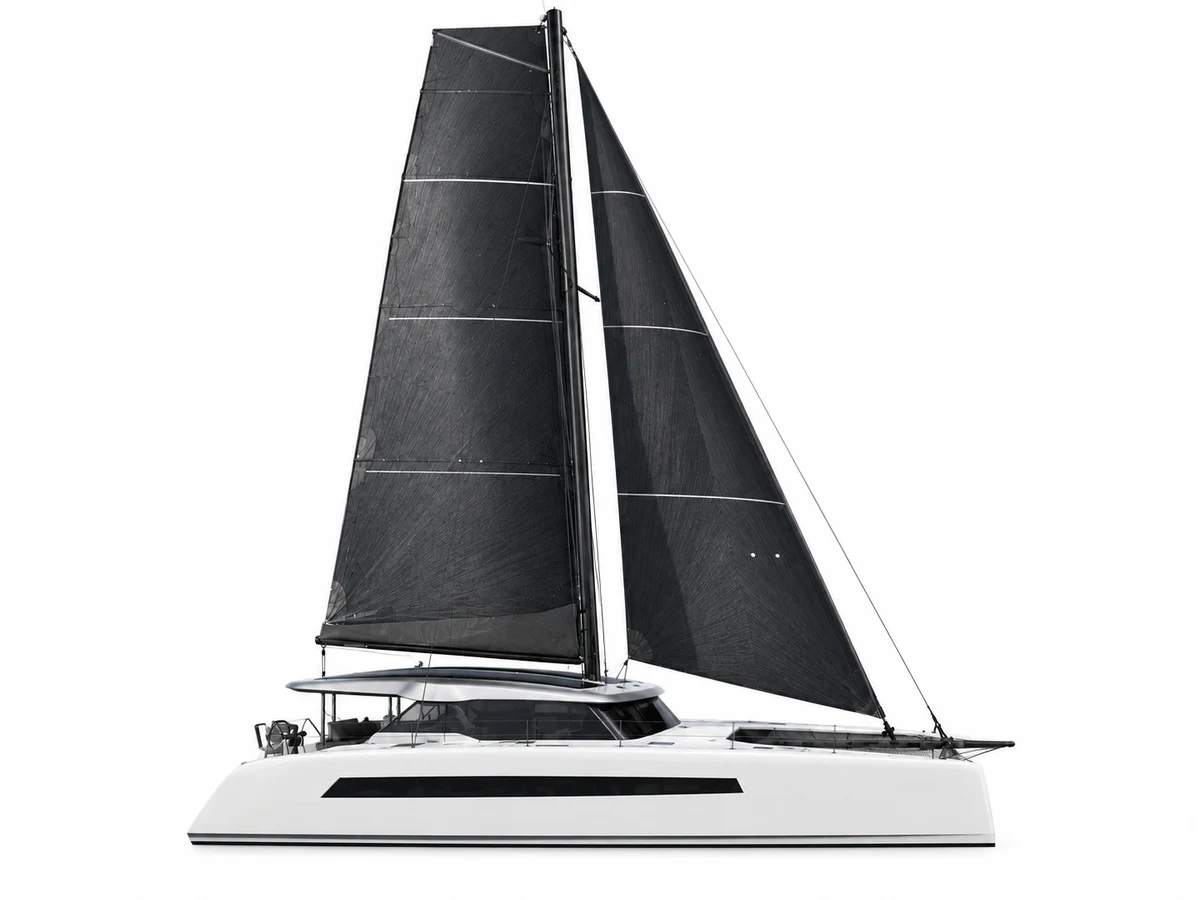
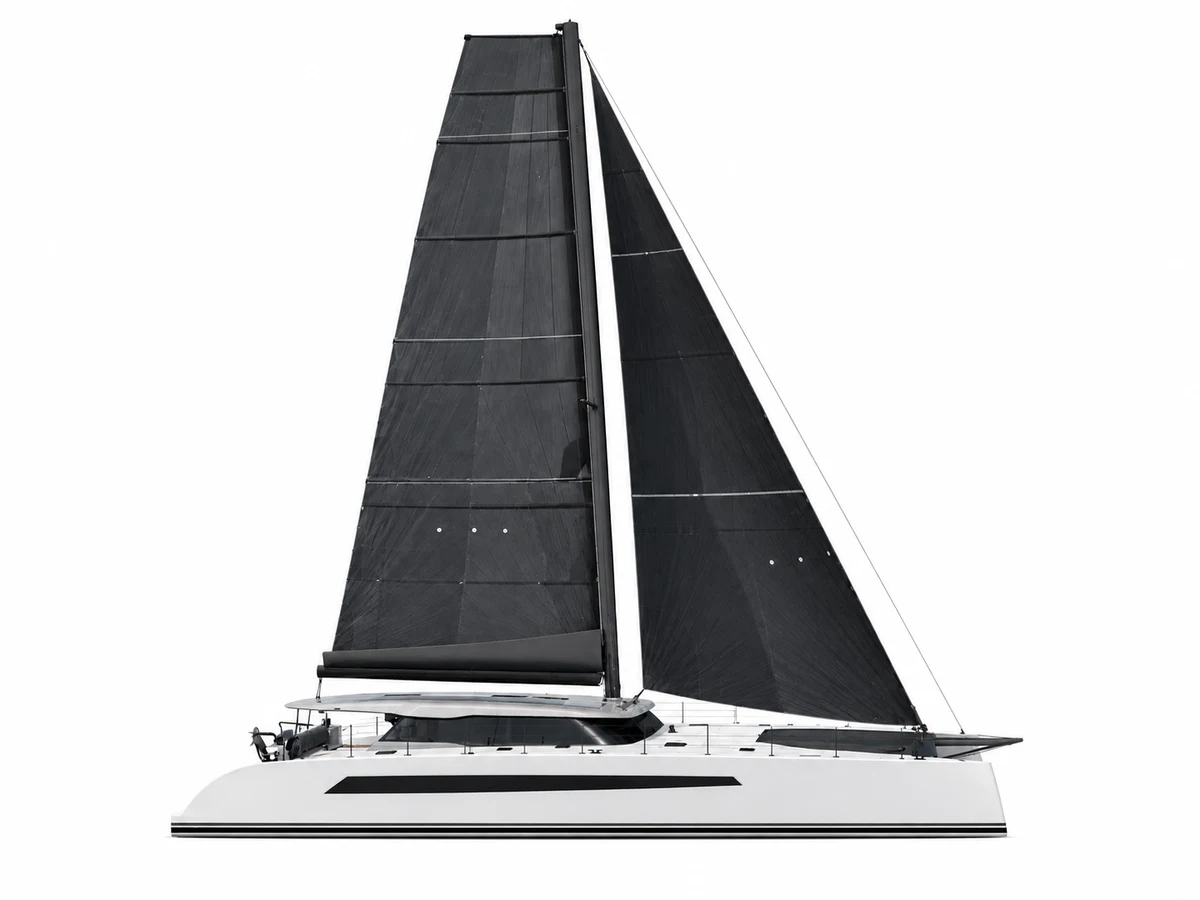
Manufacturer design renderings illustrate the exterior and interior arrangements. Images: Cure Marine.
About the Cure 48GT
The Cure 48GT is a Bury Design catamaran built by McConaghy in Zhuhai, China, using full-carbon-fibre construction. Its published arrangement combines a saloon and galley with three-cabin accommodation, giving buyers a clear cruising layout to assess for owner use and guests. The model is therefore more specifically defined than a platform advertised with numerous cabin plans.
Accommodation choices are comparatively focused, and the specification also lists an electric galley. This can suit a buyer who values a defined owner-and-guest arrangement, but the published material does not present the cabin-layout flexibility shown for larger Cure models. Because the imagery consists of manufacturer design renderings, confirm the layout and equipment of any individual boat rather than assuming every fit-out matches the drawings.
The published sailing package pairs a square-top mainsail and self-tacking jib with a carbon rig and articulating helms, with 130 m² listed for the mainsail and jib. Buyers can evaluate the helm positions and sightlines for their intended use. Auxiliary power is specified as twin 45 hp Yanmar diesel engines, alongside a listed 2.5 kW solar installation for onboard electrical supply.
For a specific buying decision, compare the Cure 48GT’s published arrangement with the Cure 55GT’s three- or four-cabin choices and the Cure 68GT’s multiple configurations. CatamaranWorld can be used to compare those plans with actual inventory, especially if an additional cabin is more important than the 48GT’s focused layout. Buyers who prefer the smaller model’s arrangement can concentrate on whether an individual boat follows the published galley and accommodation drawings.
Cure 48GT accommodation layouts
Manufacturer general-arrangement drawings. Open a plan for a closer look.
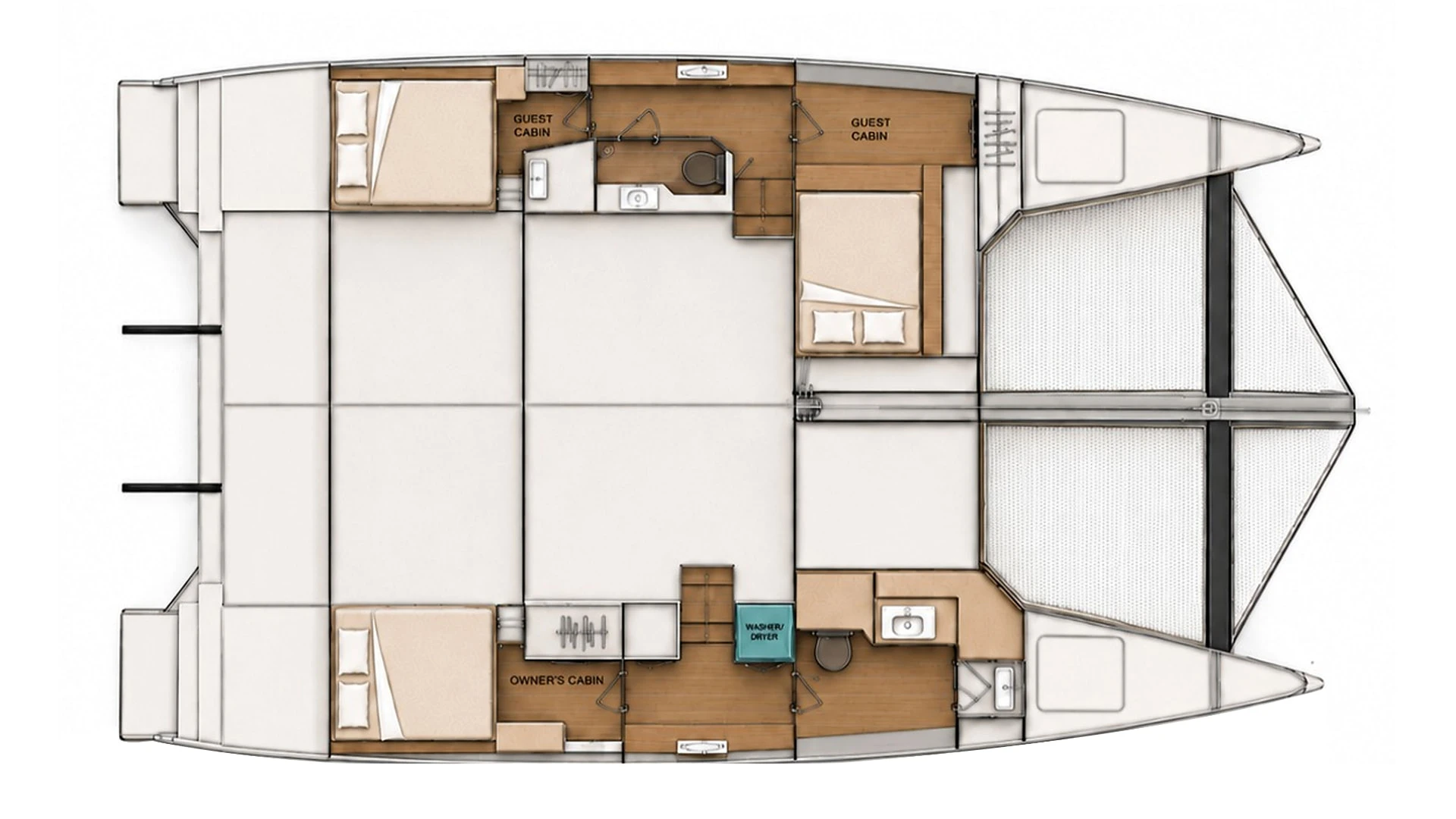
Published three-cabin arrangement with heads and storage in the hulls.
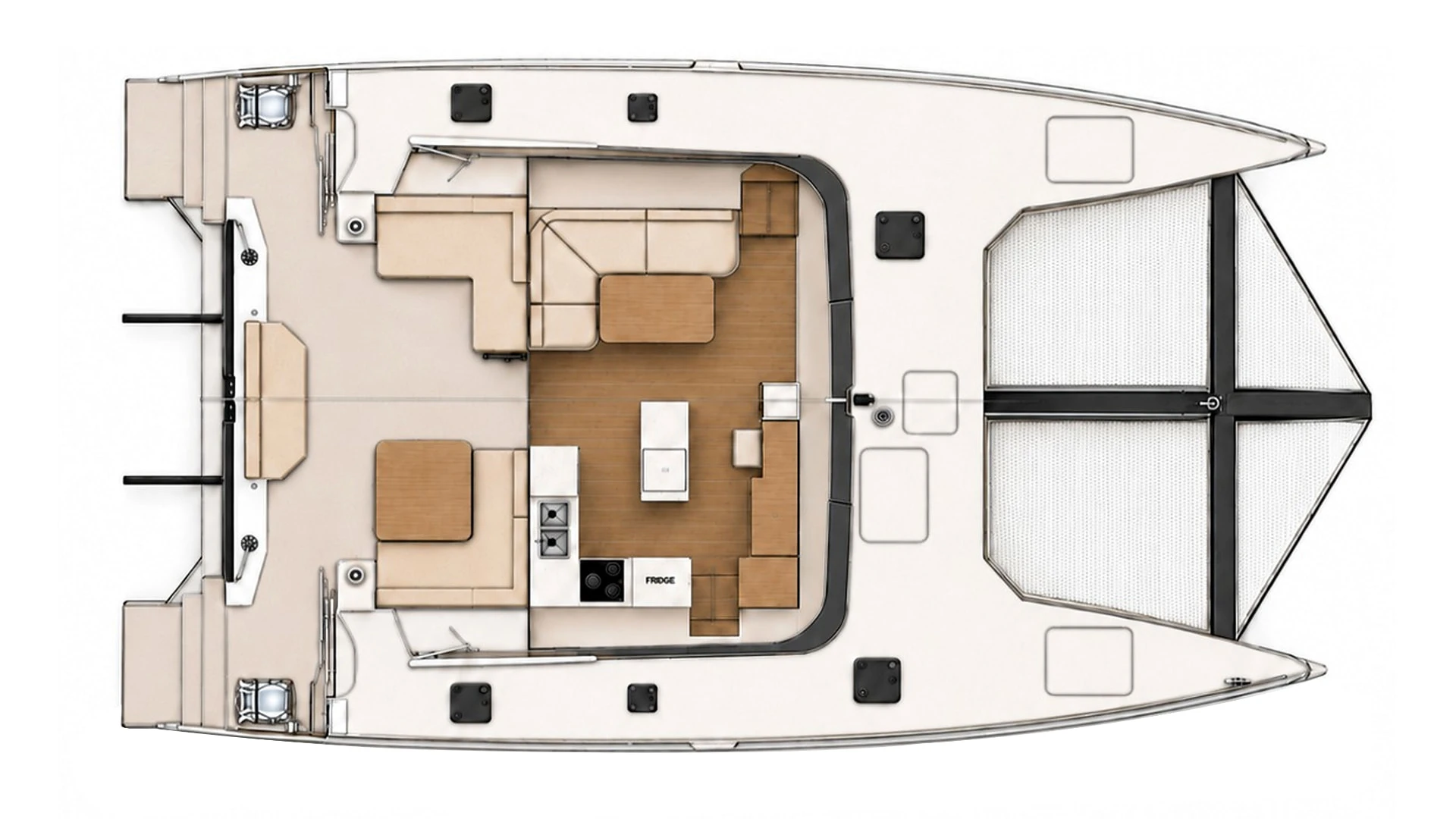
Published main-deck arrangement showing the cockpit, saloon and island galley.
Testimonials
“Carbon cruising for a couple”
Katamarans calls the full-carbon 48GT Cure’s smallest model, sized for a couple to sail without crew. Its three cabins and twin swing helm stations form a sailor-centred cruising layout.
Katamarans lists a square-top mainsail, self-tacking jib and reaching gennaker. It also specifies a 2.5 kW solar array and twin 45 hp Yanmar diesels.
“A jib that simplifies tacking”
Cure Marine’s 48GT overview says its self-tacking jib is intended to simplify short-handed sailing: tacking requires little more than turning the wheel. The manufacturer says the square-top mainsail provides most of the driving force and describes articulating helm stations with controls close to hand.
The published arrangement offers three cabins, a saloon and a galley. Cure Marine specifies an electric galley with induction cooking and an oven, and says it designed the layout to provide natural light, practical storage and everyday usability.
Model years & editions
Key milestones and configuration choices.
- 2026
McConaghy production programme
McConaghy acquired the Cure brand and intellectual property and announced further development of the 48GT and 55GT. The current GT specification should be distinguished from earlier Australian-built Cure boats.
- Layouts and systems
Three-cabin configuration
The current design combines a three-cabin layout, self-tacking jib and diesel auxiliary engines. Battery capacity should be confirmed against the contracted equipment list.
Cure 48GT FAQs
Is the Cure 48GT a sailing catamaran or a powercat?
It is a sailing catamaran. The current manufacturer detail page specifies a carbon rig, mainsail, self-tacking jib and daggerboards, with twin diesel engines for auxiliary power. The solar installation supports the onboard electrical system; it does not replace the sailing rig or establish electric propulsion.
Who builds the current Cure 48GT?
The current design is by Bury Design and is built by McConaghy. McConaghy announced its acquisition of the Cure brand and intellectual property in 2026 and described further development of the 48GT and 55GT. Earlier Australian Cure boats should be distinguished from the current production programme.
Which Cure 48GT length should I use for a marina berth?
The model detail page lists a 14.65 m hull length and 15.25 m overall including the bowsprit, with 8.45 m beam. Those measurements serve different purposes. Confirm the current build drawing and all fitted projections when booking a slip or arranging a lift.
What draft does the Cure 48GT have with its boards raised?
The published figures are 1.30 m with daggerboards raised and 2.25 m lowered. Raising the boards changes the underwater configuration; it does not establish clearance for a fully loaded yacht in all conditions. Confirm loaded draft and the remaining appendages before planning shallow access.
Does the Cure 48GT’s solar array power the engines?
The reference engines are twin 45 hp Yanmar diesels, while the 2.5 kW solar array supports the electrical system. Solar capacity does not make this an electric-propulsion boat. Confirm the battery specification and expected domestic loads separately from engine endurance.
Are the Cure 48GT polar curves measured sea-trial results?
No. The manufacturer describes them as predicted boat speeds supplied by Bury Design. They help compare expected performance at different wind angles and strengths, but actual results depend on sail inventory, loading, sea state and setup. Use a sea trial of the relevant build for measured performance.
Considering a Cure 48GT?
Talk through layouts, equipment, ownership costs and your cruising plans with a dedicated catamaran specialist.