
Agree the purpose before leaving the dock
A pleasant sail can leave important buying questions unanswered. Before the trial, send the surveyor and seller’s representative a short list of what you need to learn. Separate professional testing from your own observations about visibility, noise, movement and everyday handling.
BoatUS distinguishes a survey trial run from heavy-weather stress testing. Do not expect a seller to demonstrate a yacht beyond safe conditions or the agreed scope. Confirm who is in command, who may operate controls and which tests the professionals plan to conduct. Weather may limit what is possible that day.
Let the specialists set machinery tests
Ask the surveyor and any engine technician to define the operating checks appropriate to the installed equipment. Do not improvise a maximum-power test from an online checklist. Note the conditions, loading and equipment running so observations have context later.
Your useful contribution is often a precise question: was that vibration present on both engines, did it change with speed, and will the written report address it? A quick verbal reassurance on deck is easy to misremember. Keep questions together for the debrief rather than interrupting someone during a manoeuvre.
Pay attention to work at the helm
From the normal operating position, consider the view of both bows, aft quarters and the route alongside the dock. Ask how the person at the helm communicates with whoever handles lines. If permission and conditions allow, try the controls under supervision and be honest about what you find awkward.
Imagine the crew you will actually have aboard. A manoeuvre that feels easy with several experienced people may be harder with one partner handling lines. That is a reason to plan training and test your proposed routine, not to assume you will acquire the missing confidence on delivery day.
Test the sailing routine you expect to use
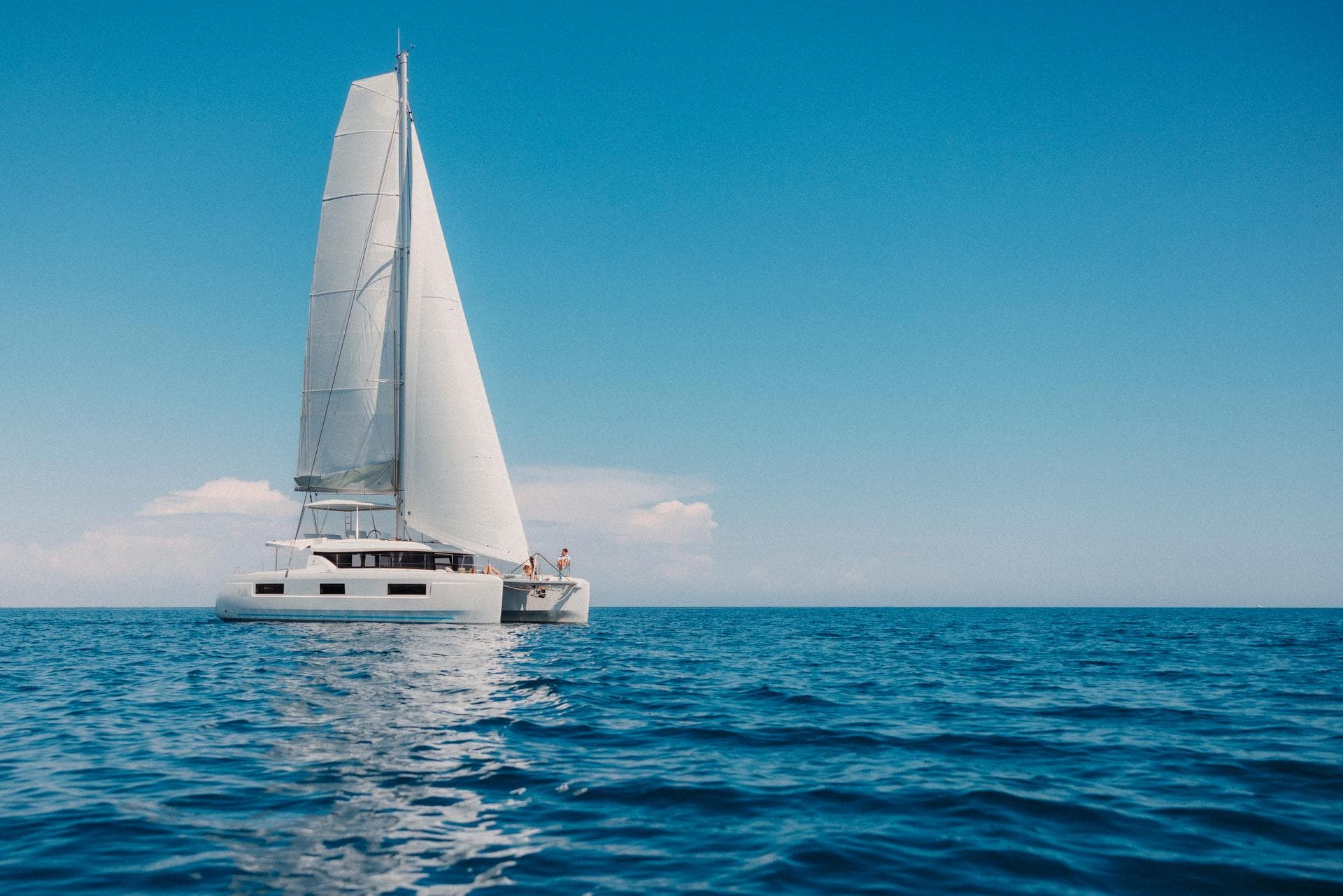
On a sailing catamaran, ask to see the agreed sail-handling operations when conditions allow. Watch where someone must stand, how lines are organised and whether the helm and working areas can communicate. Discuss anything that could not be demonstrated, including reefing or a particular sail.
Do not infer all-weather performance from a short outing. Wind, sea state, loading and bottom condition affect the experience. Note them alongside speed observations, and resist comparing a loaded boat on a quiet day with an unrelated brochure figure. For a power catamaran, use the equivalent time to assess the intended cruising routine and machinery observations.
Finish with an unresolved-items list
Back at the dock, separate observations into demonstrated, professionally assessed, and still untested. Examples of unresolved items might include a sail not deployed, equipment awaiting a part or a noise needing specialist review. Each needs an owner and a next step.
Discuss any acceptance or further-inspection decisions within the process and deadlines in your purchase agreement. The trial should leave you with clearer evidence and a more realistic operating plan. It cannot promise that nothing will fail after purchase, and a short list of unanswered questions is better than pretending the day proved everything.
Sources & further reading
Sources checked October 13, 2026. Procedures, availability and terms should be confirmed for the boat and location concerned.