
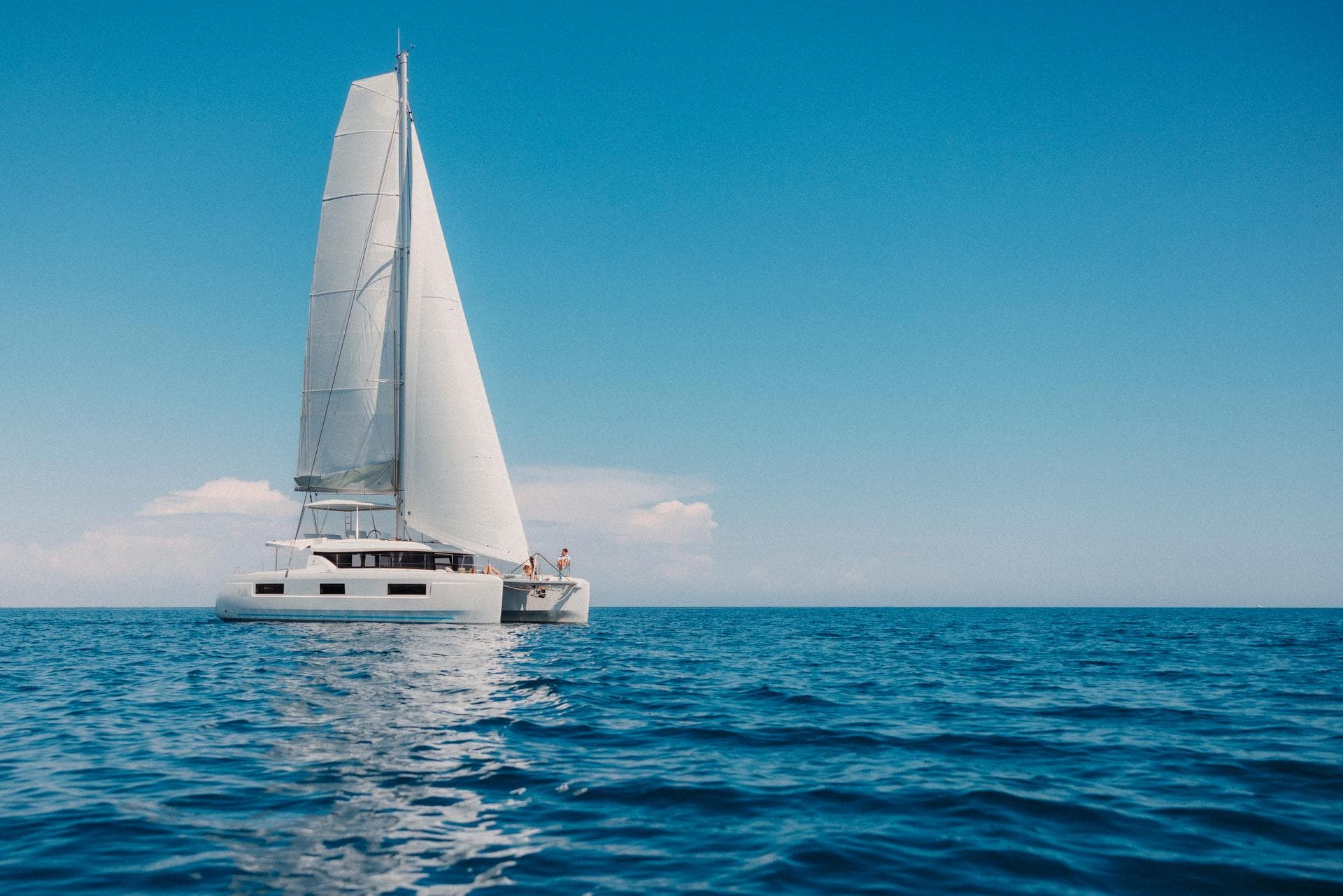
Show the yacht before selling the lifestyle
A buyer needs to recognise the boat, understand its layout and judge whether an enquiry is worthwhile. Lead with a clear exterior view of the actual yacht. A distant sunset silhouette may be attractive, but it tells someone very little about the catamaran they are considering.
Plan the sequence before taking hundreds of photographs. Begin outside, move through the cockpit and saloon, then show each hull in a consistent order. Finish with safely accessible machinery, equipment and relevant condition details. A coherent walk-through is easier to follow than a random gallery of the best-looking corners.
Use a repeatable shot list
For the exterior, include an overall view, both accessible sides, cockpit, helm and foredeck. For the interior, show the saloon, galley, each cabin and each head. Add the storage or working areas that distinguish this yacht from comparable listings.
Identify cabins in captions using positions such as port aft or starboard forward. Nearly identical bedrooms are easy to confuse. If you include a layout drawing, verify that it matches this boat rather than a different version from the same builder. Do not let a stock diagram contradict the photographs.
Keep proportions and condition believable
Take enough distance to describe a space without exaggerating its size. If an extremely wide lens makes a doorway or berth look distorted, choose a more natural view and add a second angle. Buyers will eventually stand in the same space; disappointment at that point helps nobody.
Discover Boating’s photography guidance recommends a clean lens, a level horizon and attention to exposure. Those simple habits matter more than aggressive editing. Correct brightness and colour sensibly, but do not erase cracks, stains, equipment or other facts a buyer would reasonably need to see. Use current images of the yacht itself.
Include details that earn the next conversation
Ask the broker which recurring questions could be answered visually. A clear view of an equipment label, access panel or tender arrangement may be more useful than another cockpit cushion. Obtain permission and follow safe access procedures; there is no reason to open live electrical enclosures for marketing pictures.
Separate public photos from sensitive records. Remove visible personal documents, passwords, access codes and banking information. Where a buyer needs serial numbers or detailed paperwork, share them through the appropriate transaction channel rather than exposing everything in a public gallery.
Review the gallery on a phone
Check whether the leading image still makes sense as a small crop, whether text is readable and whether dark machinery photos reveal anything at all. Retake a weak image instead of uploading several almost identical alternatives. Keep original-resolution files for the publisher and let the site create suitable display sizes.
Finish by comparing the gallery with the written inventory. Does it show excluded equipment without explanation? Is an upgraded item missing? Has the boat changed since the photographs were taken? A good listing gallery reduces uncertainty. It should leave a serious buyer with better questions, not with a misleading first impression.
Sources & further reading
Sources checked October 13, 2026. Procedures, availability and terms should be confirmed for the boat and location concerned.