HH52
Manufacturer photographs, design renderings and arrangement drawings. Images: HH.
Official tour of Taboo II. Other helm and construction versions differ.
About the HH52
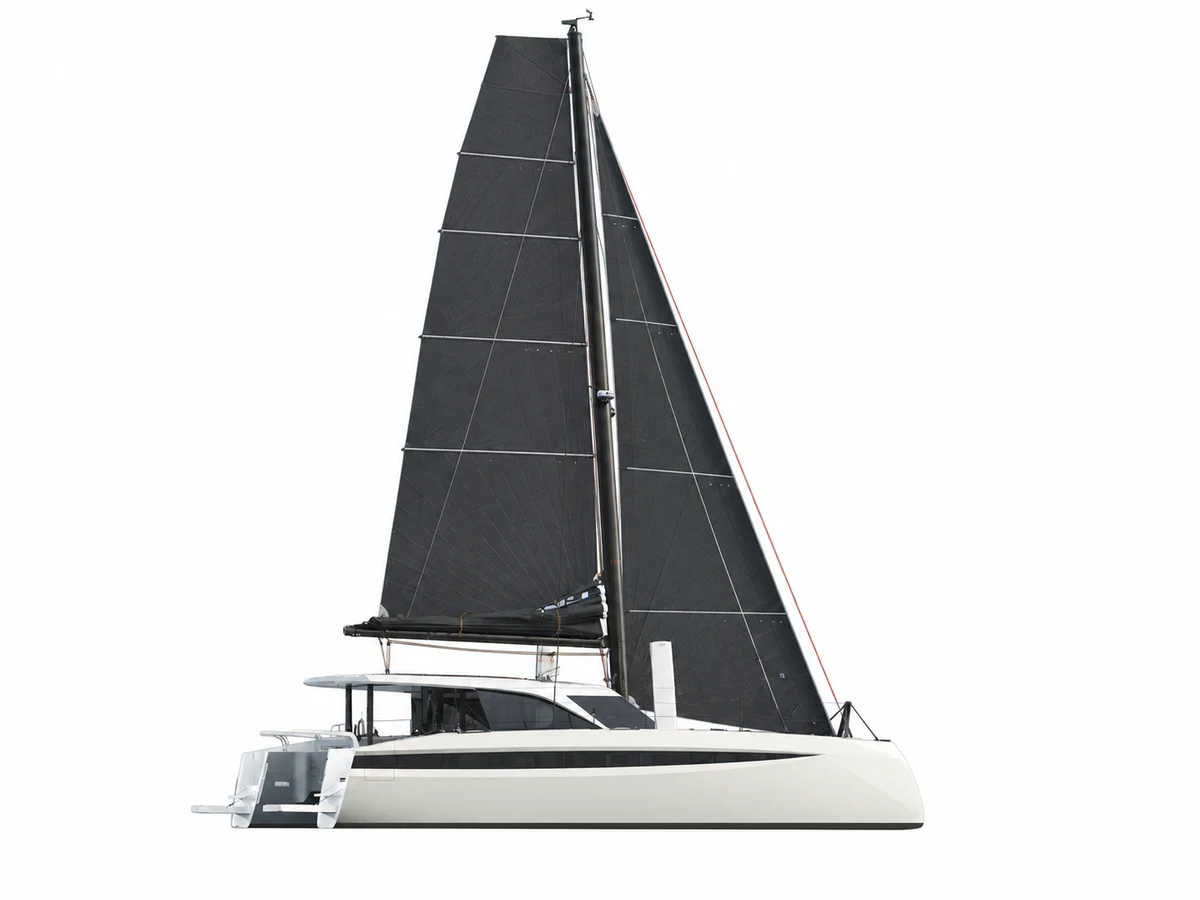
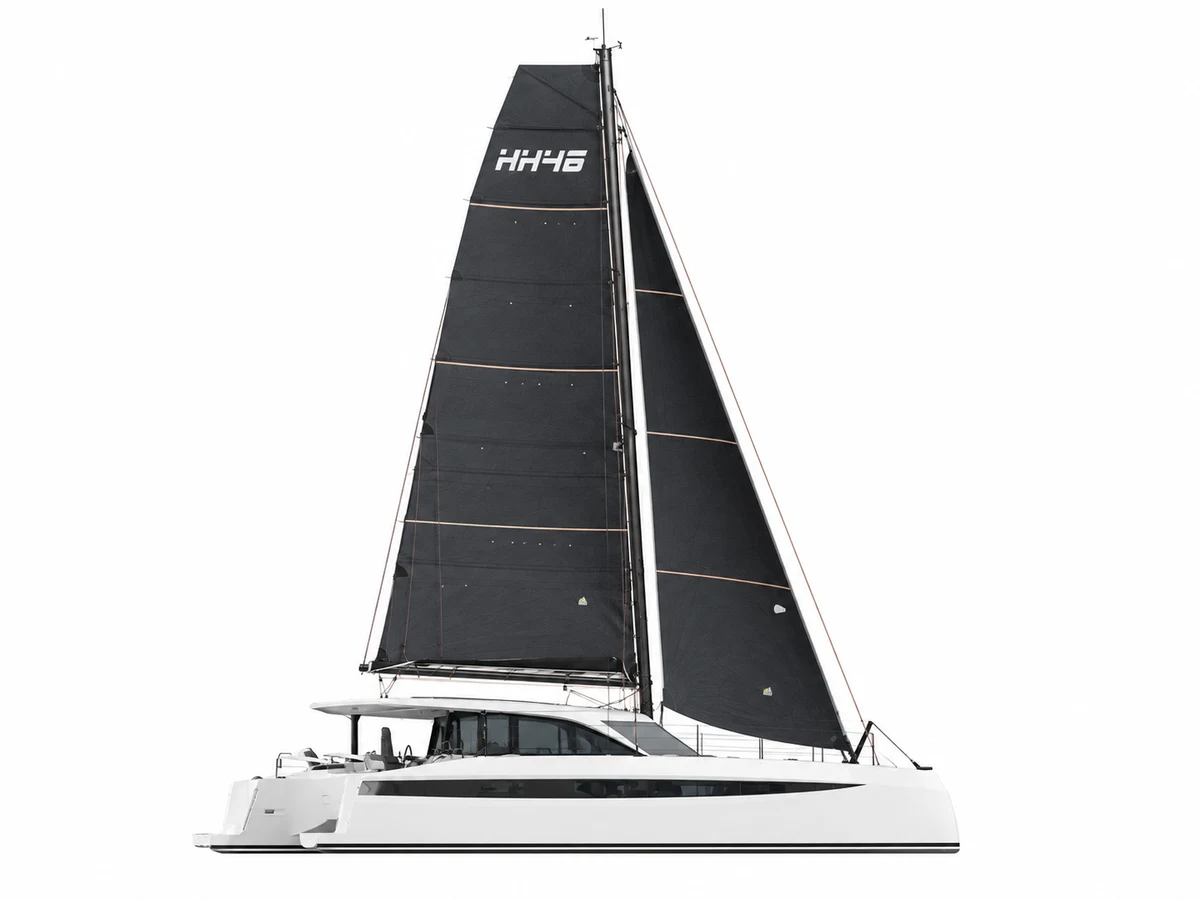
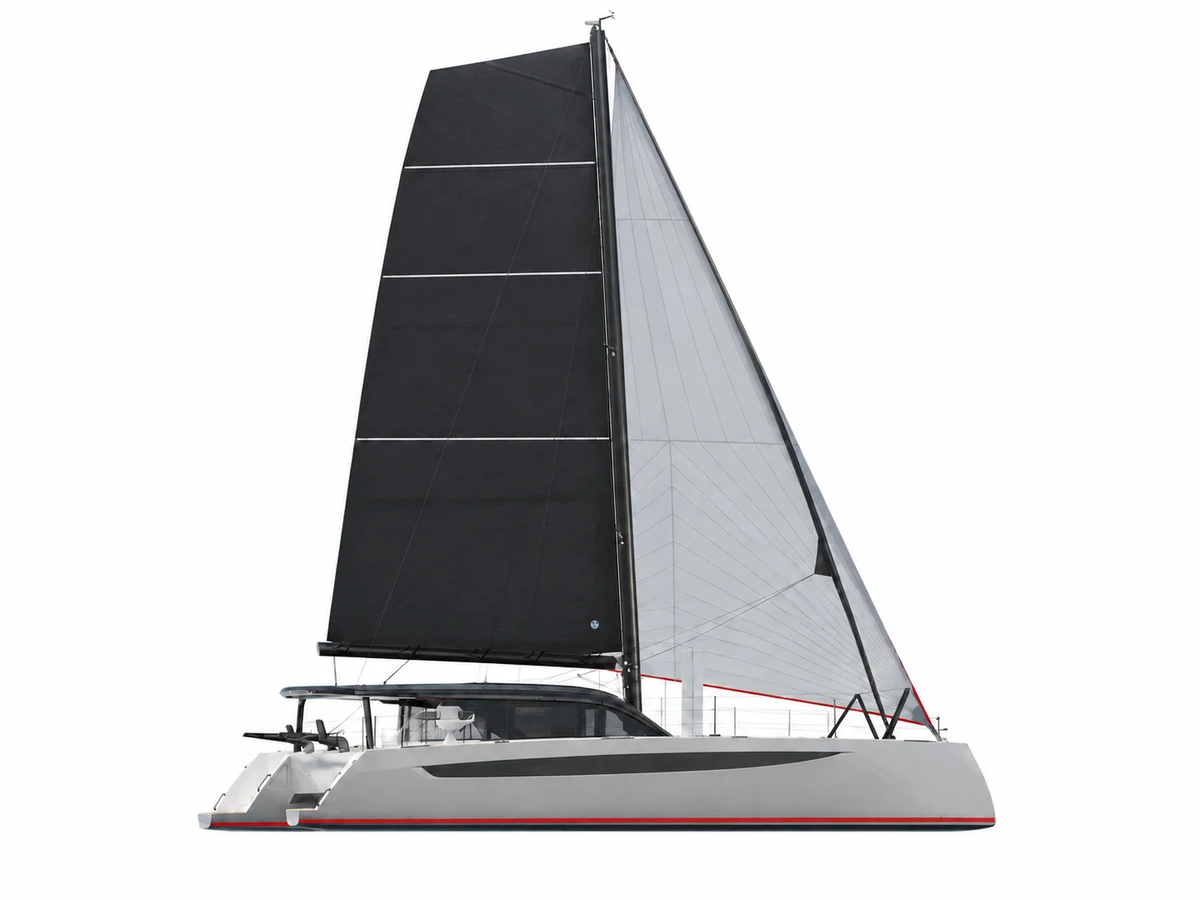
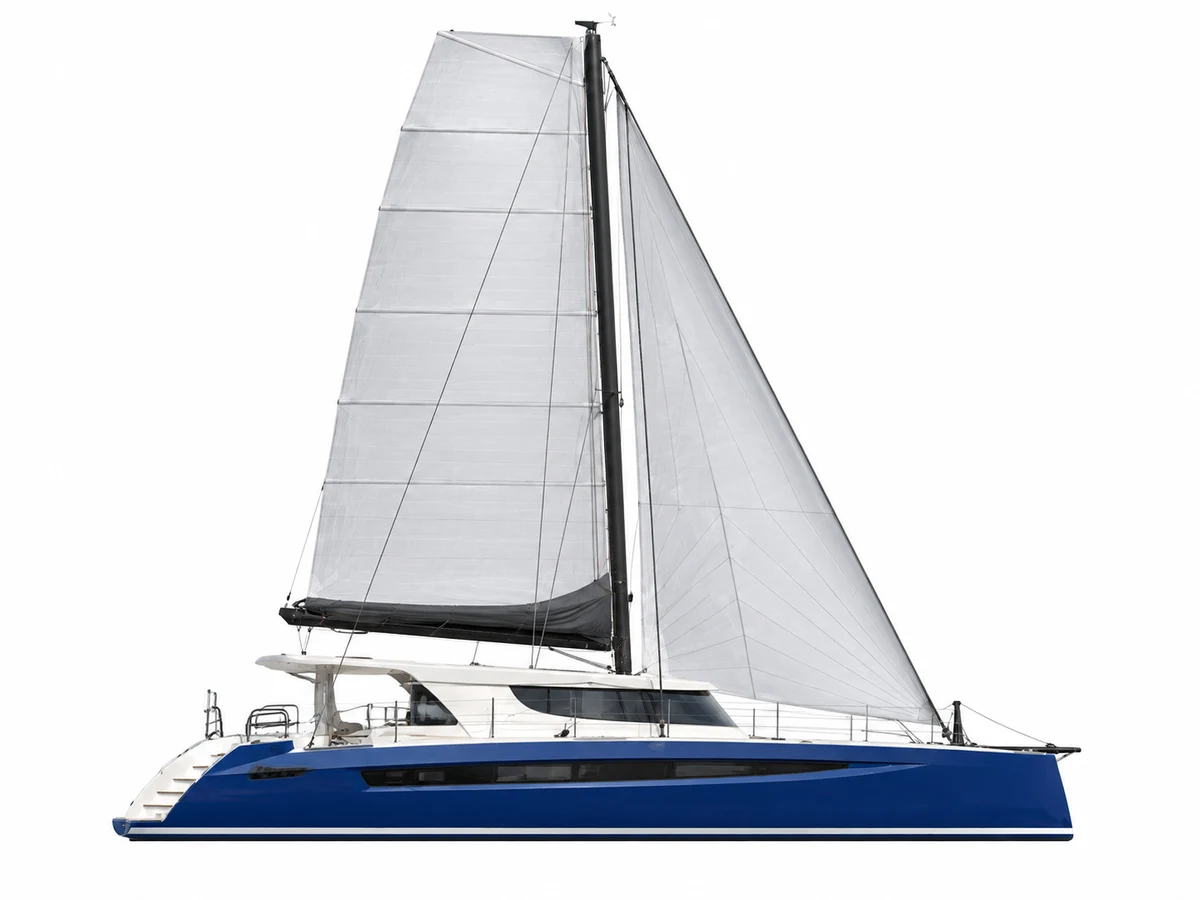
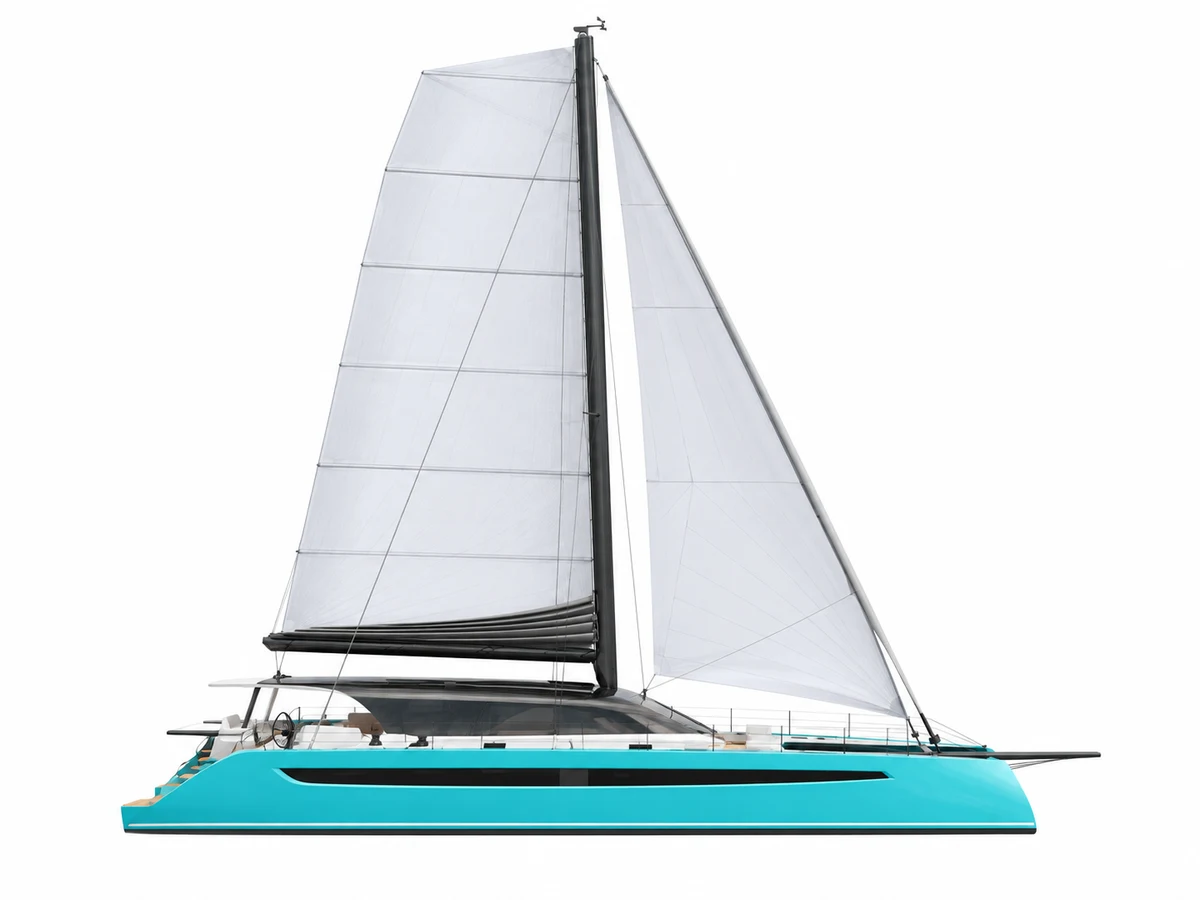
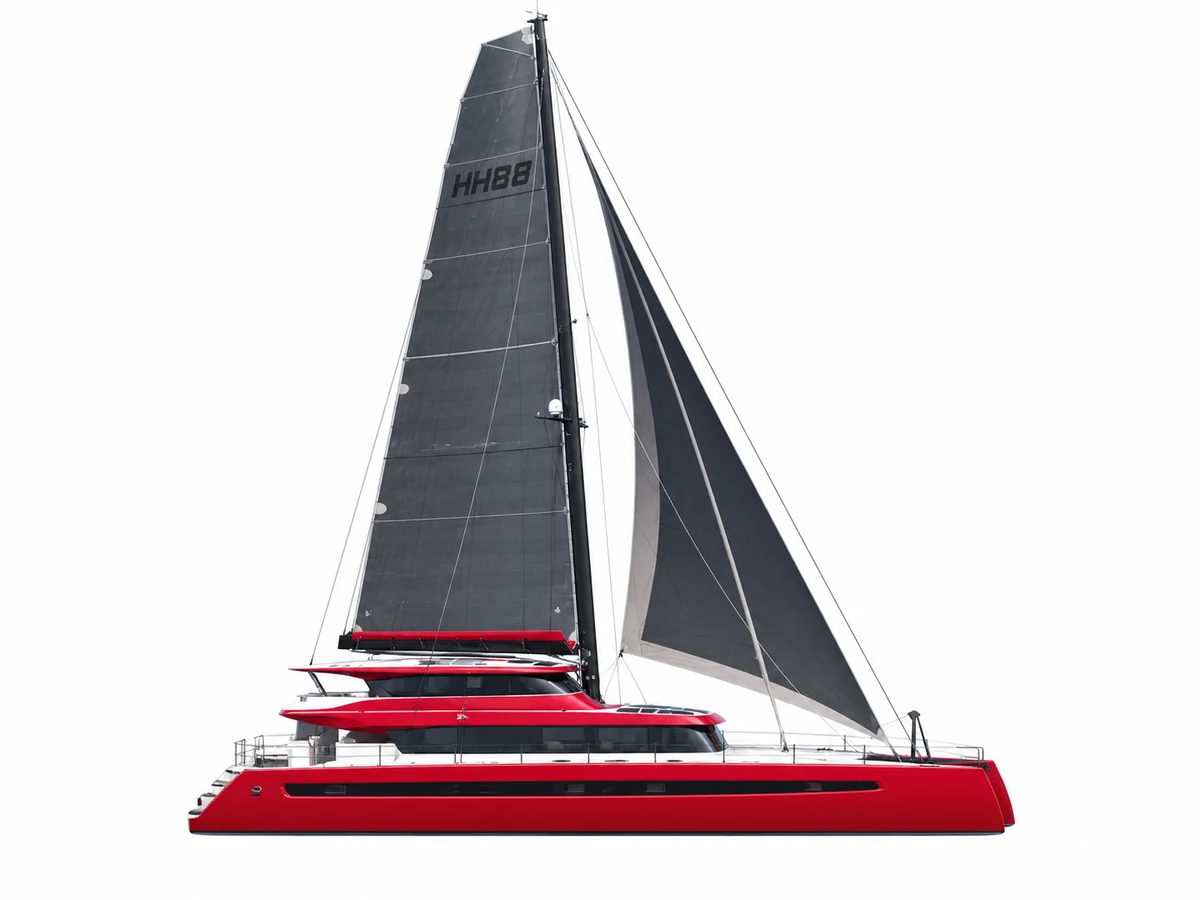
The HH52 is a delivered sailing catamaran developed from the HH50 hull moulds, yet its cabin plan, deck, interior and rig distinguish it as a separate model. Four versions frame the choice: full-carbon SC and SCF boats use daggerboards, while OC and OCF variants combine carbon and E-glass construction with mini-keels; SC and OC have aft helms, while SCF and OCF place the helm forward.
Accommodation can be arranged with two or three cabins, and a workshop can incorporate Pullman berths for occasional guests or passage use. Buyers may also choose a U-shaped or island galley; paired with the helm position, that decision shapes circulation and saloon space. Manufacturer renderings illustrate interior finishes and helm treatments, so they should be compared with the specification and photographs of an individual yacht.
On aft-helm versions, twin swing helms place steering at the cockpit edges, while SCF and OCF move the primary station to a central interior position beside the forward working pit and two watertight doors. Optional aft tiller chairs with push-button controls extend the forward-helm configurations’ steering choices. The HH52 measures 17.05 metres overall with a 7.44-metre beam; reference propulsion is twin Beta 38 hp diesels, with EcoDrive availability dependent on configuration.
Variant selection should begin with intended use rather than the model badge alone. Daggerboards and full-carbon construction distinguish SC and SCF, whereas OC and OCF mini-keels offer a different underwater arrangement; aft helms leave a larger saloon, while the forward helm places steering beside the working pit. CatamaranWorld recommends matching these distinctions to the yacht’s build specification, inventory and current condition.
HH52 accommodation layouts
Manufacturer general-arrangement drawings. Open a plan for a closer look.
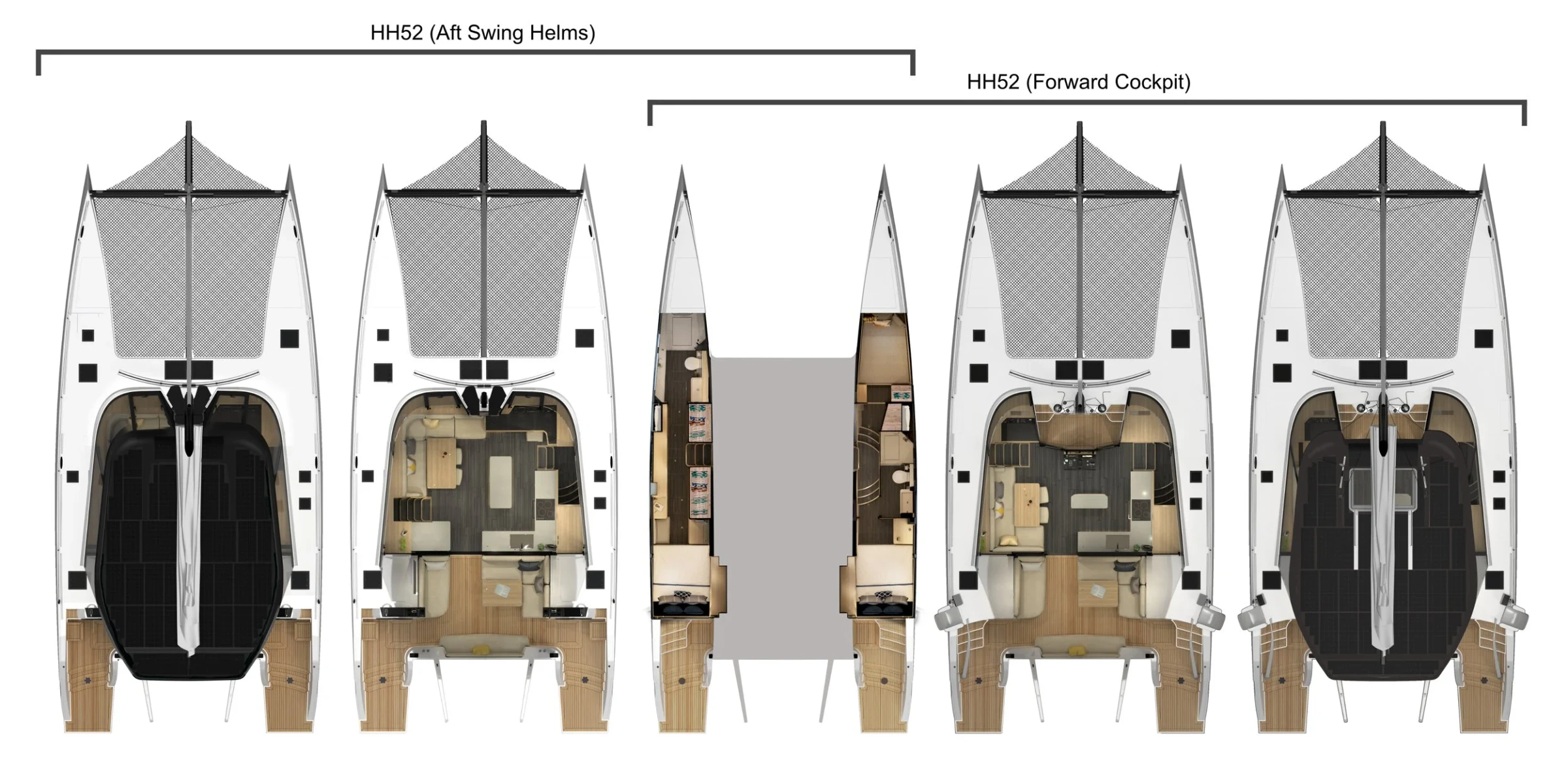
Official manufacturer reference arrangement; the individual yacht may have a different selected configuration.
Testimonials
“Steering from the aft tiller chairs”
In his Chesapeake Bay sea trial, Cruising World’s Herb McCormick especially enjoyed steering the HH52 from the test boat’s optional aft tiller chairs. Push-button sail controls were close at hand, while an enclosed forward helm opened onto a cockpit organized around the sail-handling lines and winches.
McCormick reported 10 knots on a close reach in 14 to 16 knots of wind, then boat speeds in the mid-teens after the crew set a reacher. He also relayed fellow judge Ralph Naranjo’s praise for the minimalist interior and exposed carbon-fiber construction details. The sailing results describe their optioned test boat.
“Forward-cockpit teamwork”
In her SAIL boat review, Lydia Mullan highlights the forward working cockpit on the HH52 she sailed. Full-sized doors beside the interior helm lead into the recessed space, where two people can work together. Deck-mounted sheaves allow flexible line routing to the winches, and a display gives sail handlers information while they work.
Mullan found the hull cabins light and airy and describes a standard three-cabin layout with the port hull devoted to the owner. During her test sail, she recorded hydrogeneration of 36 amps at 48 volts per shaft at 16.5 knots of boat speed. That measurement applies to the hybrid-equipped boat she sailed.
Model years & editions
Key milestones and configuration choices.
- 2022
HH52 announced
The builder announced the HH50 evolution with new helm choices and provision for EcoDrive. An announcement is separate from the first launch.
- 2025
First model launched
HH’s history records the first HH52 launch in 2025. Later reviews and walkthroughs document completed boats.
HH52 FAQs
How is the HH52 different from the HH50?
Although the models share hull molds, HH redesigned the cabin top, deck and interior, relocating the helms aft or centrally forward. A lower boom and revised rig increase sail area while freeing coachroof space for solar. An HH50 review is therefore background, not an exact HH52 equipment guide.
What do HH52 OC, OCF, SC and SCF mean?
OC versions combine E-glass and carbon construction with fixed mini-keels; SC versions use all-carbon construction and daggerboards. The F denotes a forward cockpit and central helm. Without F, the reference arrangement uses twin aft swing helms. Both construction and steering arrangement matter.
Should I choose the HH52’s forward helm or aft helms?
The forward arrangement concentrates line handling in a protected central cockpit and offers optional aft tiller chairs. The aft-helm version gives direct quarter views and leaves a larger saloon and galley. Try both movement patterns, including reefing, docking and access between inside and outside.
Can an HH52 have a workshop instead of a guest cabin?
Yes. HH offers two- or three-cabin arrangements and workshop or Pullman-berth options. Galley and aft-cockpit choices also vary. Compare complete layouts for your cruising programme rather than assuming every HH52 has the same sleeping and storage space.
Is EcoDrive fitted to every HH52?
The electrified SC reference includes EcoDrive and a 48 V electrical system, but HH also offers conventional diesel configurations. The public page describes several versions, so confirm the specific build schedule. Solar capacity, battery storage and electric drive must be assessed together.
What tender does HH recommend for the HH52?
The manufacturer recommends a 12-foot tender and offers delivery with a compatible tender package. Confirm the installed davit limit and the total ready-to-launch weight, including engine and gear. Check that boarding, stern access and the securing arrangement work with your chosen boat.
Considering an HH52?
Talk through layouts, equipment, ownership costs and your cruising plans with a dedicated catamaran specialist.