Fountaine Pajot FP55
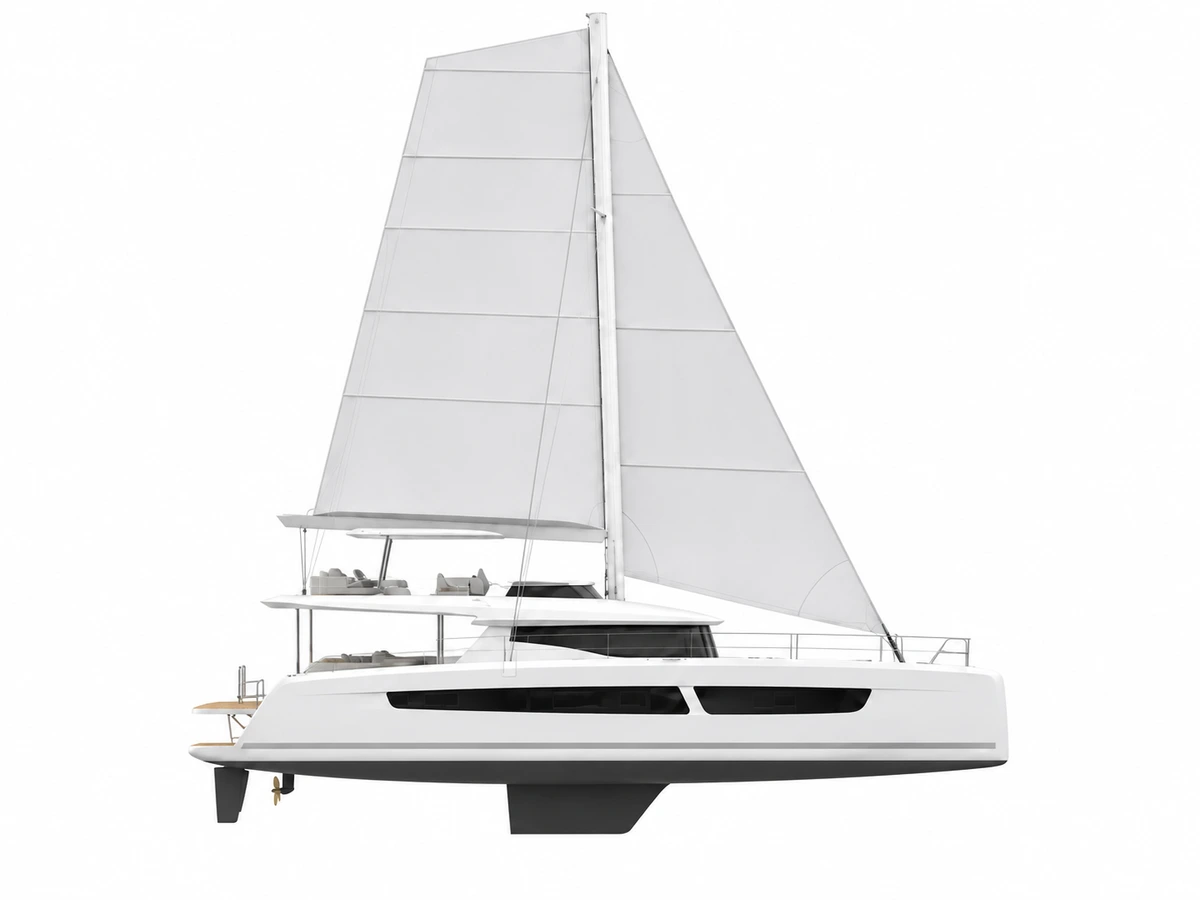
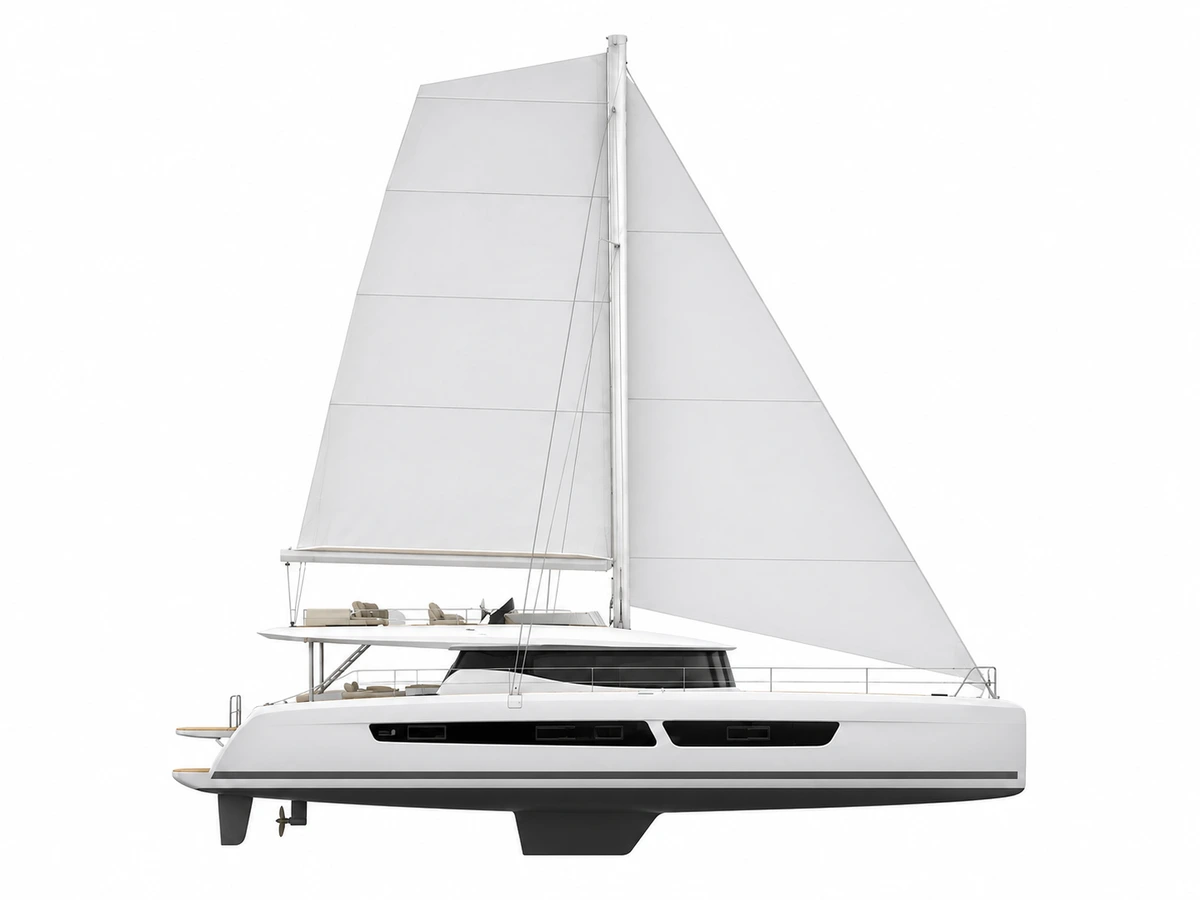
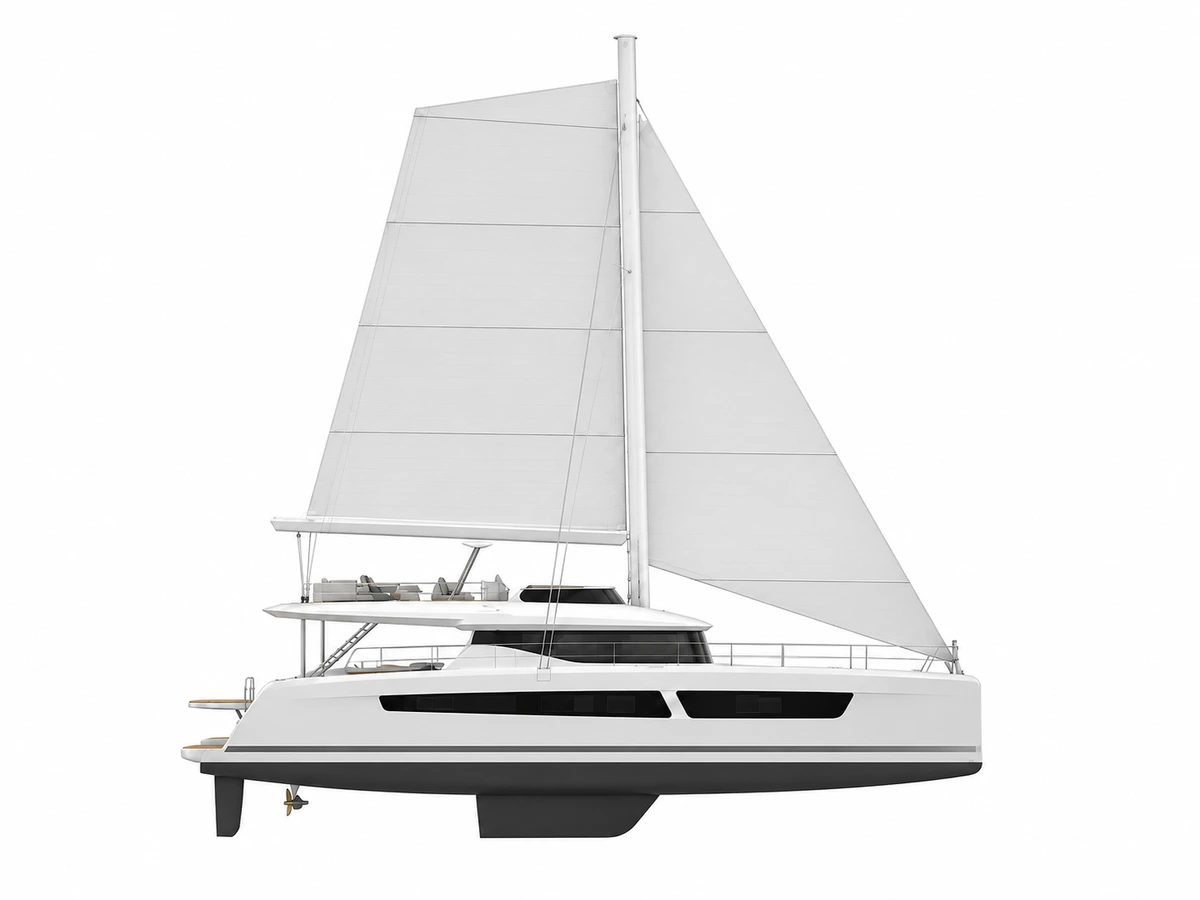
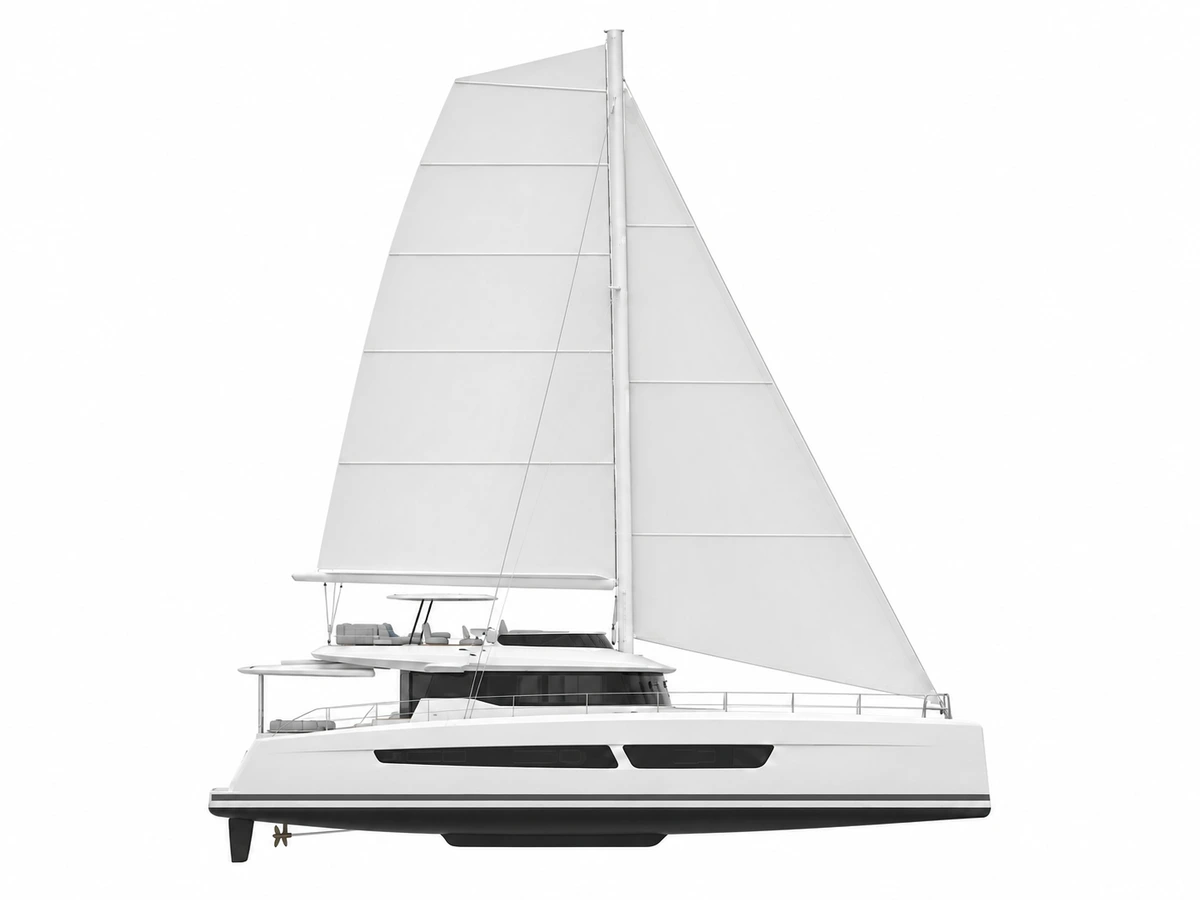
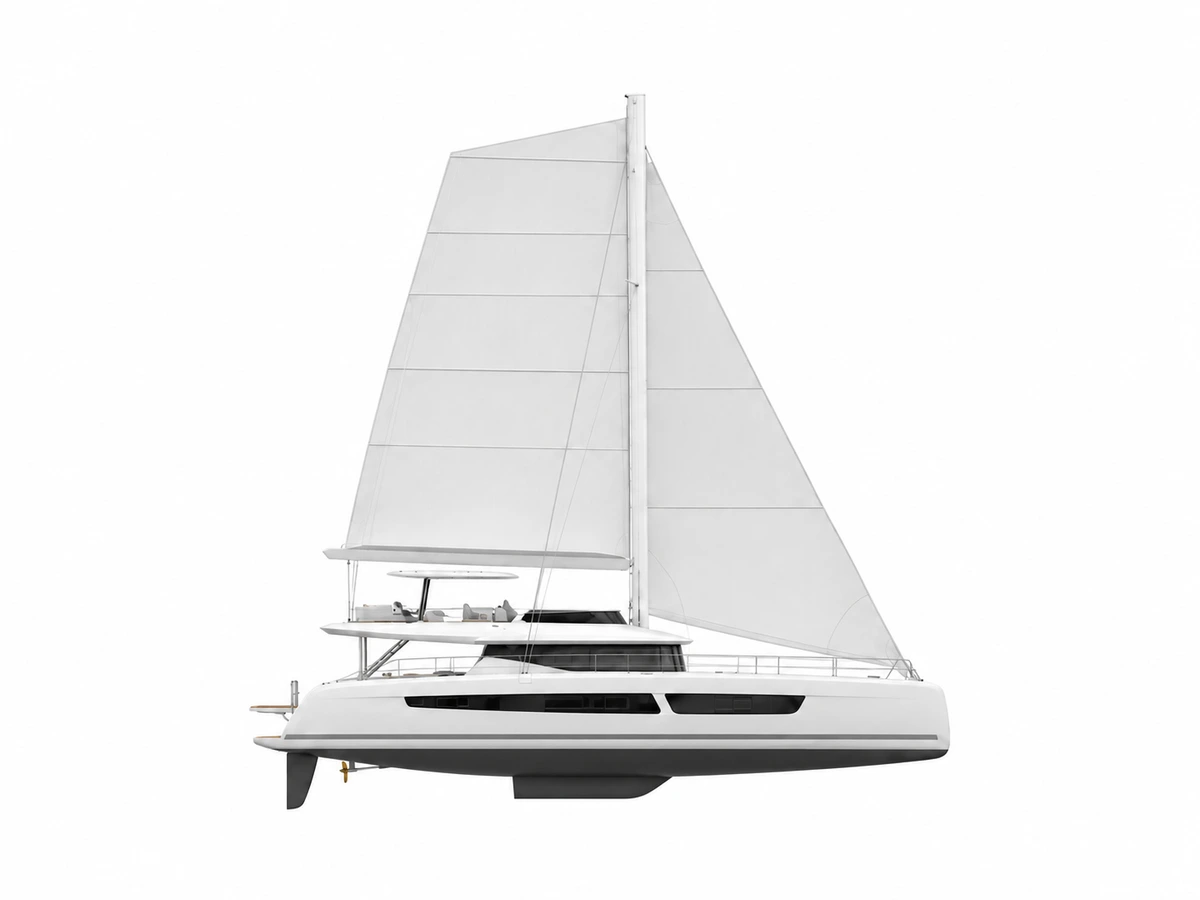
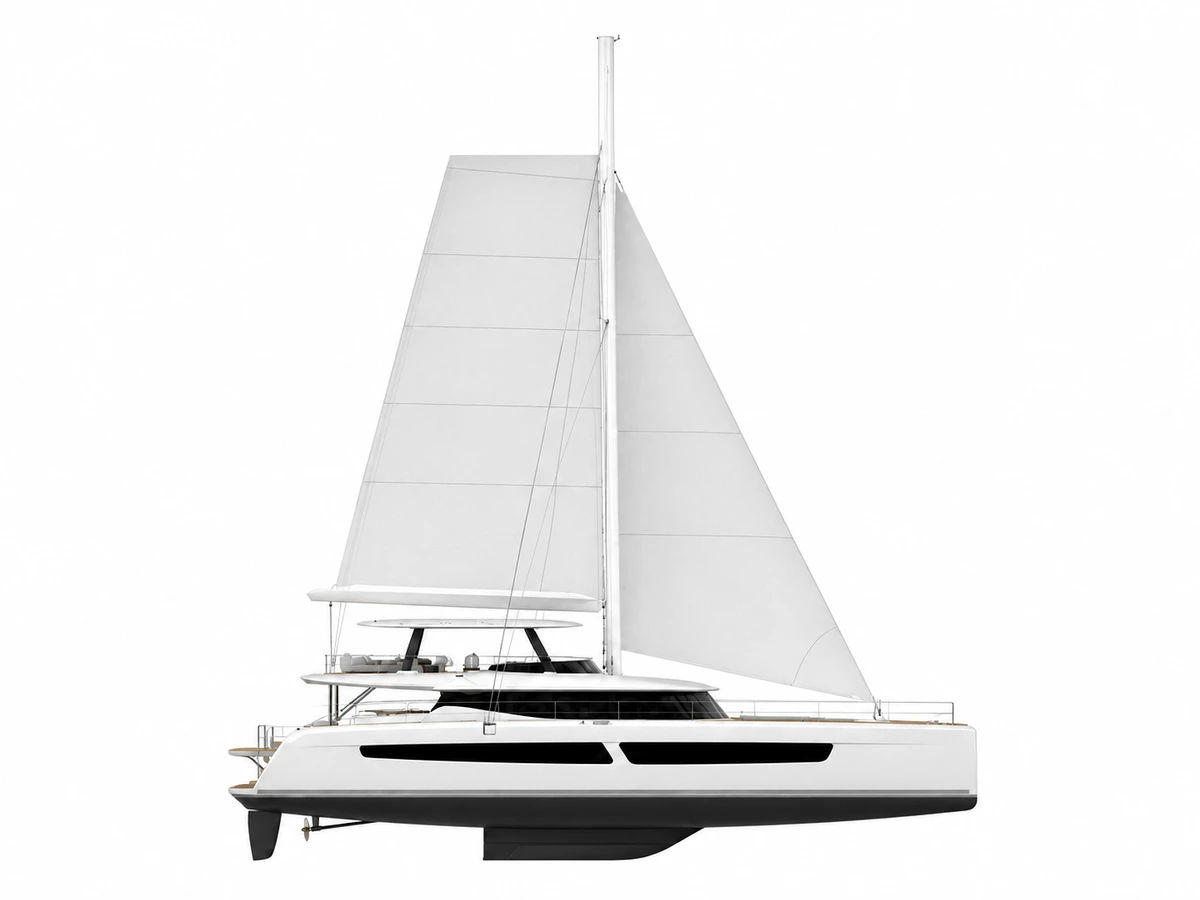
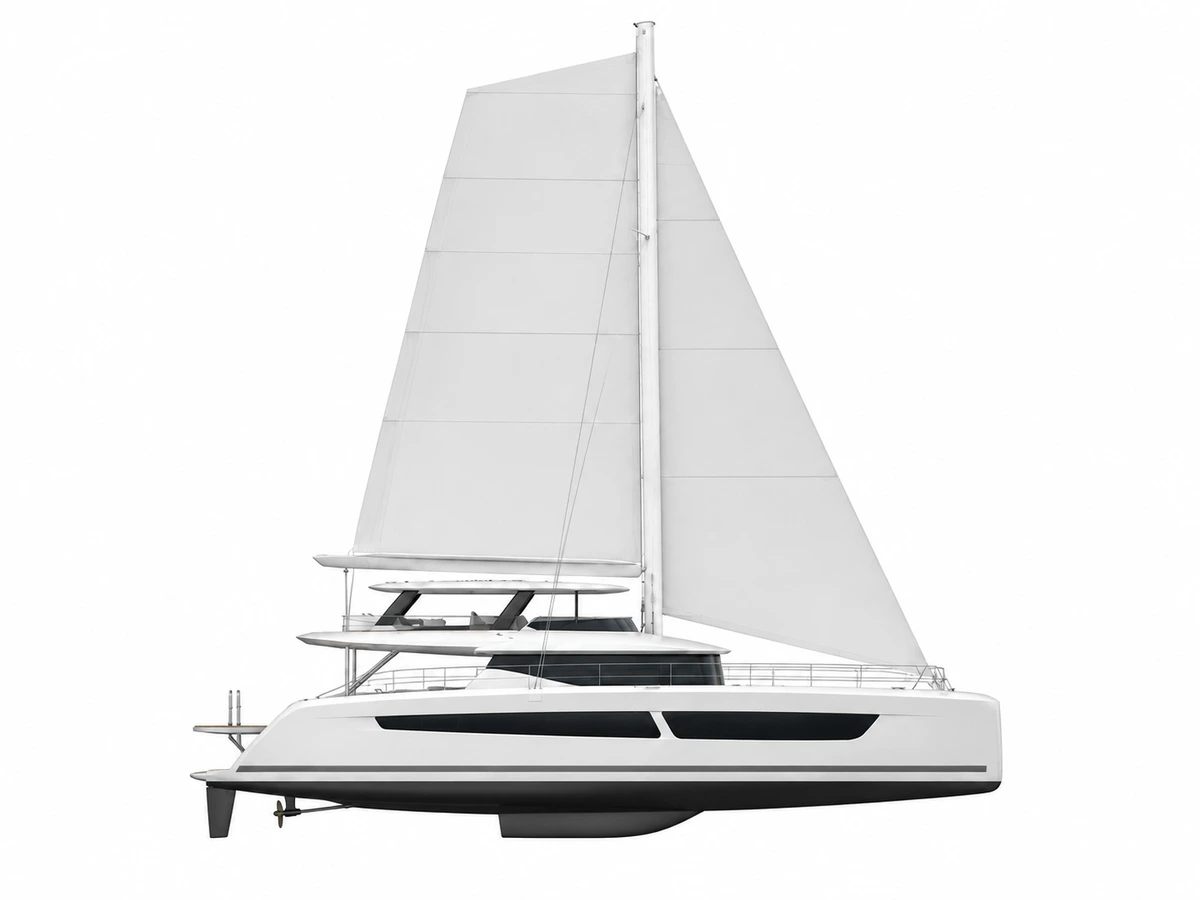
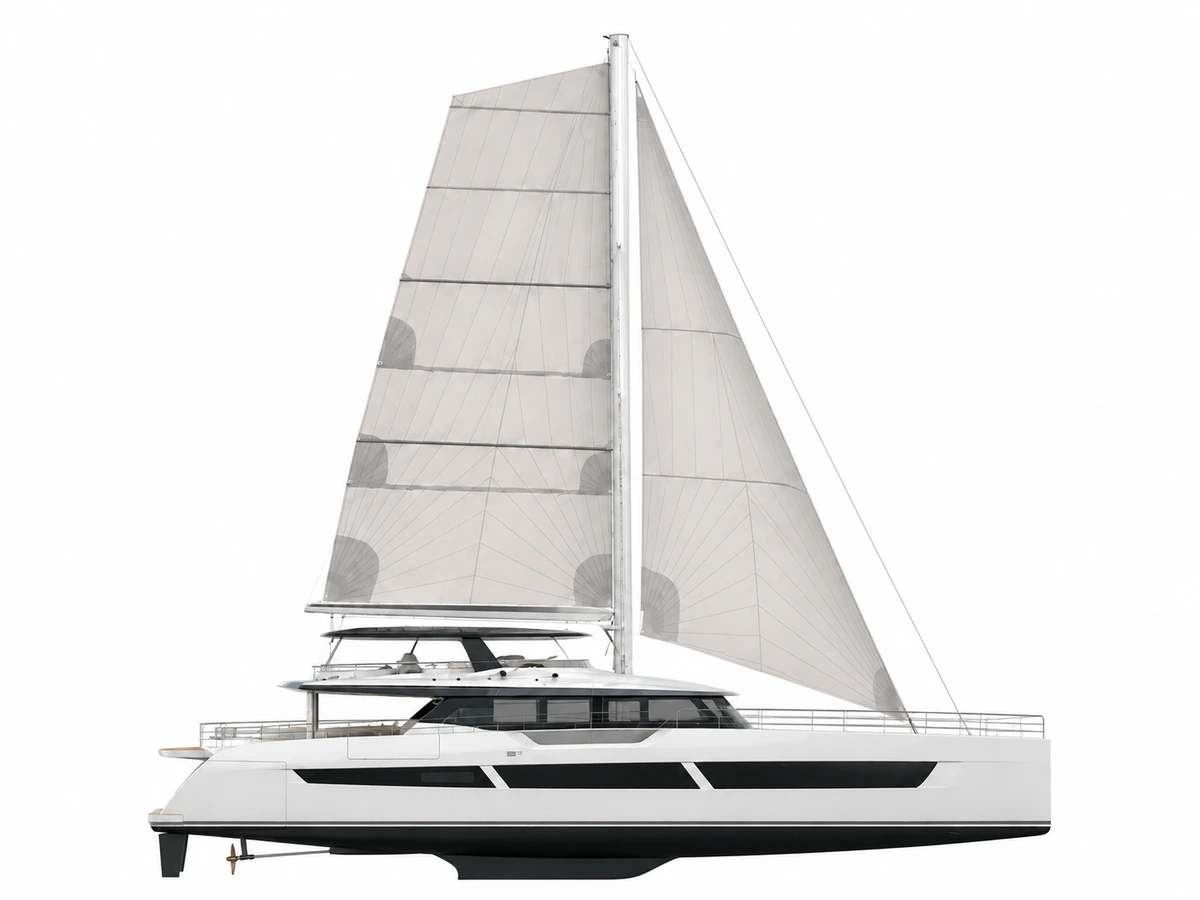
Manufacturer design renderings and arrangement drawings. Images: Fountaine Pajot.
Official animated design tour, not an onboard walkthrough.
About the Fountaine Pajot FP55
The Fountaine Pajot FP55 is a sailing catamaran and the first flybridge model in its range. A forward saloon door opens directly to the bow cockpit, while the flybridge and aft cockpit provide additional gathering areas. That separation supports extended cruising by allowing different groups to use distinct parts of the boat instead of concentrating every activity around a single cockpit.
Accommodation choices shift the balance between private suites and guest capacity. Maestro combines an owner’s suite with four double guest cabins, while Double Maestro trades some guest space for a second suite; the charter plan instead maximizes berths with up to six double cabins. Every version also includes two separate crew cabins with private bathrooms, making crew separation a constant rather than a feature reserved for the charter arrangement.
The rig uses a mainsail and genoa, with twin diesel engines serving as the standard auxiliary propulsion and higher-output diesels available as an option. ODSea+ is a separate hybrid-electric configuration with its own motor, generator, battery and hydrogeneration specification. This distinction matters because charging routines and energy management depend on the package fitted, so hybrid equipment should not be assumed on every FP55.
Buyers comparing the FP55 with the Fountaine Pajot FP51 should focus on how they want shared space organized: the FP55 emphasizes a flybridge, direct saloon-to-bow access and separate crew quarters, while the FP51 centers on a connected cockpit-saloon. On CatamaranWorld, compare actual FP55 inventory by Maestro, Double Maestro or charter layout, then decide whether its more separated circulation suits the intended mix of owners, guests and crew.
Fountaine Pajot FP55 accommodation layouts
Manufacturer general-arrangement drawings. Open a plan for a closer look.
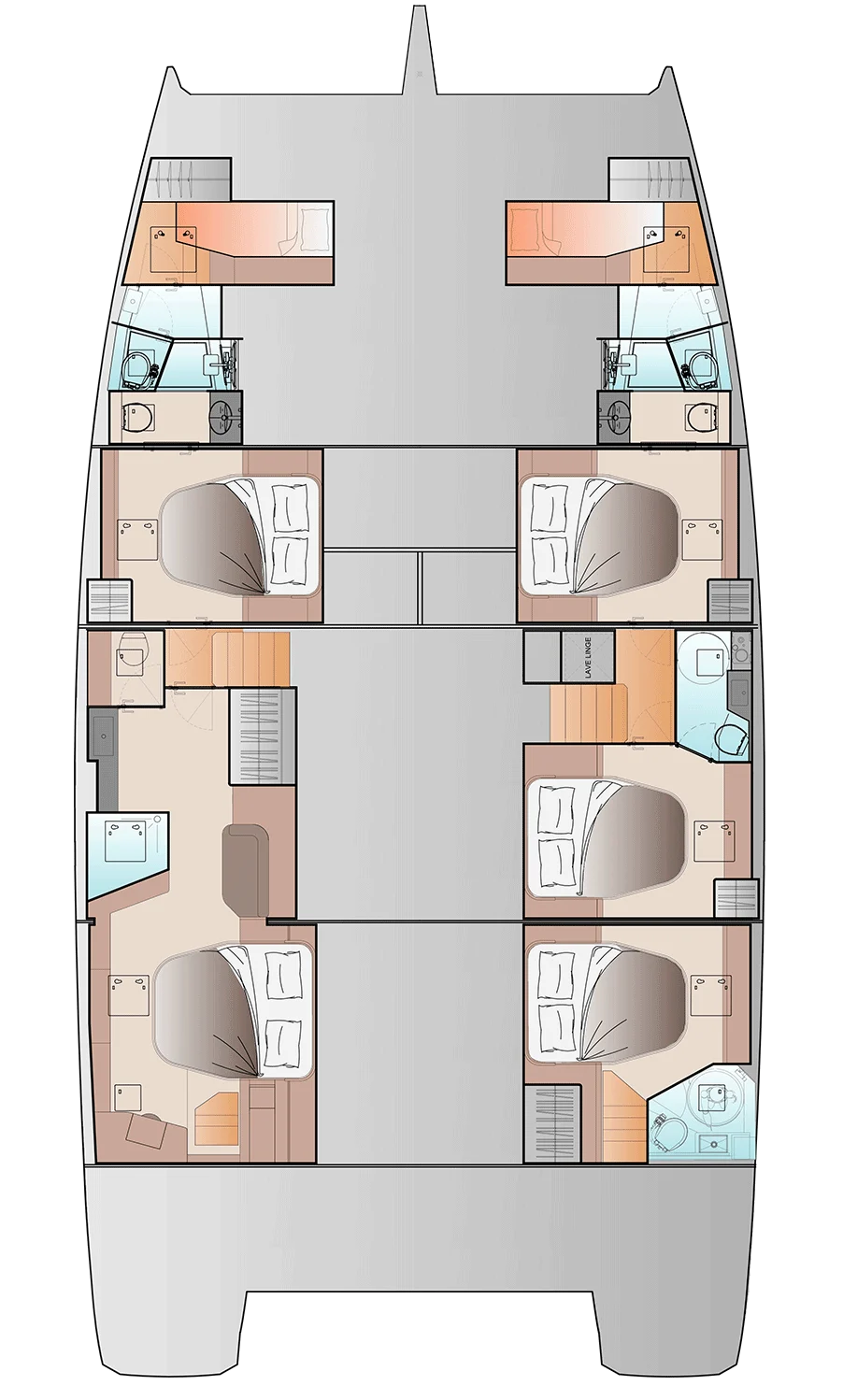
Official manufacturer arrangement. Compare cabin allocation, galley position and circulation for this configuration.
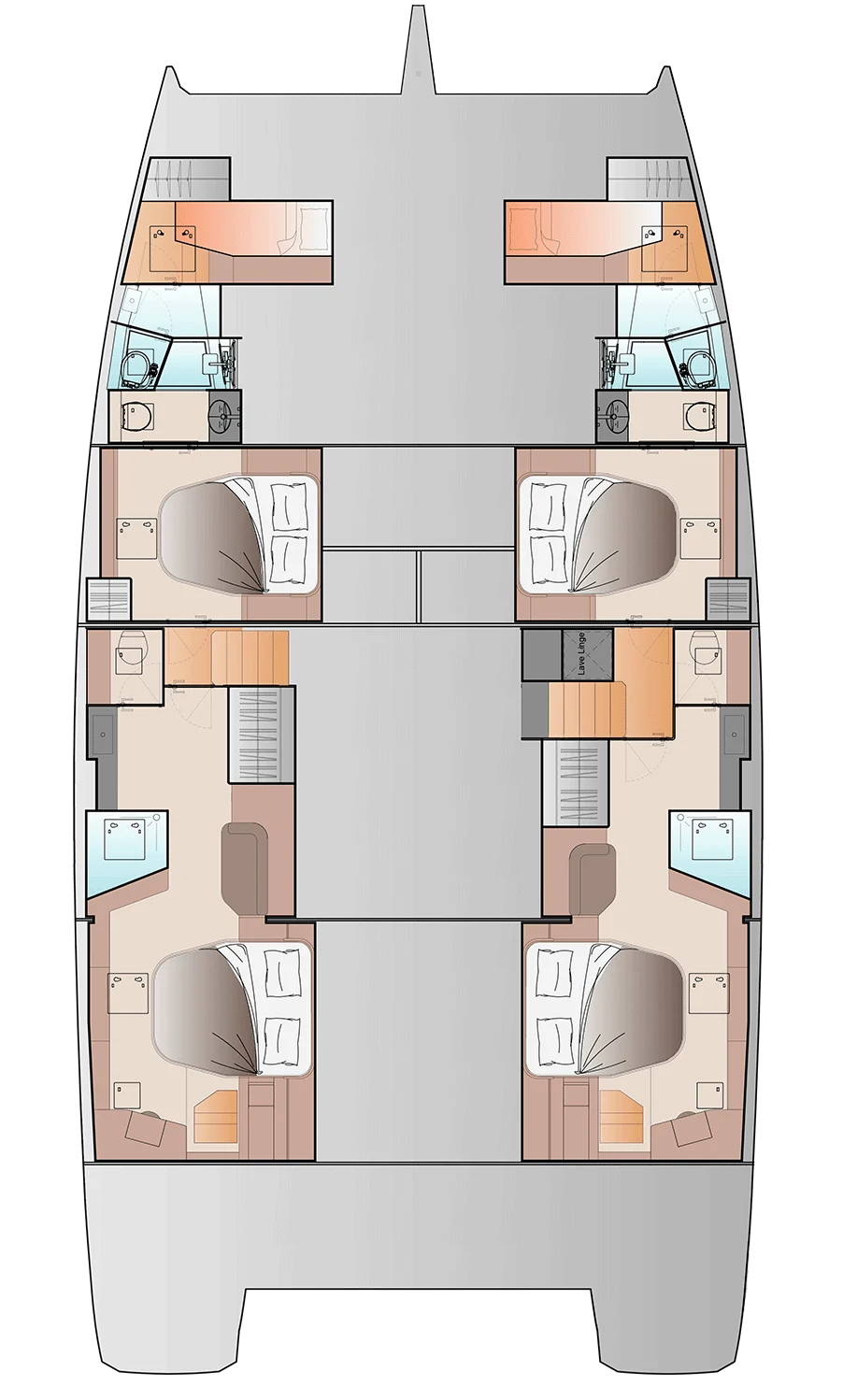
Official manufacturer arrangement. Compare cabin allocation, galley position and circulation for this configuration.
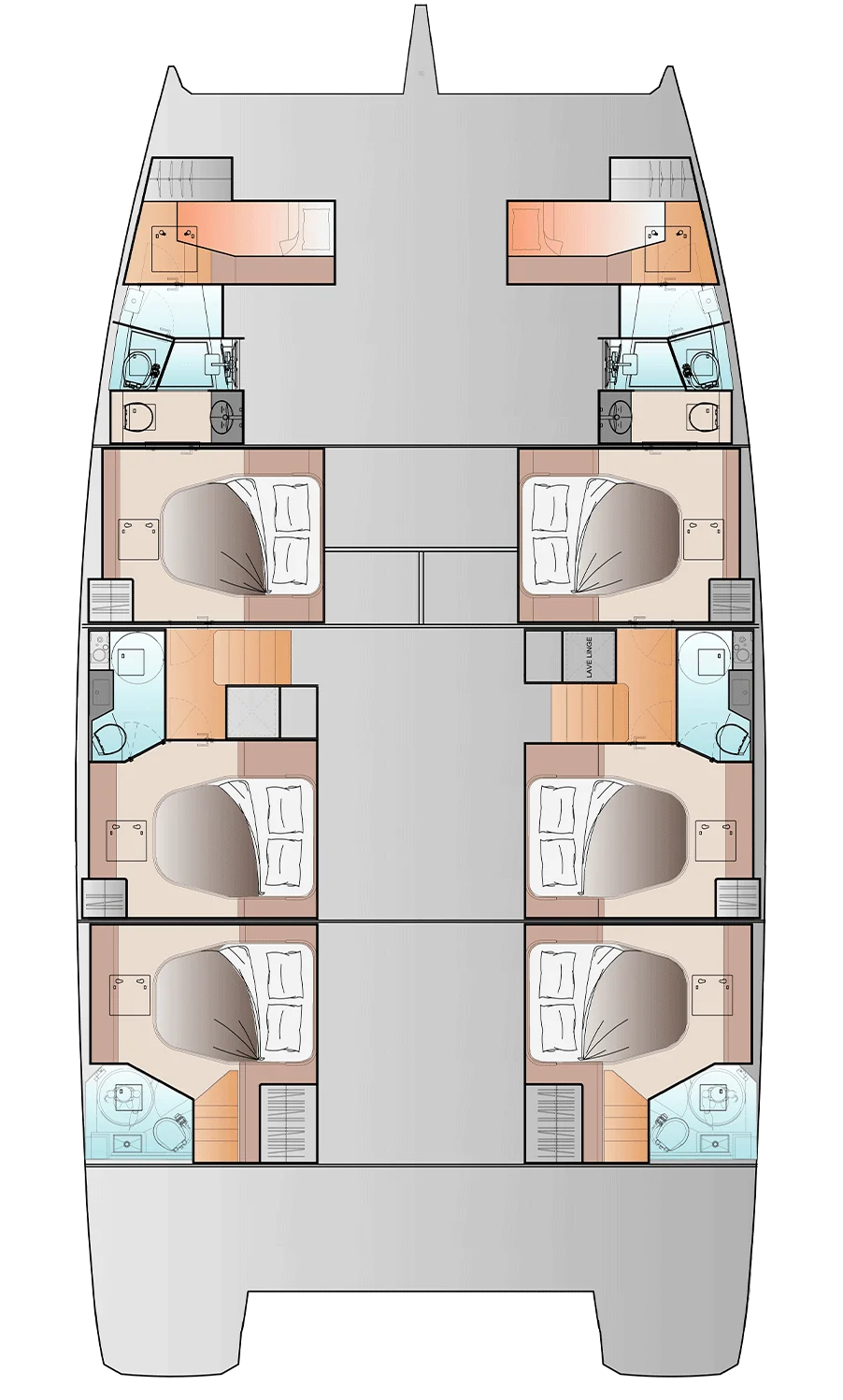
Official manufacturer arrangement. Compare cabin allocation, galley position and circulation for this configuration.
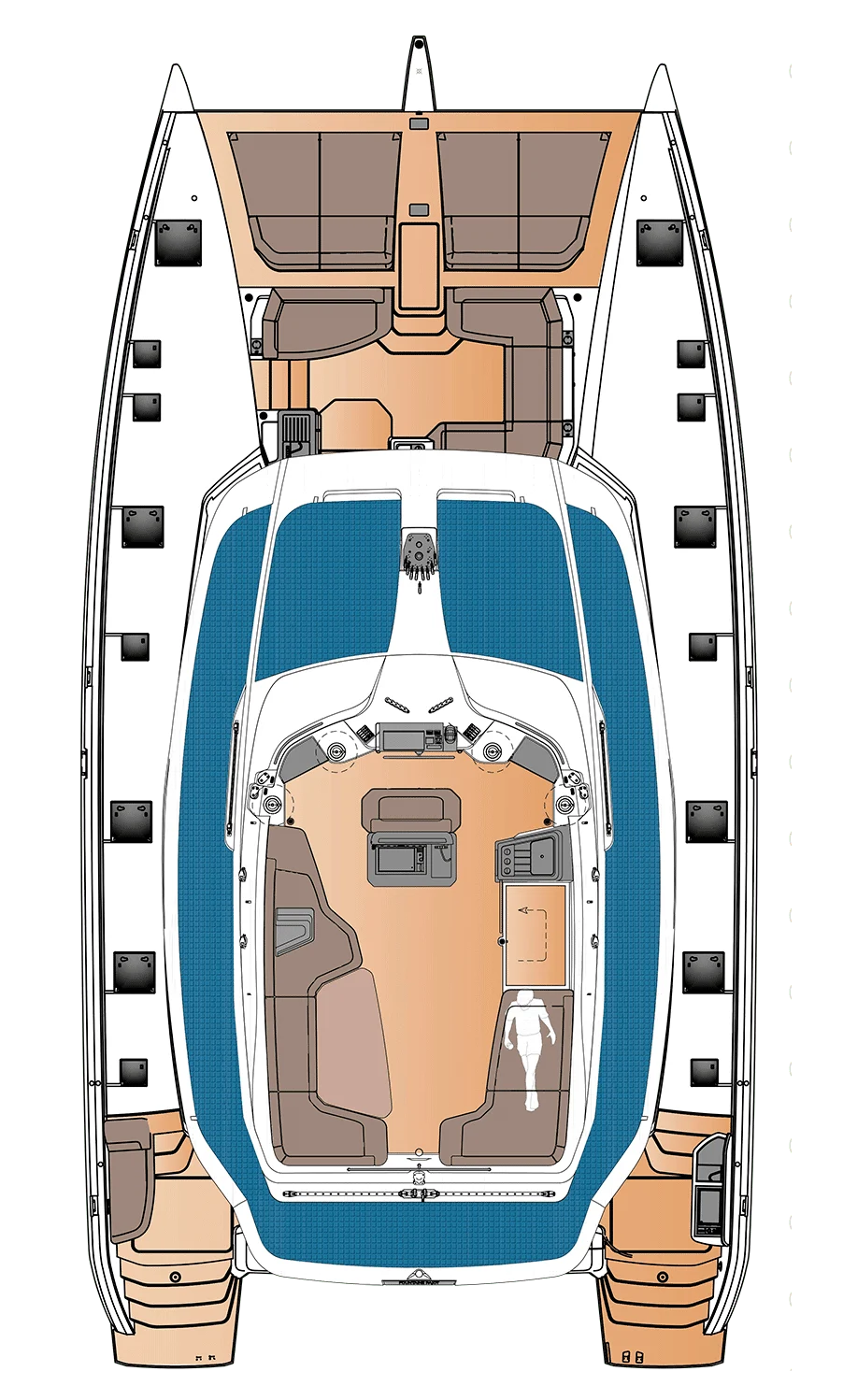
Official manufacturer arrangement. Compare cabin allocation, galley position and circulation for this configuration.
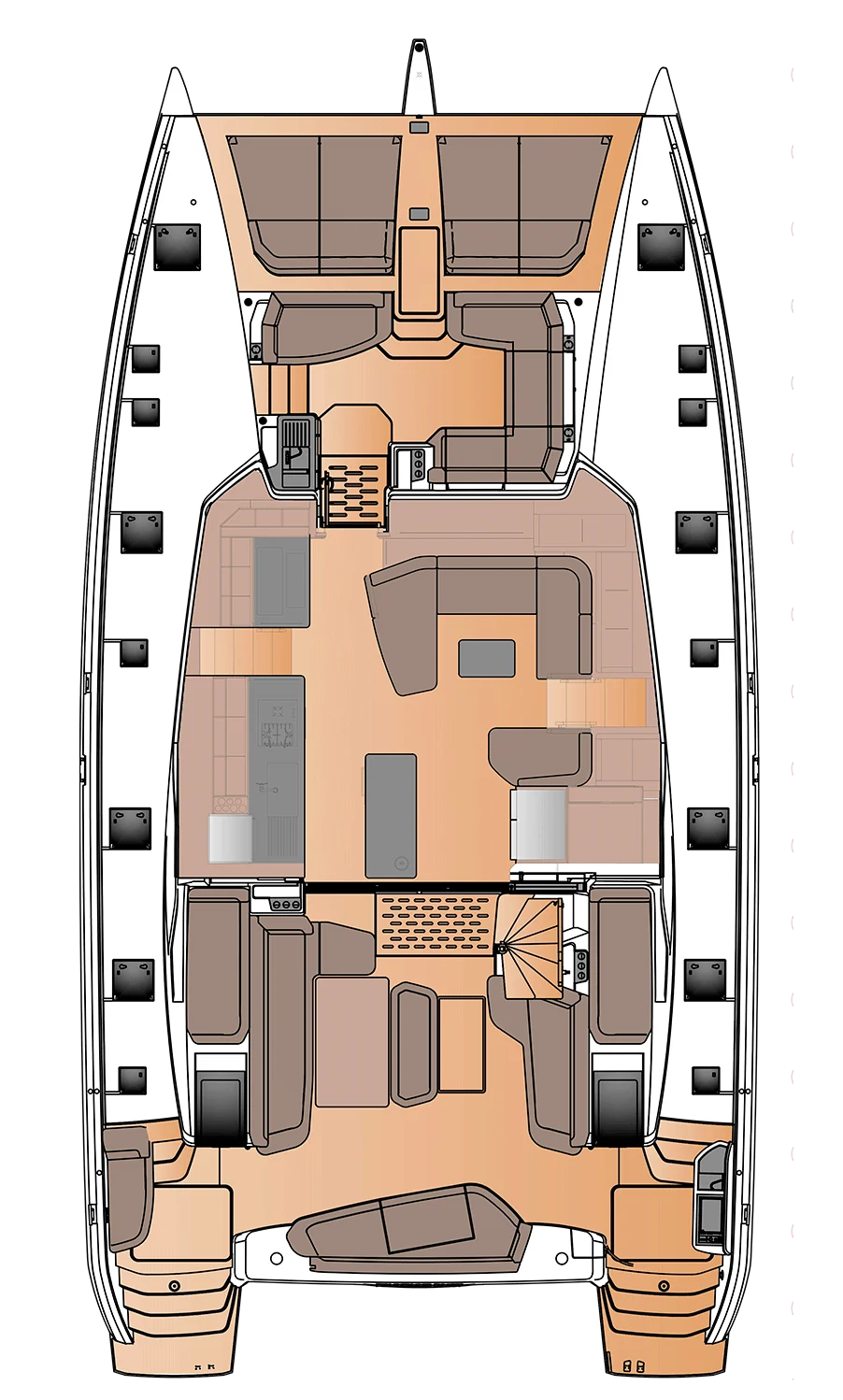
Official manufacturer arrangement. Compare cabin allocation, galley position and circulation for this configuration.
Testimonials
“Gathering places from bow to flybridge”
In his FP55 sea trial, Jean-Christophe Guillaumin describes gathering spaces in the aft cockpit, on the flybridge and in the forward cockpit. A door connects the saloon directly to the forward cockpit.
The trial boat was hull No. 1 in Maestro configuration, with an owner’s suite accessible from both the cockpit and the interior. Guillaumin noted good visibility from the flybridge and sail controls grouped near the helm; in light wind, the boat completed a tack and regained its speed on the new course.
“Six doubles or two suites”
In his Cannes Yachting Festival launch preview, Toby Hodges identifies the FP55 as the smallest full-flybridge model in Fountaine Pajot’s range. He notes its forward cockpit with direct saloon access and lists 6.3 kW of solar power.
Hodges describes layouts with up to six identical double cabins or a Double Maestro version with a large suite in each hull. His account also places a double cabin ahead of the suites and two independent en-suite crew cabins farther forward in the Double Maestro arrangement.
Model years & editions
Key milestones and configuration choices.
- 2026
La Rochelle unveiling
The manufacturer’s July 2026 event report records this model’s unveiling at its Open Days.
Fountaine Pajot FP55 FAQs
How many guest cabins does the FP55 offer?
Maestro combines an owner suite with four guest cabins. Double Maestro provides two suites and two guest cabins, while the charter plan has six double cabins. These are distinct accommodation choices.
Are the FP55 crew cabins included in the guest-cabin count?
No. The manufacturer describes two independent crew cabins, each with its own bathroom, separately from the guest arrangements. Review access routes and the final plan when assessing privacy and onboard service.
Can you reach the FP55 forward cockpit through the saloon?
Yes. The design includes a direct forward door, creating another route between indoor and outdoor spaces. Check door clearance, weather protection and movement around the galley in the selected layout.
Can the FP55 run air conditioning without its generator?
The builder describes that capability with the appropriate energy installation and up to 6,300 W of solar. Actual duration depends on battery capacity, weather and cooling load; request a realistic consumption calculation.
What engine options are listed for the FP55?
The diesel reference is twin 80 hp engines, with twin 110 hp optional. Confirm the propulsion package and charging arrangement for the individual hull, especially when comparing hybrid-equipped boats.
How large is the FP55 for marina planning?
Published hull length is 17.35 m, beam 8.80 m and draft 1.85 m. Ask for complete overall dimensions, including deployed platforms and projections, rather than booking from the model number.
Considering a Fountaine Pajot FP55?
Talk through layouts, equipment, ownership costs and your cruising plans with a dedicated catamaran specialist.