
2024 Excess 14
Manufacturer video; configurations and optional equipment may vary.
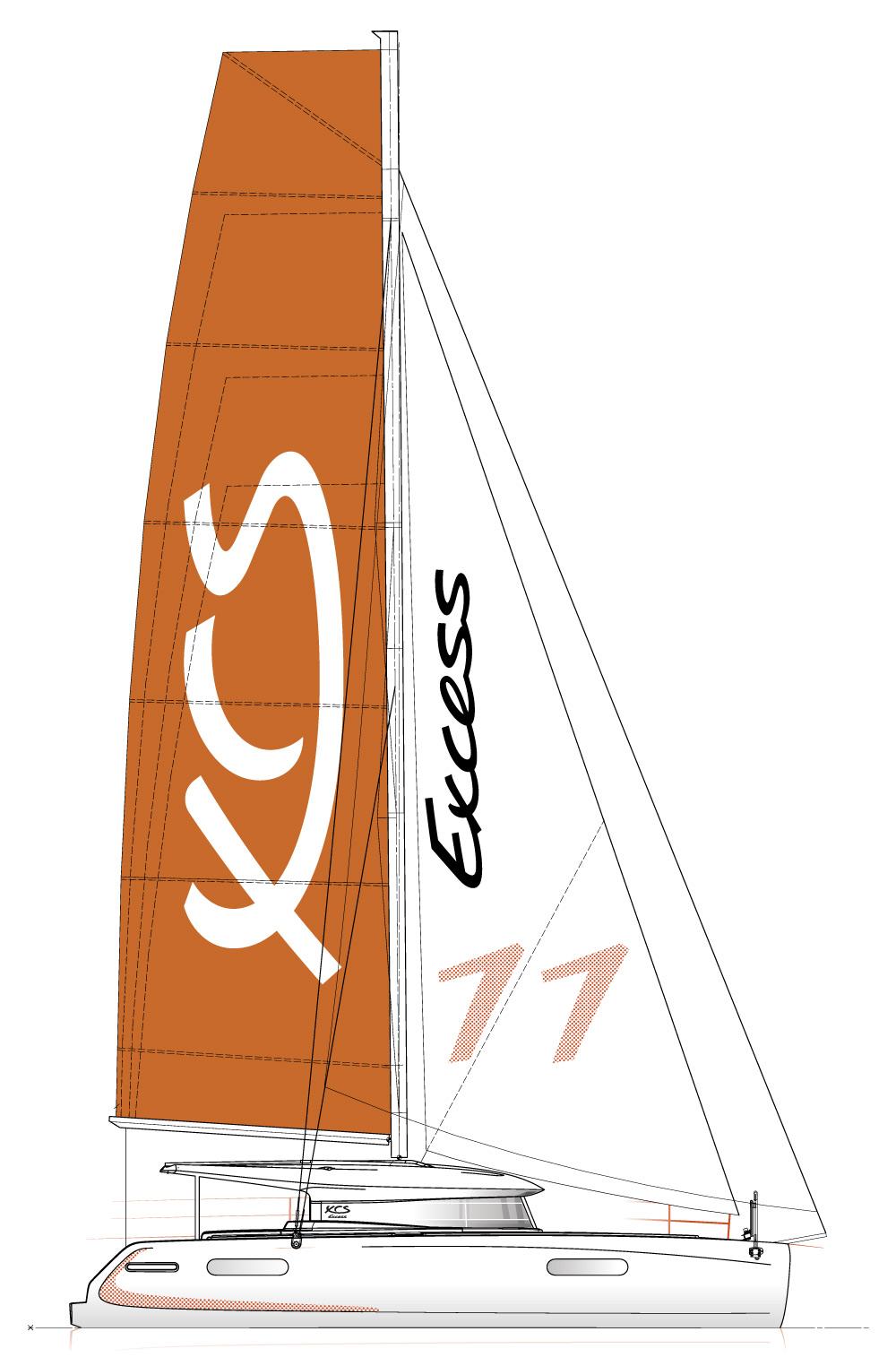
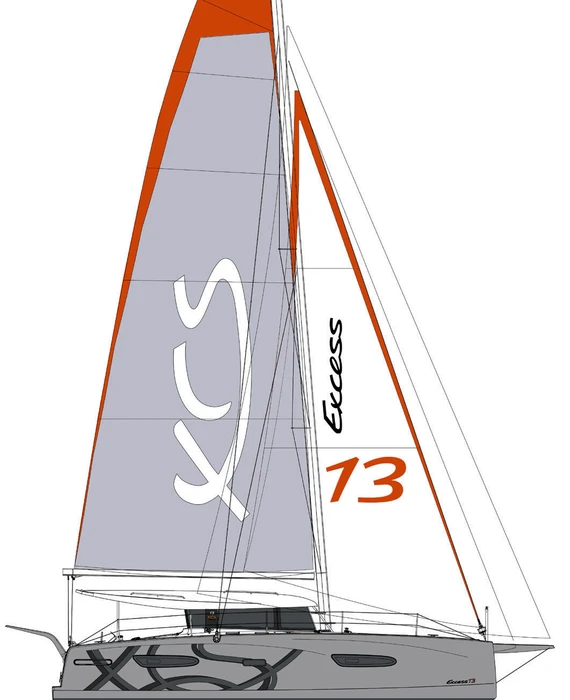
The Excess 14 is the largest of these three models, measuring 13.97 metres overall with a 7.87-metre beam and a listed light displacement of 12,800 kg. Its exterior incorporates an aft-set coachroof, forward-stepped mast, inverted and inclined bows, exposed forefoot and standard composite bowsprit.
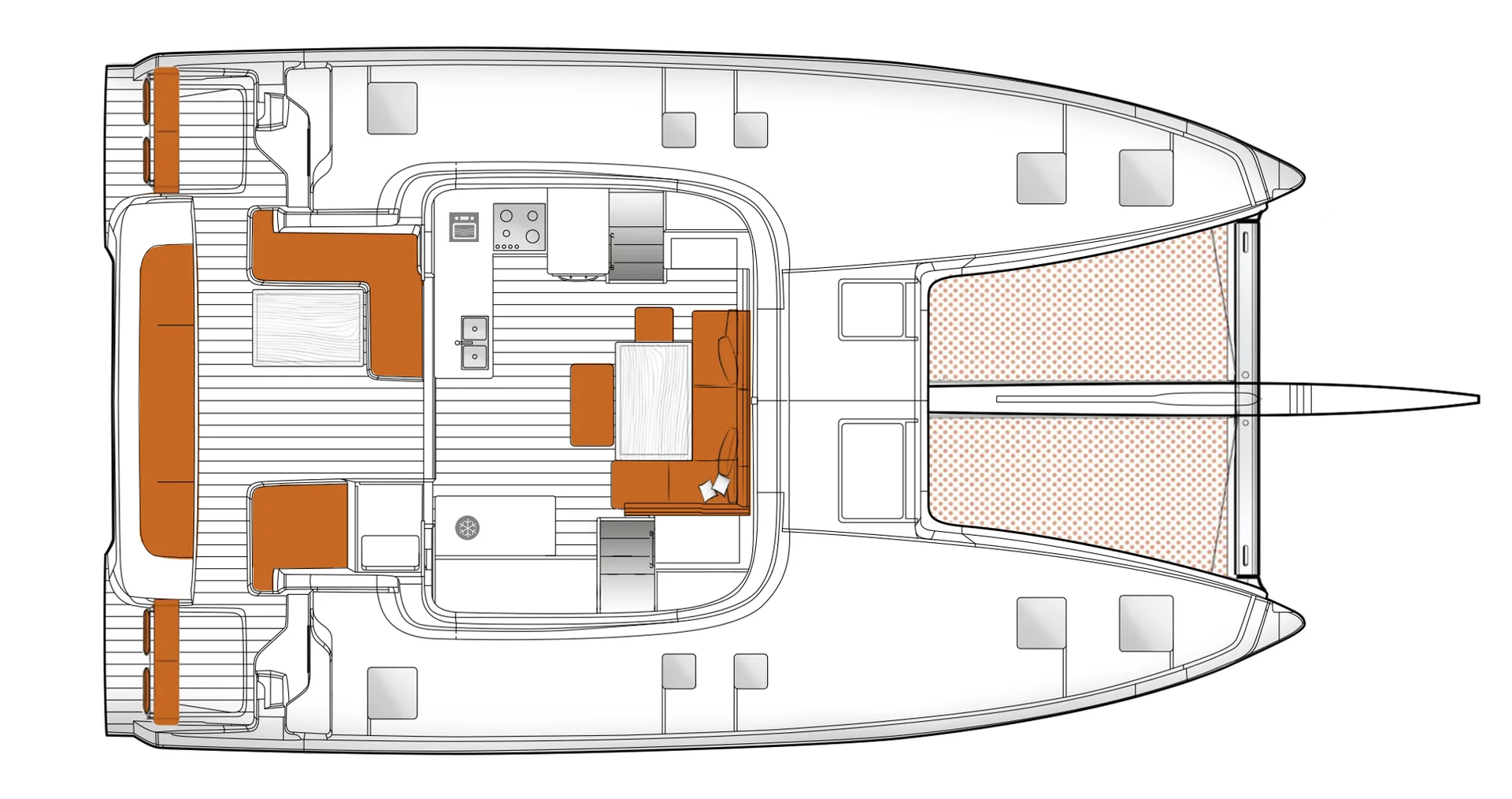
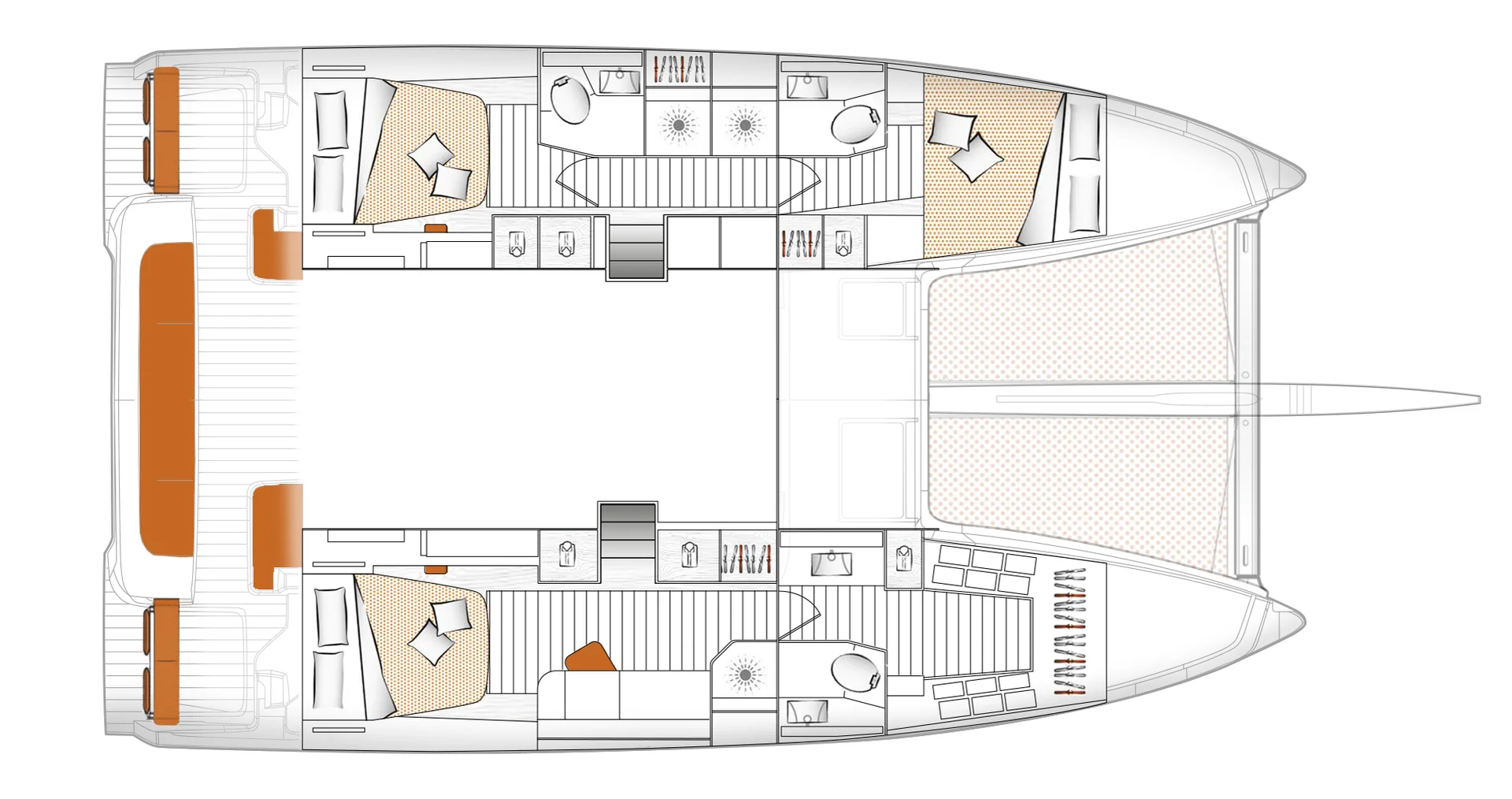
The builder offers several three-cabin layouts as well as a four-cabin configuration with four bathrooms and four separate showers. Depending on the chosen plan, features can include a private dressing room, additional berths, skipper cabins or an optional Skylounge, so CatamaranWorld buyers should compare the available layouts carefully.
Twin stern helm stations are positioned close to the rudders and use direct steering with textile lines. The standard sail plan comprises an 83 m² square-top mainsail and a 40 m² overlapping genoa, while the optional Code 0 is 72 m² and the Pulse Line raises published upwind sail area from 123 m² to 135 m².
Among the Excess 11, 13 and 14, this model has the greatest listed beam, light displacement and standard upwind sail area. Its other published figures include a 1.48-metre draft, twin 45 hp engines and accommodation for six to twelve berths.
Manufacturer general-arrangement drawings. Open a plan for a closer look.
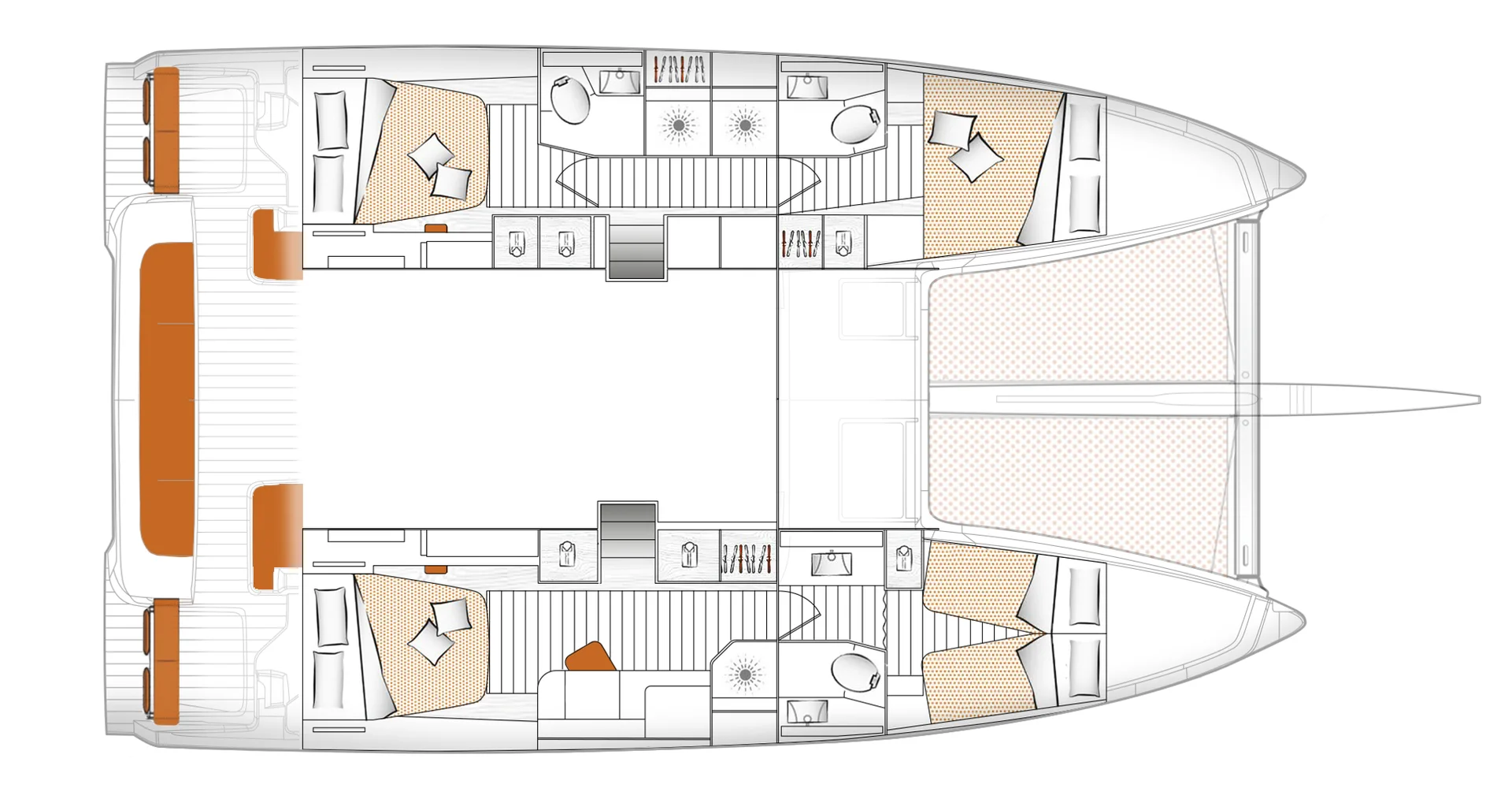
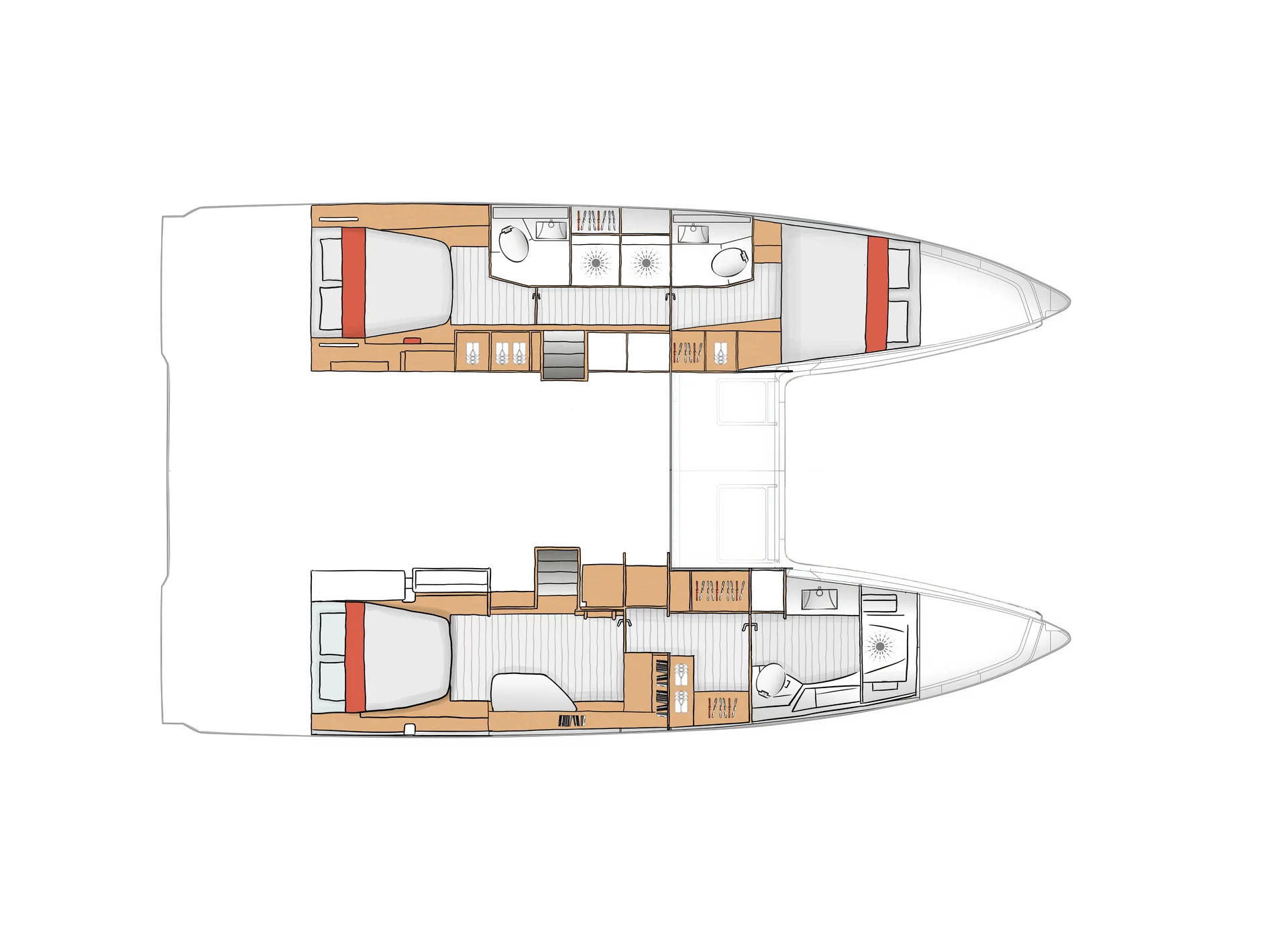
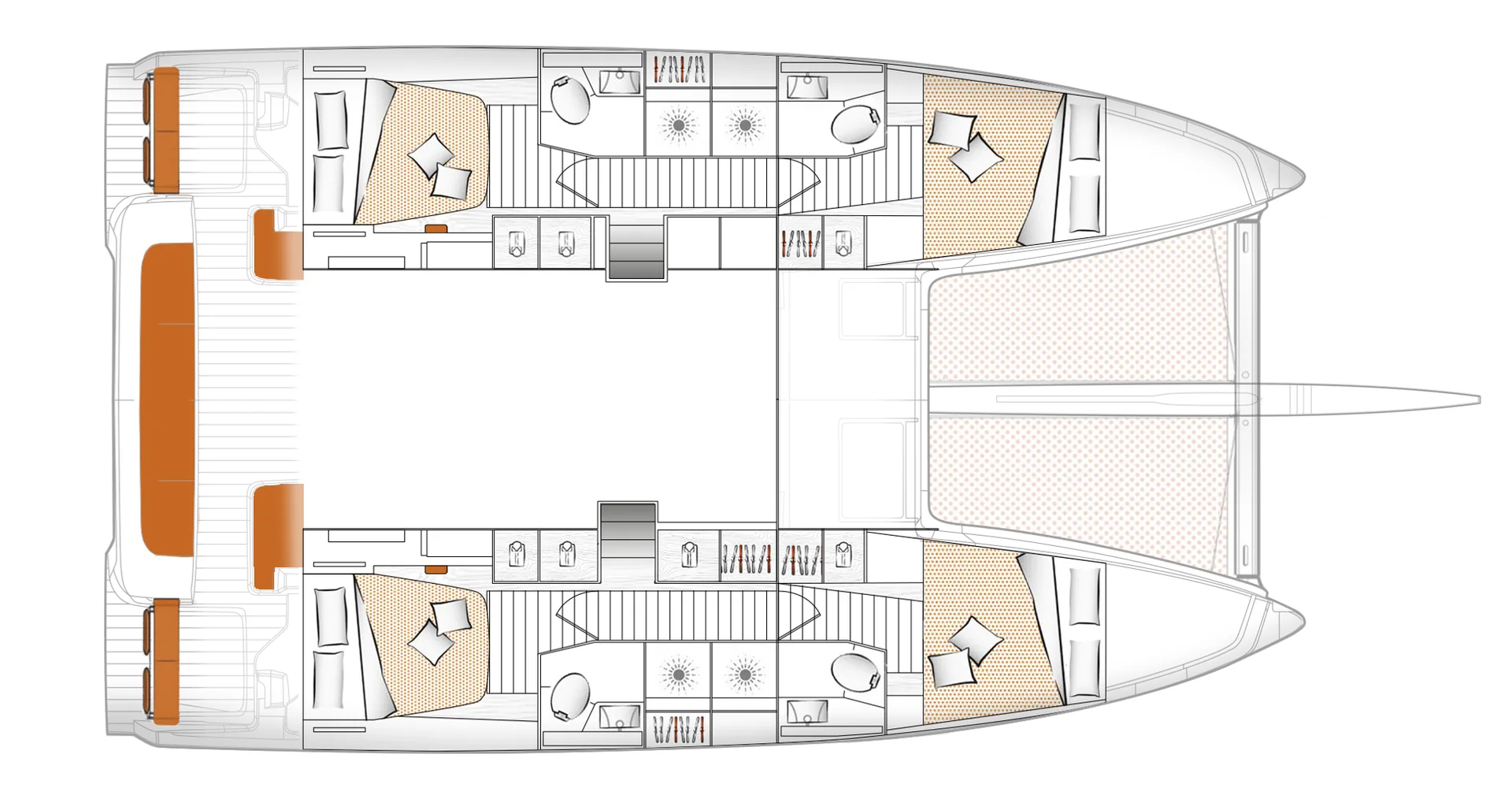
In his Yachting World review, Rupert Holmes highlighted the Excess 14’s responsive steering and straightforward tacking. Sailing upwind in 12–14 knots of true wind, he observed boat speeds around 7.4–8 knots and found that careful sail trim produced a clear response. His test boat carried the optional taller Pulse Line rig and longer bowsprit.
Holmes also praised the helm feel during a separate sail in 6–7 knots of breeze. On a breezier outing, bearing away in steep chop brought brisk acceleration, and the Code 0 helped the boat reach a recorded 10.3 knots. Beyond the sailing, he singled out the bright saloon and the owner’s flexible forward space as appealing features.
Mark Pillsbury’s Cruising World review highlighted an enjoyable sail in calm seas and roughly 4–6 knots of wind. With the main and working jib set, he recorded 4.1 knots of speed over ground upwind. After setting the Code 0, he saw 5.7 knots on a reach in a gust of about 6 knots. He also noted quick tacks and easily reached sail controls.
Pillsbury particularly liked the far-aft outdoor helms, where he could feel the breeze and remain close to people in the cockpit. He praised the saloon’s light, airy character and the owner-layout option with forward berths that fold away for storage. The boat he sailed carried the optional Pulse rig.
Key milestones and configuration choices.
Excess currently lists three- and four-cabin layouts and offers the Excess 14 in Riders’ Edition.
The three-cabin arrangements offer owner-focused space, including a private dressing area and optional extra berths. The four-cabin arrangement has four bathrooms and four separate showers, with possible skipper’s cabins in both hulls. Compare the exact plans before ordering.
Excess lists 6 to 12 berths, depending on configuration. Optional additional berths can increase sleeping capacity, so check the plan of the particular boat rather than relying on the maximum figure.
The standard sail plan pairs an 83 m² square-top mainsail with a 40 m² overlapping genoa, for 123 m² upwind. A 72 m² Code 0 is optional. The Pulse Line increases published upwind sail area to 135 m² and mast clearance from 19.78 m to 21.54 m.
Excess lists twin 45 hp engines as standard. Cruising World tested a boat fitted with optional twin 57 hp diesels. Ask a dealer which engine choices are currently available and what is installed on the boat you are considering.
Published capacities are two 200 L fuel tanks, 300 L of standard fresh water and two 80 L black-water tanks. Confirm the fitted tankage when comparing boats.
Standard overall length is 13.97 m, while maximum length including options is 16.46 m. Beam is 7.87 m and draft is 1.48 m. Also check overhead clearance: the published figures are 19.78 m with the standard mast and 21.54 m with the Pulse Line mast.
Talk through layouts, equipment, ownership costs and your cruising plans with a dedicated catamaran specialist.