Balance 464
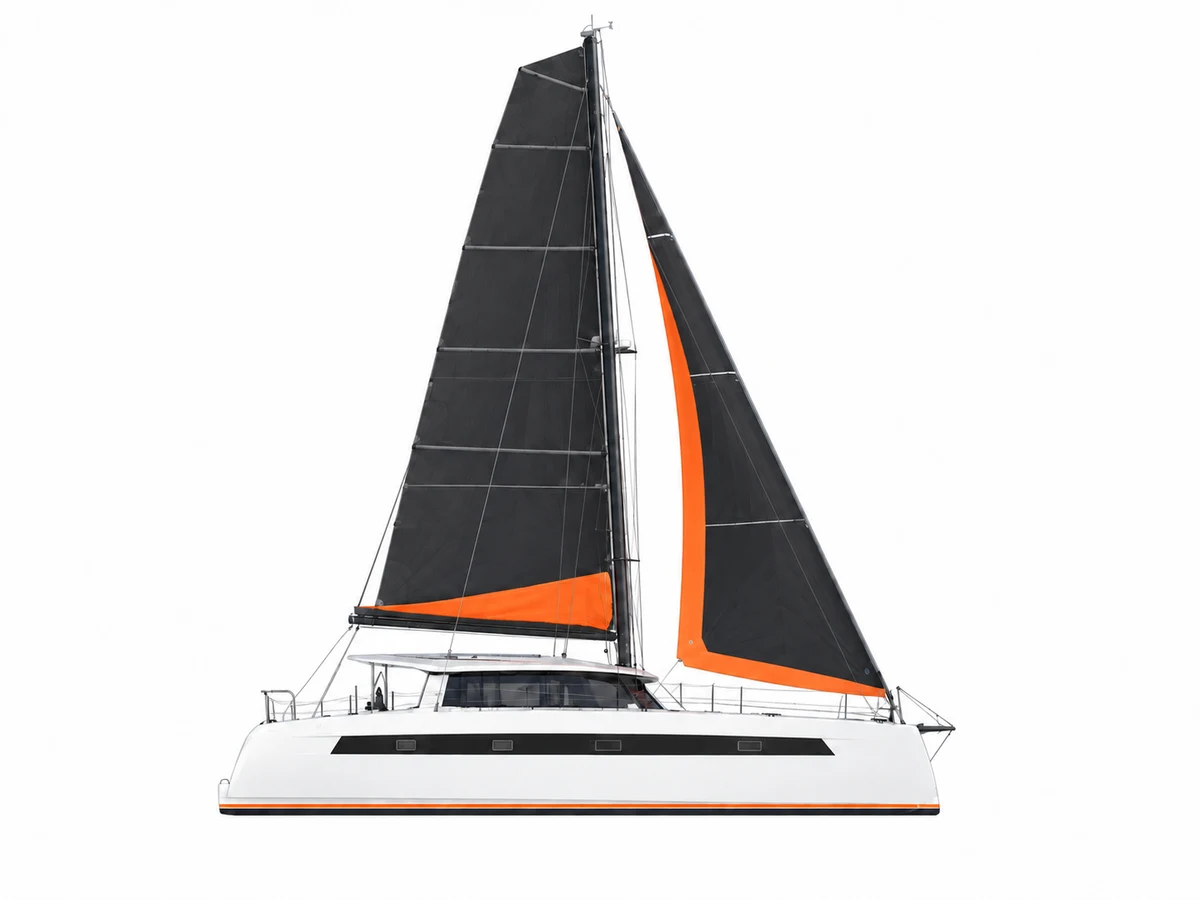
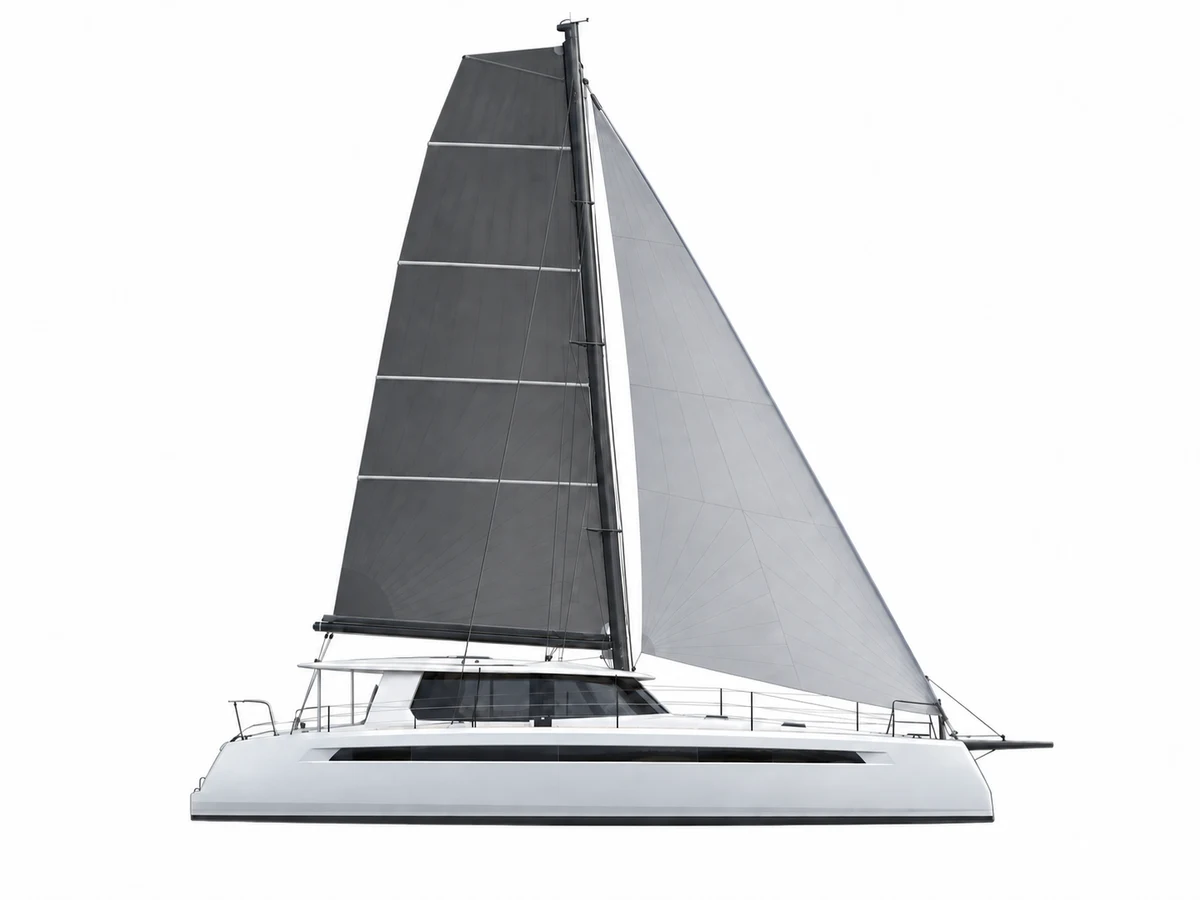
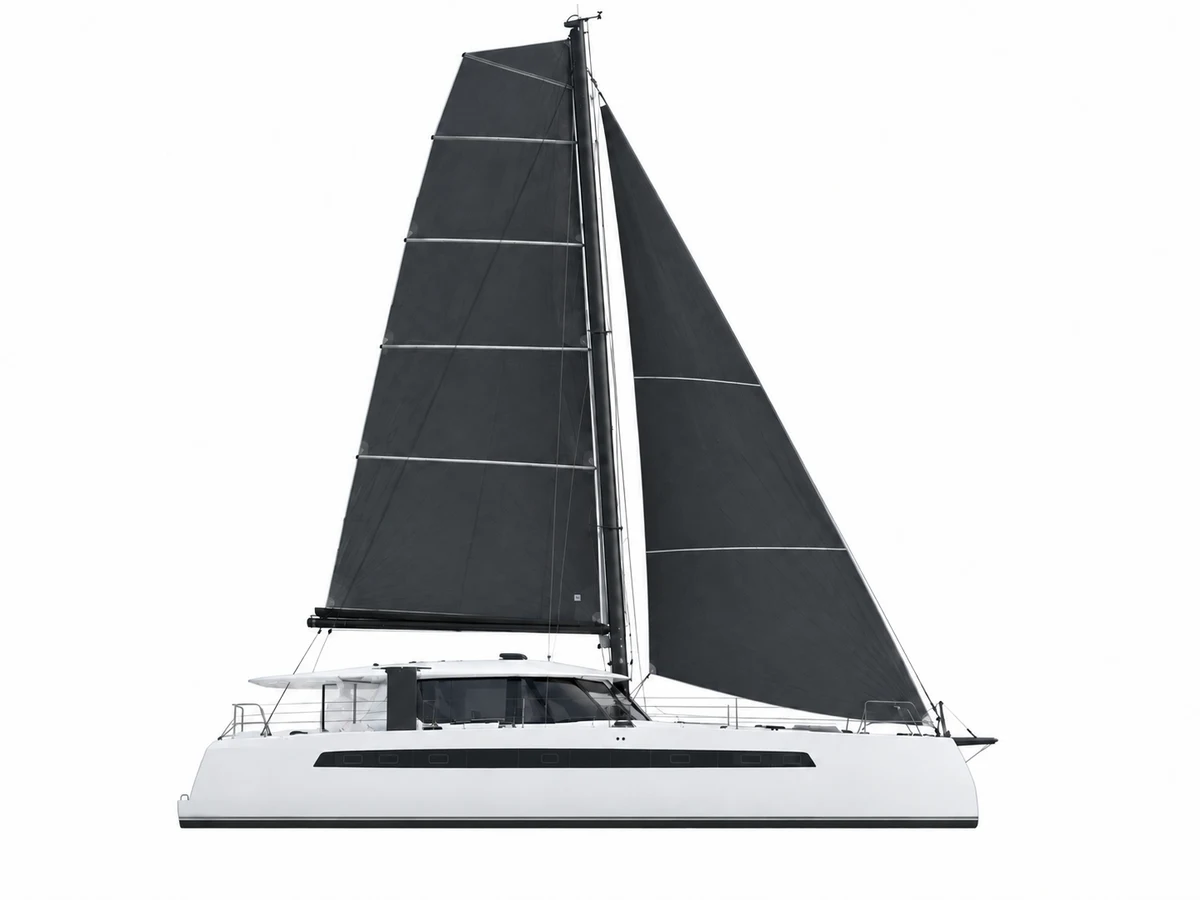
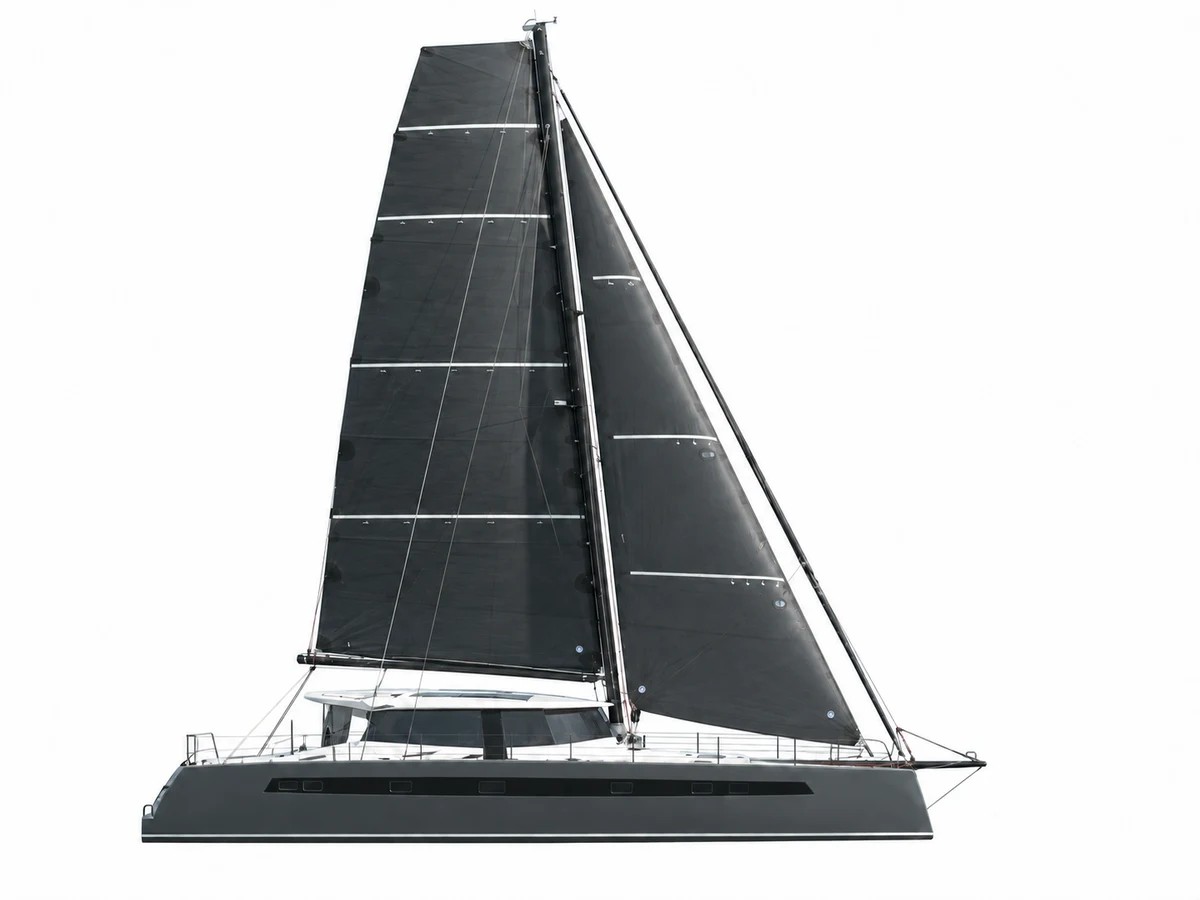
Official Balance design renderings and manufacturer reference arrangements. Shown finishes and equipment are configuration choices. Images: Balance.
Official tour of Hello World, filmed during commissioning before its first sea trial.
About the Balance 464
The Balance 464 is a new Cape Town-built performance cruising catamaran designed by Philip Berman and Anton du Toit, combining cruising accommodation with a lightweight, performance-focused structure. Carbon Cross uses carbon-reinforced E-glass, closed-cell foam, and vinylester, while Carbon Core adds a carbon internal substructure wrapped in E-glass and vinylester; the official gallery currently presents manufacturer design renderings.
The three-cabin owner plan gives the Balance 464 a dedicated owner’s suite with its shower positioned aft, while the U-shaped galley and saloon create practical, connected spaces for cooking, dining, and relaxing. A convertible saloon table provides an occasional extra berth when needed, though using it for sleeping temporarily takes over part of the boat’s main social area.
At the Balance 464’s VersaHelm, the station pivots between the upper and lower cockpit positions, while reefing lines and sailing controls lead to the upper helm. High-aspect carbon daggerboards pair with carbon spade rudders. Propulsion is based on twin diesels, with VersaDrive offered as an optional diesel-electric hybrid; it is a separate choice from the Integrel E-Power alternator system.
For a buyer, the concrete choice is Carbon Cross versus Carbon Core, matched to intended payload and budget rather than the label alone. On an actual Balance 464, confirm the contracted engine and tank schedule, inspect usable locker volume, operate the rapid-opening VersaStern door, pivot the VersaHelm through both positions, and verify that the selected construction and optional propulsion equipment match the build documents.
Balance 464 accommodation layouts
Manufacturer general-arrangement drawings. Open a plan for a closer look.
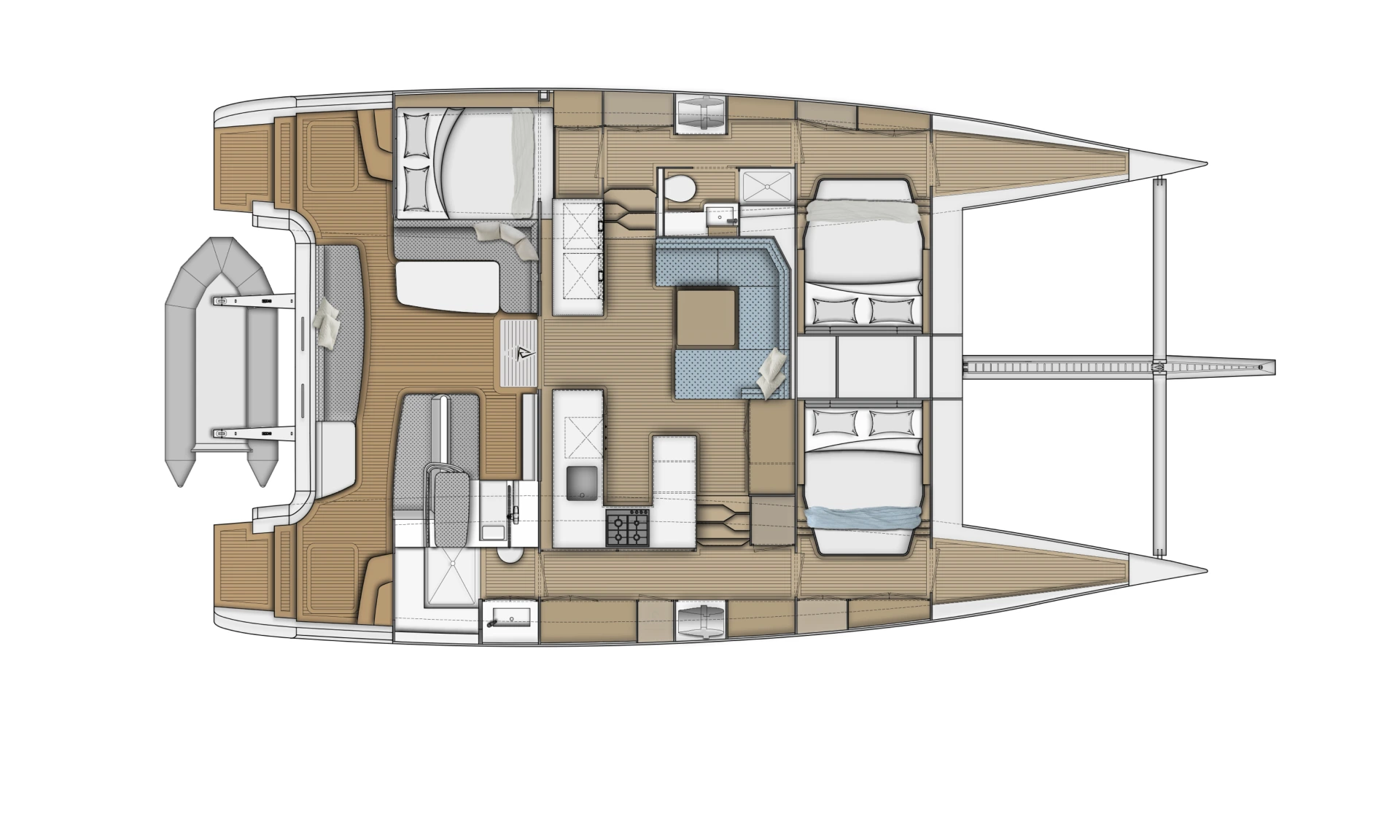
Manufacturer reference arrangement published on the current Balance 464 model page.
Testimonials
“A helm planned for two positions”
In his advertorial design feature, Justin Chisholm describes Balance’s aim to combine cruising payload and comfort with stronger sailing performance in the 464. Balance says its design brief called for a longer, lighter boat with more sail area than the 442, while a carbon internal structure would save weight.
The planned saloon replaces a traditional dining arrangement with a larger lounge, and bigger opening hatches are intended to bring in more fresh air. The VersaHelm is designed to let crew steer from the cockpit or an elevated position beside the sail controls. An optional convertible aft port cabin can serve as a workspace or sleeping space.
“Hello World’s open saloon”
In Bianca’s manufacturer article on Dean Paarman’s walkthrough, folding saloon doors on Hello World, the first 464, open the galley, lower helm and seating areas to the cockpit. The saloon has larger windows, four forward-facing portlights and two overhead hatches, while its adjustable table expands for dining.
In the guest hull, the aft cabin converts from an office and daybed to a double berth. The starboard hull forms a private owner’s suite with a flexible desk area, and the article describes sailing lines led to the upper helm. Paarman filmed the walkthrough during commissioning, before Hello World’s first sea trial.
Model years & editions
Key milestones and configuration choices.
- November 2026
Hello World afloat
Balance’s first 464 is documented afloat and in commissioning. Its published tour predates the first sea trial; do not confuse that milestone with measured sailing performance.
- Versions and layouts
Carbon Cross or Carbon Core
The choice changes the extent of carbon in the structure; it is separate from the optional hybrid propulsion package.
Balance 464 FAQs
Has the first Balance 464 been launched?
Yes. Balance’s November 12, 2026 report describes Hello World afloat and in commissioning in Cape Town. The tour was filmed before its first sea trial, so it establishes a built yacht and its interior, not measured sailing performance. The gallery on this page retains its identified design renderings.
How do Carbon Cross and Carbon Core differ on the Balance 464?
Carbon Cross uses an E-glass structure with carbon reinforcement in high-load areas. Carbon Core extends carbon into the internal structure and components while retaining an E-glass outer construction. Compare the contracted material schedule, fit-out and equipped weight rather than treating Carbon Core as an all-carbon hull.
Is Integrel E-Power the same as the optional VersaDrive hybrid?
No. E-Power is an engine-driven charging system; VersaDrive adds electric propulsion alongside the diesels. Ask which system is installed and for its battery, charging and propulsion specification. A boat advertised with Integrel charging is not automatically capable of electric motoring.
How much water does a Balance 464 draw with its boards raised?
The published draft is 1.14 m with the daggerboards raised and 2.27 m with them lowered. Those are different configurations, not interchangeable minimum-clearance figures. Establish the actual loaded draft and operating procedure before planning shallow-water access.
What tender size should I check for the Balance 464?
Balance’s current specification limits the tender to 3.5 m and 214 kg including the outboard. It also lists a separate davit-arm load figure. Use the tender limit and the delivered lifting-system documentation; do not add arm ratings together to assume a heavier tender is suitable.
Does a Balance 464 provide three private guest suites?
Its published three-cabin plan includes an owner’s hull, while the two guest cabins share a bathroom. Hello World also demonstrates a convertible guest cabin used as an office and daybed. Check the individual arrangement before treating every sleeping place as an equivalent private suite.
Considering a Balance 464?
Talk through layouts, equipment, ownership costs and your cruising plans with a dedicated catamaran specialist.